<br />
<b>Notice</b>:  Function _load_textdomain_just_in_time was called <strong>incorrectly</strong>. Translation loading for the <code>burst-statistics</code> domain was triggered too early. This is usually an indicator for some code in the plugin or theme running too early. Translations should be loaded at the <code>init</code> action or later. Please see <a href="https://developer.wordpress.org/advanced-administration/debug/debug-wordpress/">Debugging in WordPress</a> for more information. (This message was added in version 6.7.0.) in <b>/home3/themoew1/public_html/wp-includes/functions.php</b> on line <b>6170</b><br />
<?xml version="1.0" encoding="UTF-8"?><rss version="2.0"
	xmlns:content="http://purl.org/rss/1.0/modules/content/"
	xmlns:wfw="http://wellformedweb.org/CommentAPI/"
	xmlns:dc="http://purl.org/dc/elements/1.1/"
	xmlns:atom="http://www.w3.org/2005/Atom"
	xmlns:sy="http://purl.org/rss/1.0/modules/syndication/"
	xmlns:slash="http://purl.org/rss/1.0/modules/slash/"
	>

<channel>
	<title>slow meat &#8211; The Modern Day Settler</title>
	<atom:link href="https://themoderndaysettler.com/tag/slow-meat/feed/" rel="self" type="application/rss+xml" />
	<link>https://themoderndaysettler.com</link>
	<description>Homesteading on an Antique New England Farm</description>
	<lastBuildDate>Thu, 09 Jul 2020 17:42:18 +0000</lastBuildDate>
	<language>en-US</language>
	<sy:updatePeriod>
	hourly	</sy:updatePeriod>
	<sy:updateFrequency>
	1	</sy:updateFrequency>
	

<image>
	<url>https://themoderndaysettler.com/wp-content/uploads/2020/02/cropped-pig-icon-21-32x32.png</url>
	<title>slow meat &#8211; The Modern Day Settler</title>
	<link>https://themoderndaysettler.com</link>
	<width>32</width>
	<height>32</height>
</image> 
	<item>
		<title>Why We Raise Ranger Chickens for Meat and not Cornish Cross</title>
		<link>https://themoderndaysettler.com/why-we-raise-ranger-chickens-for-meat-and-not-cornish-cross/</link>
					<comments>https://themoderndaysettler.com/why-we-raise-ranger-chickens-for-meat-and-not-cornish-cross/#comments</comments>
		
		<dc:creator><![CDATA[The Modern Day Settler]]></dc:creator>
		<pubDate>Thu, 07 Feb 2019 08:00:58 +0000</pubDate>
				<category><![CDATA[Meat Chickens]]></category>
		<category><![CDATA[cornish cross chicken]]></category>
		<category><![CDATA[homegrown chicken]]></category>
		<category><![CDATA[meat chickens]]></category>
		<category><![CDATA[pastured bird]]></category>
		<category><![CDATA[pastured chicken]]></category>
		<category><![CDATA[raising meat chickens]]></category>
		<category><![CDATA[red ranger chicken]]></category>
		<category><![CDATA[slow meat]]></category>
		<category><![CDATA[summer]]></category>
		<guid isPermaLink="false">https://themoderndaysettler.com//?p=941</guid>

					<description><![CDATA[A few years ago my husband and I began our path down the road to self sufficiency. Being meat eaters, we couldn&#8217;t really call ourselves self sufficient without raising our own! So, we decided to get our feet wet and started with meat chickens like most do. Our initial round of birds we raised were [&#8230;]]]></description>
										<content:encoded><![CDATA[		<div data-elementor-type="wp-post" data-elementor-id="941" class="elementor elementor-941">
						<section class="elementor-section elementor-top-section elementor-element elementor-element-869ed62 elementor-section-boxed elementor-section-height-default elementor-section-height-default" data-id="869ed62" data-element_type="section">
						<div class="elementor-container elementor-column-gap-default">
					<div class="elementor-column elementor-col-100 elementor-top-column elementor-element elementor-element-0358467" data-id="0358467" data-element_type="column">
			<div class="elementor-widget-wrap elementor-element-populated">
						<div class="elementor-element elementor-element-c32710a elementor-widget elementor-widget-text-editor" data-id="c32710a" data-element_type="widget" data-widget_type="text-editor.default">
				<div class="elementor-widget-container">
									<p style="text-align: center;">A few years ago my husband and I began our path down the road to self sufficiency. Being meat eaters, we couldn&#8217;t really call ourselves self sufficient without raising our own! So, we decided to get our feet wet and started with meat chickens like most do. Our initial round of birds we raised were the Cornish Cross because well, that&#8217;s what everyone raises! So they must be good right? Wrong. Well, wrong for us at least. We couldn&#8217;t stand these birds, and after that first round we swore we would never raise them again&#8230;and we haven&#8217;t. &nbsp;We immediately switched to the Rangers. A robust, slower growing breed that is more adapt for being raised on pasture. &nbsp;We have raised a couple hundred since then, and have been beyond thrilled with the breed overall.</p>
<p style="text-align: center;">So why the Rangers and not Cornish Cross? &nbsp;Read on!</p>								</div>
				</div>
					</div>
		</div>
					</div>
		</section>
				<section class="elementor-section elementor-top-section elementor-element elementor-element-45f2813 elementor-section-boxed elementor-section-height-default elementor-section-height-default" data-id="45f2813" data-element_type="section">
						<div class="elementor-container elementor-column-gap-default">
					<div class="elementor-column elementor-col-100 elementor-top-column elementor-element elementor-element-d807a81" data-id="d807a81" data-element_type="column">
			<div class="elementor-widget-wrap elementor-element-populated">
						<div class="elementor-element elementor-element-6457437 elementor-widget elementor-widget-heading" data-id="6457437" data-element_type="widget" data-widget_type="heading.default">
				<div class="elementor-widget-container">
					<h2 class="elementor-heading-title elementor-size-medium">Cornish Cross</h2>				</div>
				</div>
					</div>
		</div>
					</div>
		</section>
				<section class="elementor-section elementor-top-section elementor-element elementor-element-3449800 elementor-section-boxed elementor-section-height-default elementor-section-height-default" data-id="3449800" data-element_type="section">
						<div class="elementor-container elementor-column-gap-default">
					<div class="elementor-column elementor-col-100 elementor-top-column elementor-element elementor-element-dd32cd7" data-id="dd32cd7" data-element_type="column">
			<div class="elementor-widget-wrap elementor-element-populated">
						<div class="elementor-element elementor-element-fcccd67 elementor-widget elementor-widget-text-editor" data-id="fcccd67" data-element_type="widget" data-widget_type="text-editor.default">
				<div class="elementor-widget-container">
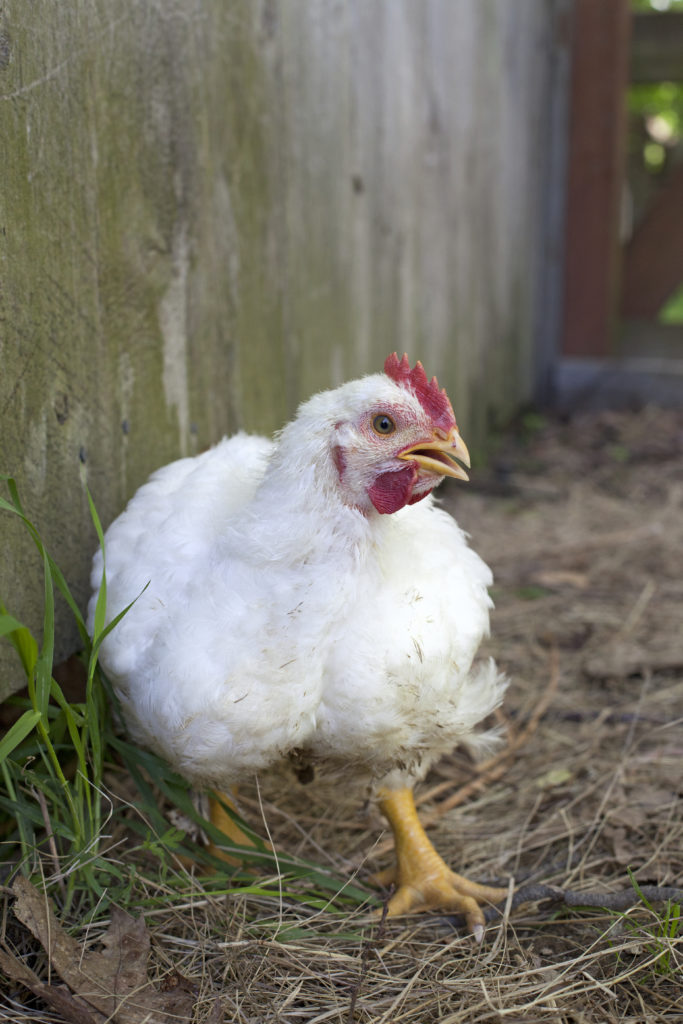
									<p style="text-align: center;">My experience with the Cornish Cross was not a pleasant one.  Ultimately, the breed itself just wasn&#8217;t right for the environment we raise them in (pasture versus confined) and their obvious genetic selection for certain attributes just didn&#8217;t sit well with me.  Again, this is my experience.  I know plenty of people that happily raise them and plenty of others that have sworn them off just like me. Some key points are:</p><ul><li>They aren&#8217;t hardy.  The Cornish Cross are a hybrid breed just like the Rangers. However, the breeding stock are chosen for very specific traits such as exaggerated large breasts to meet the high demand of white meat eaters, sparse feathering, wide set legs, extremely fast growth, and foraging suppression.  All of these traits are desirable for the large scale poultry farms, which is the industry the breed was tailored for. These traits aren&#8217;t natural, and as a result, the bird&#8217;s health suffers.  Their body is designed to put on an incredible amount of weight in a short amount of time, causing other systems to be compromised.  They are notorious for leg issues and organ failure among other health problems.  This is why most people don&#8217;t raise them past the 8-10 week mark because they physically will not be able to make it.  After this point, the mortality rate spikes and you are really taking a gamble on if the birds survive no matter how well you care for them.  In addition to health issues, they are very sensitive to extreme temperatures and are not equipped to withstand  the elements of inclement weather.  All it takes is one short heat wave to completely devastate your flock, I have seen it personally.</li><li>Yes, they grow fast. But I mean man do they grow <em>fast</em>.  They have a high feed conversion ratio meaning they very efficiently and quickly convert their feed weight.  They do it better than any other breed and is one of the many reasons why they are a favorite of large poultry farms as well as homesteaders. </li><li>They just don&#8217;t seem natural.  If you&#8217;ve ever seen an animal in its live form and thought &#8220;man that thing is gross I wouldn&#8217;t even want to eat it&#8221; that&#8217;s how I feel about the Cornish Cross. Their splotchy feathering and exaggerated wide set legs to support their front heavy stature make them look like a science project gone awry.  It just isn&#8217;t natural. Even worse, we had to prop their food trough up on bricks to raise it so they actually had to stand to eat. Otherwise, they would lay down in front of the food dish, in their own poop, and eat.  No matter how much space they had to move and forage, once they reached a couple weeks old these birds would plop themselves in front of the food trough <em>all day long</em>. Overall, they are minimal foragers in comparison to other breeds which for us is a big no no.  </li></ul><h5 style="text-align: center;">Let&#8217;s sum them up:</h5><ul><li><strong>Pros</strong>: do well in confinement setting, reach slaughter weight quickly (as little as 6 weeks), easier to pluck due to sparse feathering, large breasts for white meat lovers, widely available.</li><li><strong>Cons</strong>: don&#8217;t make good foragers, generally unhealthier and lack of hardiness, don&#8217;t display normal chicken behaviors, unhygienic.</li></ul>								</div>
				</div>
					</div>
		</div>
					</div>
		</section>
				<section class="elementor-section elementor-top-section elementor-element elementor-element-91fe845 elementor-section-boxed elementor-section-height-default elementor-section-height-default" data-id="91fe845" data-element_type="section">
						<div class="elementor-container elementor-column-gap-default">
					<div class="elementor-column elementor-col-100 elementor-top-column elementor-element elementor-element-a7b426a" data-id="a7b426a" data-element_type="column">
			<div class="elementor-widget-wrap elementor-element-populated">
						<div class="elementor-element elementor-element-35f2df8 elementor-widget elementor-widget-image" data-id="35f2df8" data-element_type="widget" data-widget_type="image.default">
				<div class="elementor-widget-container">
															<img fetchpriority="high" decoding="async" width="683" height="1024" src="https://themoderndaysettler.com/wp-content/uploads/2019/02/Cornish-Close-6-week-683x1024.jpg" class="attachment-large size-large wp-image-949" alt="" srcset="https://themoderndaysettler.com/wp-content/uploads/2019/02/Cornish-Close-6-week-683x1024.jpg 683w, https://themoderndaysettler.com/wp-content/uploads/2019/02/Cornish-Close-6-week-200x300.jpg 200w, https://themoderndaysettler.com/wp-content/uploads/2019/02/Cornish-Close-6-week-768x1152.jpg 768w" sizes="(max-width: 683px) 100vw, 683px" />															</div>
				</div>
					</div>
		</div>
					</div>
		</section>
				<section class="elementor-section elementor-top-section elementor-element elementor-element-c7b67c9 elementor-section-boxed elementor-section-height-default elementor-section-height-default" data-id="c7b67c9" data-element_type="section">
						<div class="elementor-container elementor-column-gap-default">
					<div class="elementor-column elementor-col-100 elementor-top-column elementor-element elementor-element-b2da4fd" data-id="b2da4fd" data-element_type="column">
			<div class="elementor-widget-wrap elementor-element-populated">
						<div class="elementor-element elementor-element-ae1c35b elementor-widget elementor-widget-heading" data-id="ae1c35b" data-element_type="widget" data-widget_type="heading.default">
				<div class="elementor-widget-container">
					<h2 class="elementor-heading-title elementor-size-medium">Rangers</h2>				</div>
				</div>
					</div>
		</div>
					</div>
		</section>
				<section class="elementor-section elementor-top-section elementor-element elementor-element-e8639ce elementor-section-boxed elementor-section-height-default elementor-section-height-default" data-id="e8639ce" data-element_type="section">
						<div class="elementor-container elementor-column-gap-default">
					<div class="elementor-column elementor-col-100 elementor-top-column elementor-element elementor-element-336183d" data-id="336183d" data-element_type="column">
			<div class="elementor-widget-wrap elementor-element-populated">
						<div class="elementor-element elementor-element-459b3a3 elementor-widget elementor-widget-text-editor" data-id="459b3a3" data-element_type="widget" data-widget_type="text-editor.default">
				<div class="elementor-widget-container">
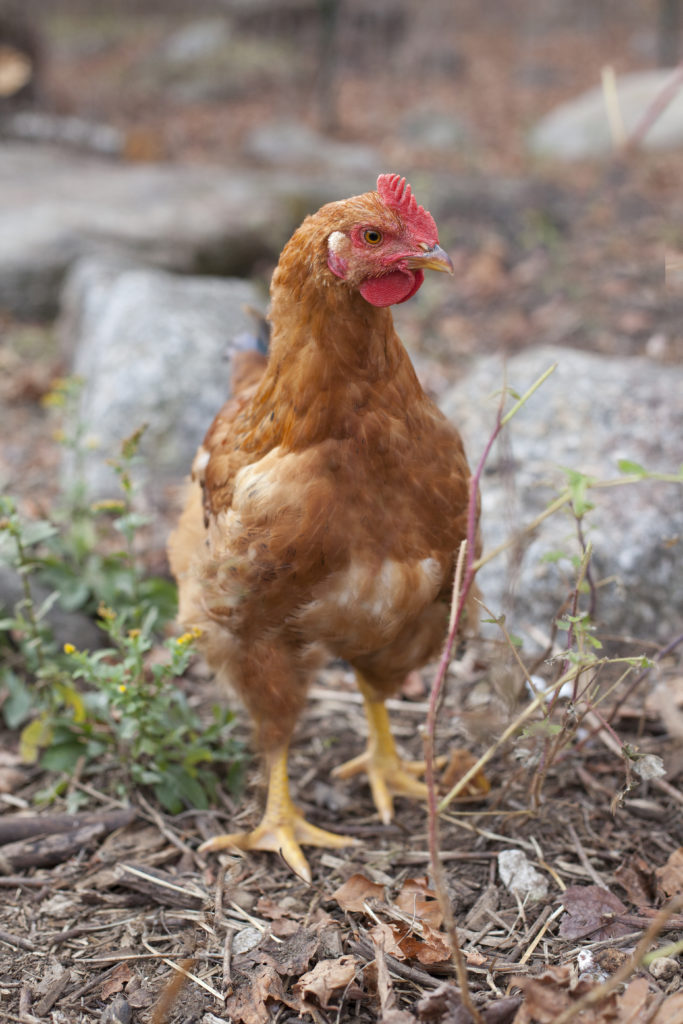
									<p>Since switching to the Rangers we have been extremely happy with their performance. They are a slower growing breed which allows more flavor to impregnate the meat that you just can&#8217;t get in a quick growing bird.  They are also known for their dark meat, which makes them more desirable if you are a chicken leg lover such as myself.  Some key points are:</p><ul><li>The Rangers are very similar to dual purpose laying hens in their appearance and personality.  They are fully feathered with their breast meat being proportional to their body unlike a Cornish.  They also display normal behaviors such as active foraging, roosting, taking dust baths, etc. Even with a feeder full of grain, they will still opt to forage making them an ideal pastured bird.</li><li>I have raised Rangers in varying temperatures and seasons without issue. They are very hardy and are able to hold up to inclement weather regardless of a heat wave or cold snap without any special accommodations.  Because we raise our birds on pasture, this is an absolute necessity without a controlled environment.</li><li>They grow considerably slower than the Cornish Cross. While the average age to process is around the 12-14 week mark, we have never processed our birds that early. We always end up pushing them out further and process between 16-20 weeks, and have dressed weights between 7-8 pounds.  There are two schools of thought on this:  Some see this as a negative because they want the birds to grow out as fast as possible.  Others see this as a good thing because longer growth equates to more flavorful meat.  I take the latter point of view, and like the slower growth rate.  It allows more time for flavor to develop, but because we process our own birds it also gives us the luxury of processing them on our own time.  Unlike the Cornish, the Rangers will not succumb to multiple system failures so they can be processed whenever we get to them whether they&#8217;re 10 weeks or 10 months old.</li></ul><h5 style="text-align: center;">Let&#8217;s sum them up:</h5><ul><li><strong>Pros:</strong> natural foragers reducing feed costs, very hardy, display normal chicken behaviors, more flavorful meat, great for dark meat lovers</li><li><strong>Cons:</strong> take longer to reach slaughter weight (if you consider that a con, which I don&#8217;t), fully feathered so harder to pluck, smaller breasts than Cornish Cross (again not a con for me, they&#8217;re far from &#8220;small&#8221;!)</li></ul>								</div>
				</div>
					</div>
		</div>
					</div>
		</section>
				<section class="elementor-section elementor-top-section elementor-element elementor-element-51240ab elementor-section-boxed elementor-section-height-default elementor-section-height-default" data-id="51240ab" data-element_type="section">
						<div class="elementor-container elementor-column-gap-default">
					<div class="elementor-column elementor-col-100 elementor-top-column elementor-element elementor-element-02eaa44" data-id="02eaa44" data-element_type="column">
			<div class="elementor-widget-wrap elementor-element-populated">
						<div class="elementor-element elementor-element-37addca elementor-widget elementor-widget-image" data-id="37addca" data-element_type="widget" data-widget_type="image.default">
				<div class="elementor-widget-container">
															<img decoding="async" width="683" height="1024" src="https://themoderndaysettler.com/wp-content/uploads/2019/02/Meat-Bird-683x1024.jpg" class="attachment-large size-large wp-image-954" alt="" srcset="https://themoderndaysettler.com/wp-content/uploads/2019/02/Meat-Bird-683x1024.jpg 683w, https://themoderndaysettler.com/wp-content/uploads/2019/02/Meat-Bird-200x300.jpg 200w, https://themoderndaysettler.com/wp-content/uploads/2019/02/Meat-Bird-768x1152.jpg 768w" sizes="(max-width: 683px) 100vw, 683px" />															</div>
				</div>
					</div>
		</div>
					</div>
		</section>
				<section class="elementor-section elementor-top-section elementor-element elementor-element-9785432 elementor-section-boxed elementor-section-height-default elementor-section-height-default" data-id="9785432" data-element_type="section">
						<div class="elementor-container elementor-column-gap-default">
					<div class="elementor-column elementor-col-100 elementor-top-column elementor-element elementor-element-3e90782" data-id="3e90782" data-element_type="column">
			<div class="elementor-widget-wrap elementor-element-populated">
						<div class="elementor-element elementor-element-defeada elementor-widget elementor-widget-spacer" data-id="defeada" data-element_type="widget" data-widget_type="spacer.default">
				<div class="elementor-widget-container">
							<div class="elementor-spacer">
			<div class="elementor-spacer-inner"></div>
		</div>
						</div>
				</div>
					</div>
		</div>
					</div>
		</section>
				<section class="elementor-section elementor-top-section elementor-element elementor-element-48032f0 elementor-section-boxed elementor-section-height-default elementor-section-height-default" data-id="48032f0" data-element_type="section">
						<div class="elementor-container elementor-column-gap-default">
					<div class="elementor-column elementor-col-100 elementor-top-column elementor-element elementor-element-035b6fa" data-id="035b6fa" data-element_type="column">
			<div class="elementor-widget-wrap elementor-element-populated">
						<div class="elementor-element elementor-element-dc4bd3e elementor-widget elementor-widget-heading" data-id="dc4bd3e" data-element_type="widget" data-widget_type="heading.default">
				<div class="elementor-widget-container">
					<h2 class="elementor-heading-title elementor-size-medium">Let's Talk About Slow Meat</h2>				</div>
				</div>
					</div>
		</div>
					</div>
		</section>
				<section class="elementor-section elementor-top-section elementor-element elementor-element-b74e4e0 elementor-section-boxed elementor-section-height-default elementor-section-height-default" data-id="b74e4e0" data-element_type="section">
						<div class="elementor-container elementor-column-gap-default">
					<div class="elementor-column elementor-col-100 elementor-top-column elementor-element elementor-element-dfba9b8" data-id="dfba9b8" data-element_type="column">
			<div class="elementor-widget-wrap elementor-element-populated">
						<div class="elementor-element elementor-element-2b7fd39 elementor-widget elementor-widget-text-editor" data-id="2b7fd39" data-element_type="widget" data-widget_type="text-editor.default">
				<div class="elementor-widget-container">
									<p style="text-align: center;">Everyone is familiar with the notion that you can&#8217;t rush quality, and meat chickens are no exception to this rule.  Flavor takes time, and it&#8217;s a process that can&#8217;t be rushed.  This is a concept that people are starting to realize with the &#8220;slow meat movement&#8221; taking its hold.  </p><p style="text-align: center;">Is there really a noticeable difference though? <em>Absolutely!!!!</em> Night and day.  A big part of the difference in flavor is of course the feed given to the birds as well as supplemental pasture.  But, time is a huge part of it as well and is a variable that can&#8217;t be rushed.  If you raised a Cornish Cross and a Ranger side by side under the same exact conditions and processed them at their respective average slaughter ages, there would be a noticeable difference in the appearance and flavor. </p>								</div>
				</div>
					</div>
		</div>
					</div>
		</section>
				<section class="elementor-section elementor-top-section elementor-element elementor-element-67ba6cf elementor-section-boxed elementor-section-height-default elementor-section-height-default" data-id="67ba6cf" data-element_type="section">
						<div class="elementor-container elementor-column-gap-default">
					<div class="elementor-column elementor-col-100 elementor-top-column elementor-element elementor-element-96df0c0" data-id="96df0c0" data-element_type="column">
			<div class="elementor-widget-wrap elementor-element-populated">
						<div class="elementor-element elementor-element-b3e95ab elementor-widget elementor-widget-text-editor" data-id="b3e95ab" data-element_type="widget" data-widget_type="text-editor.default">
				<div class="elementor-widget-container">
									<p style="text-align: center;">As I previously emphasized, choosing the breed of meat chicken to raise is very much a personal preference based on what is important to <em>you</em>.  Maybe you don&#8217;t care that the Cornish aren&#8217;t foragers because you&#8217;re going to raise them in a small pen.  Or you live in a hot climate and want to raise them in the summer so you need a hardier animal and decide to go with the Rangers. I know people who raise the Cornish Cross knowing that they will always lose at least 10% of their flock, and they are okay with that, so they order extra anticipating loss.  It is a personal choice just like anything else.</p><p style="text-align: center;">We love raising the Rangers because to us, they are how a chicken should be. Natural.  They run, scratch through the dirt, chase each other fighting over worms, <a href="https://themoderndaysettler.com/mobile-chicken-coop/" target="_blank" rel="noopener">thrive raised on pasture</a>, and just all around are a robust healthy bird.  Sure it takes longer for them to grow, but it&#8217;s a non issue because the result is incredibly nutrient dense delicious chicken for us!  But, as they say the proof is in the pudding!  See for yourself as I teach you <a href="https://www.themoderndaysettler.com/breaking-down-a-whole-chicken/" target="_blank" rel="noopener">how to break down a whole chicken</a>.  You just can&#8217;t get that dark red meat and healthy yellow fat from a fast growing sedentary bird.</p>								</div>
				</div>
					</div>
		</div>
					</div>
		</section>
				</div>
		]]></content:encoded>
					
					<wfw:commentRss>https://themoderndaysettler.com/why-we-raise-ranger-chickens-for-meat-and-not-cornish-cross/feed/</wfw:commentRss>
			<slash:comments>25</slash:comments>
		
		
			</item>
	</channel>
</rss>