<br />
<b>Notice</b>:  Function _load_textdomain_just_in_time was called <strong>incorrectly</strong>. Translation loading for the <code>insert-headers-and-footers</code> domain was triggered too early. This is usually an indicator for some code in the plugin or theme running too early. Translations should be loaded at the <code>init</code> action or later. Please see <a href="https://developer.wordpress.org/advanced-administration/debug/debug-wordpress/">Debugging in WordPress</a> for more information. (This message was added in version 6.7.0.) in <b>/home3/themoew1/public_html/wp-includes/functions.php</b> on line <b>6131</b><br />
<br />
<b>Notice</b>:  Function _load_textdomain_just_in_time was called <strong>incorrectly</strong>. Translation loading for the <code>burst-statistics</code> domain was triggered too early. This is usually an indicator for some code in the plugin or theme running too early. Translations should be loaded at the <code>init</code> action or later. Please see <a href="https://developer.wordpress.org/advanced-administration/debug/debug-wordpress/">Debugging in WordPress</a> for more information. (This message was added in version 6.7.0.) in <b>/home3/themoew1/public_html/wp-includes/functions.php</b> on line <b>6131</b><br />
<?xml version="1.0" encoding="UTF-8"?><rss version="2.0"
	xmlns:content="http://purl.org/rss/1.0/modules/content/"
	xmlns:wfw="http://wellformedweb.org/CommentAPI/"
	xmlns:dc="http://purl.org/dc/elements/1.1/"
	xmlns:atom="http://www.w3.org/2005/Atom"
	xmlns:sy="http://purl.org/rss/1.0/modules/syndication/"
	xmlns:slash="http://purl.org/rss/1.0/modules/slash/"
	>

<channel>
	<title>Seed Starting &#8211; The Modern Day Settler</title>
	<atom:link href="https://themoderndaysettler.com/category/in-the-garden/seed-starting/feed/" rel="self" type="application/rss+xml" />
	<link>https://themoderndaysettler.com</link>
	<description>Homesteading on an Antique New England Farm</description>
	<lastBuildDate>Wed, 25 Mar 2020 14:43:21 +0000</lastBuildDate>
	<language>en-US</language>
	<sy:updatePeriod>
	hourly	</sy:updatePeriod>
	<sy:updateFrequency>
	1	</sy:updateFrequency>
	

<image>
	<url>https://themoderndaysettler.com/wp-content/uploads/2020/02/cropped-pig-icon-21-32x32.png</url>
	<title>Seed Starting &#8211; The Modern Day Settler</title>
	<link>https://themoderndaysettler.com</link>
	<width>32</width>
	<height>32</height>
</image> 
	<item>
		<title>Thinning Tomato Seedlings</title>
		<link>https://themoderndaysettler.com/thinning-tomato-seedlings/</link>
					<comments>https://themoderndaysettler.com/thinning-tomato-seedlings/#comments</comments>
		
		<dc:creator><![CDATA[The Modern Day Settler]]></dc:creator>
		<pubDate>Mon, 04 Feb 2019 00:00:31 +0000</pubDate>
				<category><![CDATA[Seed Starting]]></category>
		<category><![CDATA[growing tomatoes]]></category>
		<category><![CDATA[growing tomatoes from seed]]></category>
		<category><![CDATA[heirloom tomatoes]]></category>
		<category><![CDATA[heirloom vegetables]]></category>
		<category><![CDATA[seed starting starting seeds]]></category>
		<category><![CDATA[thinning tomatoes]]></category>
		<category><![CDATA[tomato gardening]]></category>
		<category><![CDATA[tomatoes]]></category>
		<guid isPermaLink="false">https://themoderndaysettler.com//?p=939</guid>

					<description><![CDATA[Up until this point in your tomato growing journey you have fussed over and doted on these seedlings as if they were your babies. You started them from seed and nurtured them to help them grow big and strong. Now, I&#8217;m going to tell you that you have to pick the strongest and best ones [&#8230;]]]></description>
										<content:encoded><![CDATA[		<div data-elementor-type="wp-post" data-elementor-id="939" class="elementor elementor-939">
						<section class="elementor-section elementor-top-section elementor-element elementor-element-a92435c elementor-section-boxed elementor-section-height-default elementor-section-height-default" data-id="a92435c" data-element_type="section">
						<div class="elementor-container elementor-column-gap-default">
					<div class="elementor-column elementor-col-100 elementor-top-column elementor-element elementor-element-4ac32ab" data-id="4ac32ab" data-element_type="column">
			<div class="elementor-widget-wrap elementor-element-populated">
						<div class="elementor-element elementor-element-3f93906 elementor-widget elementor-widget-text-editor" data-id="3f93906" data-element_type="widget" data-widget_type="text-editor.default">
				<div class="elementor-widget-container">
									<p style="text-align: center;">Up until this point in your tomato growing journey you have fussed over and doted on these seedlings as if they were your babies. You <a href="https://themoderndaysettler.com/starting-heirloom-tomatoes-from-seed/" target="_blank" rel="noopener">started them from seed</a> and <a href="https://themoderndaysettler.com/caring-for-tomato-seedlings/" target="_blank" rel="noopener">nurtured them</a> to help them grow big and strong. Now, I&#8217;m going to tell you that you have to pick the strongest and best ones and cut out all the rest. Yes, I said it. This process is called thinning your seedlings and it is unfortunately necessary. &nbsp;I know, I know. &nbsp;All that work, all that doting, and now you have to remove the weak ones so that the strong can thrive.</p>
<p style="text-align: center;">Now, honestly I don&#8217;t like doing this. &nbsp;No one does! &nbsp;I hate having to cut out perfectly healthy tomato seedlings because there is another one a little bigger or healthier looking. But guess what? That&#8217;s why you plant so many seeds per cell. &nbsp;You want the best of the best! &nbsp;The purpose of planting 2-3 seeds per cell is to ensure that you end up with one strong healthy seedling in each. &nbsp;Survival of the fittest in action. &nbsp;</p>
<p style="text-align: center;">&nbsp;&nbsp; &nbsp; &nbsp; The process of thinning seedlings is quite easy. &nbsp;You pick the strongest seedling in the cell, and then cut the others at the soil level with scissors. &nbsp;This will allow the strongest to grow without any competition. &nbsp;I do not recommend pulling the seedlings out, as at this point the root systems are very fragile and if the roots are connected to the one you&#8217;re keeping it could pull it up as well. Snipping them off at the soil line is the quickest method and ensures you don&#8217;t cause any damage to the ones you&#8217;re sparing.</p>								</div>
				</div>
					</div>
		</div>
					</div>
		</section>
				<section class="elementor-section elementor-top-section elementor-element elementor-element-6195adf elementor-section-boxed elementor-section-height-default elementor-section-height-default" data-id="6195adf" data-element_type="section">
						<div class="elementor-container elementor-column-gap-default">
					<div class="elementor-column elementor-col-100 elementor-top-column elementor-element elementor-element-5811537" data-id="5811537" data-element_type="column">
			<div class="elementor-widget-wrap elementor-element-populated">
						<div class="elementor-element elementor-element-5cb2a0f elementor-widget elementor-widget-heading" data-id="5cb2a0f" data-element_type="widget" data-widget_type="heading.default">
				<div class="elementor-widget-container">
					<h2 class="elementor-heading-title elementor-size-medium">Who Stays and Who Goes?</h2>				</div>
				</div>
					</div>
		</div>
					</div>
		</section>
				<section class="elementor-section elementor-top-section elementor-element elementor-element-2500347 elementor-section-boxed elementor-section-height-default elementor-section-height-default" data-id="2500347" data-element_type="section">
						<div class="elementor-container elementor-column-gap-default">
					<div class="elementor-column elementor-col-100 elementor-top-column elementor-element elementor-element-f4228ff" data-id="f4228ff" data-element_type="column">
			<div class="elementor-widget-wrap elementor-element-populated">
						<div class="elementor-element elementor-element-379f884 elementor-widget elementor-widget-text-editor" data-id="379f884" data-element_type="widget" data-widget_type="text-editor.default">
				<div class="elementor-widget-container">
									<p style="text-align: center;">So how do you determine which seedlings are weak and which is the strongest? First you want to just go by general look.  If one obviously looks weak or sickly in comparison to the others then snip it.  Aside from that there are some general things to look for if it isn&#8217;t immediately obvious:</p>								</div>
				</div>
					</div>
		</div>
					</div>
		</section>
				<section class="elementor-section elementor-top-section elementor-element elementor-element-f569edc elementor-section-boxed elementor-section-height-default elementor-section-height-default" data-id="f569edc" data-element_type="section">
						<div class="elementor-container elementor-column-gap-default">
					<div class="elementor-column elementor-col-100 elementor-top-column elementor-element elementor-element-08f036d" data-id="08f036d" data-element_type="column">
			<div class="elementor-widget-wrap elementor-element-populated">
						<div class="elementor-element elementor-element-f9a4d71 elementor-widget elementor-widget-heading" data-id="f9a4d71" data-element_type="widget" data-widget_type="heading.default">
				<div class="elementor-widget-container">
					<h2 class="elementor-heading-title elementor-size-medium">Stems</h2>				</div>
				</div>
					</div>
		</div>
					</div>
		</section>
				<section class="elementor-section elementor-top-section elementor-element elementor-element-39d1225 elementor-section-boxed elementor-section-height-default elementor-section-height-default" data-id="39d1225" data-element_type="section">
						<div class="elementor-container elementor-column-gap-default">
					<div class="elementor-column elementor-col-100 elementor-top-column elementor-element elementor-element-aca7a76" data-id="aca7a76" data-element_type="column">
			<div class="elementor-widget-wrap elementor-element-populated">
						<div class="elementor-element elementor-element-445fa03 elementor-widget elementor-widget-text-editor" data-id="445fa03" data-element_type="widget" data-widget_type="text-editor.default">
				<div class="elementor-widget-container">
									<ul><li>If the stem of the seedling looks thin in comparison to some others, then this is a good indication of a weaker seedling.  Thin stemmed seedlings don&#8217;t transplant well outside because they aren&#8217;t strong enough to withstand the elements.</li><li>If the stem tapers as you get closer to the soil line this is an indication of inconsistent watering (over or under) and again is a sign it should be snipped.</li><li>The straightness of the stem is something that I take into consideration as well.  Some have a tendency to grow curved or wavy and I will always choose a straight stem in leu of these.</li><li>If all of your seedlings have thin stems, then I would move what you have left after you thin outside during the day (weather permitting) as much as you possibly can.  Put them in a well lit area but not under direct sun as this can burn the seedlings.  The stems will thicken and get stringer when they are subjected to a breeze.  If you can&#8217;t move them outside, then put a fan on them on low a few hours a day for the same affect.</li></ul>								</div>
				</div>
					</div>
		</div>
					</div>
		</section>
				<section class="elementor-section elementor-top-section elementor-element elementor-element-8c3b489 elementor-section-boxed elementor-section-height-default elementor-section-height-default" data-id="8c3b489" data-element_type="section">
						<div class="elementor-container elementor-column-gap-default">
					<div class="elementor-column elementor-col-100 elementor-top-column elementor-element elementor-element-148fc03" data-id="148fc03" data-element_type="column">
			<div class="elementor-widget-wrap elementor-element-populated">
						<div class="elementor-element elementor-element-42f5673 elementor-widget elementor-widget-heading" data-id="42f5673" data-element_type="widget" data-widget_type="heading.default">
				<div class="elementor-widget-container">
					<h2 class="elementor-heading-title elementor-size-medium">True Leaves</h2>				</div>
				</div>
					</div>
		</div>
					</div>
		</section>
				<section class="elementor-section elementor-top-section elementor-element elementor-element-06cd2db elementor-section-boxed elementor-section-height-default elementor-section-height-default" data-id="06cd2db" data-element_type="section">
						<div class="elementor-container elementor-column-gap-default">
					<div class="elementor-column elementor-col-100 elementor-top-column elementor-element elementor-element-ed5575d" data-id="ed5575d" data-element_type="column">
			<div class="elementor-widget-wrap elementor-element-populated">
						<div class="elementor-element elementor-element-1661695 elementor-widget elementor-widget-text-editor" data-id="1661695" data-element_type="widget" data-widget_type="text-editor.default">
				<div class="elementor-widget-container">
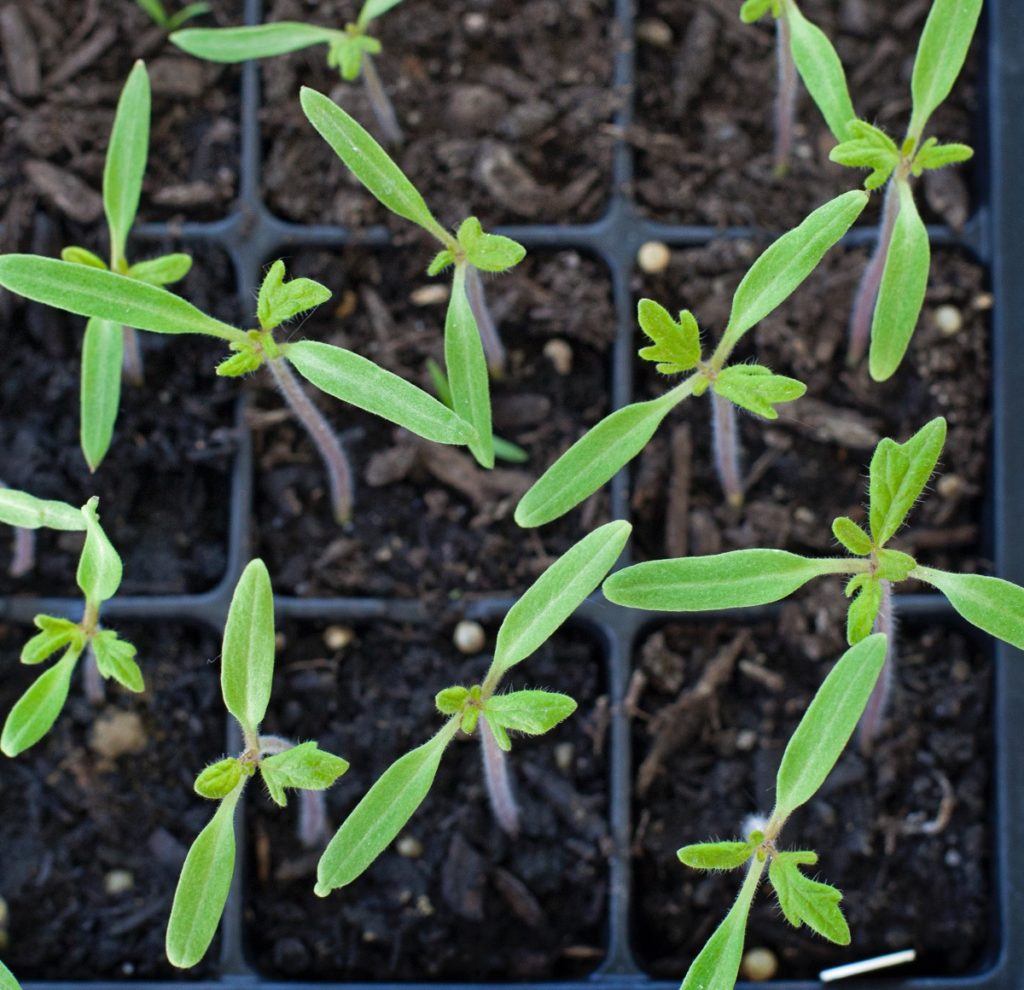
									<p style="text-align: center;">The first oval shaped leaves that appear on a seedling are called cotyledons or &#8220;seed leaves&#8221;.  The second set of leaves that appear after the cotyledons are referred to as the &#8220;true leaves&#8221; .  These leaves look like miniature versions of the plant&#8217;s mature leaf and are more decorative in shape.  </p>								</div>
				</div>
					</div>
		</div>
					</div>
		</section>
				<section class="elementor-section elementor-top-section elementor-element elementor-element-f9d49ab elementor-section-boxed elementor-section-height-default elementor-section-height-default" data-id="f9d49ab" data-element_type="section">
						<div class="elementor-container elementor-column-gap-default">
					<div class="elementor-column elementor-col-100 elementor-top-column elementor-element elementor-element-0695652" data-id="0695652" data-element_type="column">
			<div class="elementor-widget-wrap elementor-element-populated">
						<div class="elementor-element elementor-element-376e46f elementor-widget elementor-widget-image" data-id="376e46f" data-element_type="widget" data-widget_type="image.default">
				<div class="elementor-widget-container">
															<img fetchpriority="high" decoding="async" width="1024" height="990" src="https://themoderndaysettler.com/wp-content/uploads/2019/02/Tomato-Seedlings-true-1024x990.jpg" class="attachment-large size-large wp-image-1013" alt="thinning-tomato-seedlings" srcset="https://themoderndaysettler.com/wp-content/uploads/2019/02/Tomato-Seedlings-true-1024x990.jpg 1024w, https://themoderndaysettler.com/wp-content/uploads/2019/02/Tomato-Seedlings-true-300x290.jpg 300w, https://themoderndaysettler.com/wp-content/uploads/2019/02/Tomato-Seedlings-true-768x742.jpg 768w, https://themoderndaysettler.com/wp-content/uploads/2019/02/Tomato-Seedlings-true.jpg 1200w" sizes="(max-width: 1024px) 100vw, 1024px" />															</div>
				</div>
					</div>
		</div>
					</div>
		</section>
				<section class="elementor-section elementor-top-section elementor-element elementor-element-5704df1 elementor-section-boxed elementor-section-height-default elementor-section-height-default" data-id="5704df1" data-element_type="section">
						<div class="elementor-container elementor-column-gap-default">
					<div class="elementor-column elementor-col-100 elementor-top-column elementor-element elementor-element-3e23260" data-id="3e23260" data-element_type="column">
			<div class="elementor-widget-wrap elementor-element-populated">
						<div class="elementor-element elementor-element-b9a6573 elementor-widget elementor-widget-text-editor" data-id="b9a6573" data-element_type="widget" data-widget_type="text-editor.default">
				<div class="elementor-widget-container">
									<ul><li>Presence of true leaves is an indication that the seedling is further along and getting the basic requirements to grow.  Their presence alone however doesn&#8217;t necessarily mean it is the strongest seedling.  Seeds germinate at different rates, and it may have been a late bloomer.  The stems should be the primary factor in determining weaker seedlings, then take into consideration the presence of true leaves secondary.  This is why I <em>always</em> wait until the true leaves come in before thinning.</li></ul>								</div>
				</div>
					</div>
		</div>
					</div>
		</section>
				<section class="elementor-section elementor-top-section elementor-element elementor-element-6a70bda elementor-section-boxed elementor-section-height-default elementor-section-height-default" data-id="6a70bda" data-element_type="section">
						<div class="elementor-container elementor-column-gap-default">
					<div class="elementor-column elementor-col-100 elementor-top-column elementor-element elementor-element-afac5f7" data-id="afac5f7" data-element_type="column">
			<div class="elementor-widget-wrap elementor-element-populated">
						<div class="elementor-element elementor-element-6a84e12 elementor-widget elementor-widget-heading" data-id="6a84e12" data-element_type="widget" data-widget_type="heading.default">
				<div class="elementor-widget-container">
					<h2 class="elementor-heading-title elementor-size-medium">Height</h2>				</div>
				</div>
					</div>
		</div>
					</div>
		</section>
				<section class="elementor-section elementor-top-section elementor-element elementor-element-e4a9dfa elementor-section-boxed elementor-section-height-default elementor-section-height-default" data-id="e4a9dfa" data-element_type="section">
						<div class="elementor-container elementor-column-gap-default">
					<div class="elementor-column elementor-col-100 elementor-top-column elementor-element elementor-element-fe04bf0" data-id="fe04bf0" data-element_type="column">
			<div class="elementor-widget-wrap elementor-element-populated">
						<div class="elementor-element elementor-element-63b4d3e elementor-widget elementor-widget-text-editor" data-id="63b4d3e" data-element_type="widget" data-widget_type="text-editor.default">
				<div class="elementor-widget-container">
									<ul><li>This is not something I take into consideration or get too worked up about unless the seedlings are identical in terms of their stem thickness and presence of true leaves. Just because it is taller in no way means it&#8217;s stronger.  Some of my best tomato plants have come from short and stalky seedlings.  In fact, leggy seedlings tend to be very tall, and don&#8217;t do well outside because they&#8217;re weak. </li></ul>								</div>
				</div>
					</div>
		</div>
					</div>
		</section>
				<section class="elementor-section elementor-top-section elementor-element elementor-element-e3e86c8 elementor-section-boxed elementor-section-height-default elementor-section-height-default" data-id="e3e86c8" data-element_type="section">
						<div class="elementor-container elementor-column-gap-default">
					<div class="elementor-column elementor-col-100 elementor-top-column elementor-element elementor-element-2e65a57" data-id="2e65a57" data-element_type="column">
			<div class="elementor-widget-wrap elementor-element-populated">
						<div class="elementor-element elementor-element-17b19e6 elementor-widget elementor-widget-text-editor" data-id="17b19e6" data-element_type="widget" data-widget_type="text-editor.default">
				<div class="elementor-widget-container">
									<p style="text-align: center;">Everyone has heard the saying &#8220;<em>do as I say not as I do</em>&#8220;.  I said that the reason that you plant so many extra seeds is so that you can thin them and get the best of the best.  Yes, this is true and although I do not &#8220;recommend&#8221; separating seedlings because the root systems really are quite fragile and you can end up killing all of the ones you&#8217;re trying to save&#8230; I do it.  Every year I have a few in the same cell that are textbook perfect and I can&#8217;t bring myself to choose just one.  <br />       If you&#8217;re going to go against what I say, and do what I do, just make sure you thoroughly water them first.  This will give you the best chance of separating the root systems while keeping them in tact.  If the soil is dry forget about it, it will crumble away and you&#8217;ll destroy the roots.  I also recommend (and actually do this) that you do not try to separate more than two seedlings.  With the little soil that there is, your chances are not good you will get a clean separation with soil to protect the roots.  If you have two perfect seedlings though and feel like chancing it, I can&#8217;t say anything!  </p>								</div>
				</div>
					</div>
		</div>
					</div>
		</section>
				</div>
		]]></content:encoded>
					
					<wfw:commentRss>https://themoderndaysettler.com/thinning-tomato-seedlings/feed/</wfw:commentRss>
			<slash:comments>7</slash:comments>
		
		
			</item>
		<item>
		<title>Caring for Tomato Seedlings</title>
		<link>https://themoderndaysettler.com/caring-for-tomato-seedlings/</link>
					<comments>https://themoderndaysettler.com/caring-for-tomato-seedlings/#comments</comments>
		
		<dc:creator><![CDATA[The Modern Day Settler]]></dc:creator>
		<pubDate>Tue, 20 Mar 2018 14:31:32 +0000</pubDate>
				<category><![CDATA[Seed Starting]]></category>
		<category><![CDATA[growing tomatoes from seed]]></category>
		<category><![CDATA[heirloom tomatoes]]></category>
		<category><![CDATA[heirloom vegetables]]></category>
		<category><![CDATA[seed starting starting seeds]]></category>
		<category><![CDATA[seedlings]]></category>
		<category><![CDATA[tomato gardening]]></category>
		<category><![CDATA[tomato seedlings]]></category>
		<category><![CDATA[tomatoes]]></category>
		<guid isPermaLink="false">https://themoderndaysettler.com/?p=894</guid>

					<description><![CDATA[Assuming you planted your seeds properly and have kept them nice and warm, you should have beautiful seedlings emerging right about now! Once your seedlings have &#8220;popped&#8221; out of the soil you will want to remove the plastic cover as it has served its purpose. Ã‚Â&#160;If you leave it on too long, the seedlings will [&#8230;]]]></description>
										<content:encoded><![CDATA[		<div data-elementor-type="wp-post" data-elementor-id="894" class="elementor elementor-894 elementor-bc-flex-widget">
						<section class="elementor-section elementor-top-section elementor-element elementor-element-b89543d elementor-section-boxed elementor-section-height-default elementor-section-height-default" data-id="b89543d" data-element_type="section">
						<div class="elementor-container elementor-column-gap-default">
					<div class="elementor-column elementor-col-100 elementor-top-column elementor-element elementor-element-4077def" data-id="4077def" data-element_type="column">
			<div class="elementor-widget-wrap elementor-element-populated">
						<div class="elementor-element elementor-element-f40e20c elementor-widget elementor-widget-text-editor" data-id="f40e20c" data-element_type="widget" data-widget_type="text-editor.default">
				<div class="elementor-widget-container">
									<p style="text-align: center;">Assuming you<a href="https://themoderndaysettler.com/starting-heirloom-tomatoes-from-seed/" target="_blank" rel="noopener"> planted your seeds</a> properly and have kept them nice and warm, you should have beautiful seedlings emerging right about now! Once your seedlings have &#8220;popped&#8221; out of the soil you will want to remove the plastic cover as it has served its purpose.  If you leave it on too long, the seedlings will begin to turn white at the soil line and essentially rot. <br />       If they have not broken through after ten days or so, then a condition wasn&#8217;t properly met whether it be over/under watering, not warm enough soil, or the seeds were planted too deep.  Luckily, you still have time to replant at this point (assuming you still have seeds) to get your plants in the ground in time!  If everything went well though and your seedlings are thriving, now it&#8217;s time to pay attention to the three main factors that affect growth:</p>								</div>
				</div>
					</div>
		</div>
					</div>
		</section>
				<section class="elementor-section elementor-top-section elementor-element elementor-element-3486d49 elementor-section-boxed elementor-section-height-default elementor-section-height-default" data-id="3486d49" data-element_type="section">
						<div class="elementor-container elementor-column-gap-default">
					<div class="elementor-column elementor-col-100 elementor-top-column elementor-element elementor-element-93c2c23" data-id="93c2c23" data-element_type="column">
			<div class="elementor-widget-wrap elementor-element-populated">
						<div class="elementor-element elementor-element-75fc0bb elementor-widget elementor-widget-heading" data-id="75fc0bb" data-element_type="widget" data-widget_type="heading.default">
				<div class="elementor-widget-container">
					<h2 class="elementor-heading-title elementor-size-medium">Light</h2>				</div>
				</div>
					</div>
		</div>
					</div>
		</section>
				<section class="elementor-section elementor-top-section elementor-element elementor-element-ee41e3a elementor-section-boxed elementor-section-height-default elementor-section-height-default" data-id="ee41e3a" data-element_type="section">
						<div class="elementor-container elementor-column-gap-default">
					<div class="elementor-column elementor-col-100 elementor-top-column elementor-element elementor-element-8efa0e8" data-id="8efa0e8" data-element_type="column">
			<div class="elementor-widget-wrap elementor-element-populated">
						<div class="elementor-element elementor-element-13009af elementor-widget elementor-widget-text-editor" data-id="13009af" data-element_type="widget" data-widget_type="text-editor.default">
				<div class="elementor-widget-container">
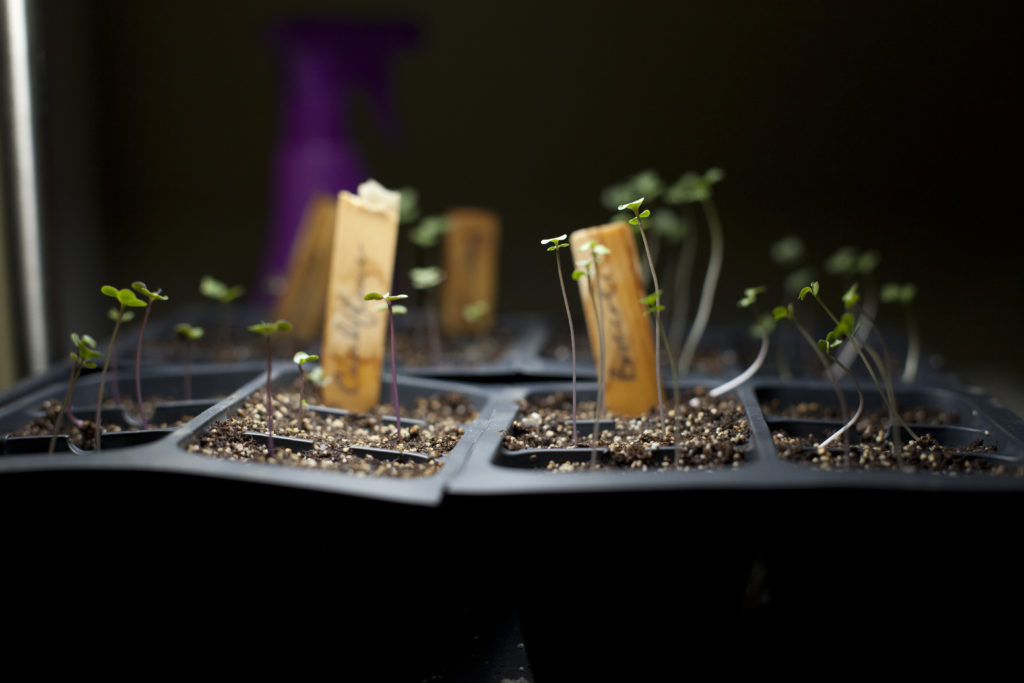
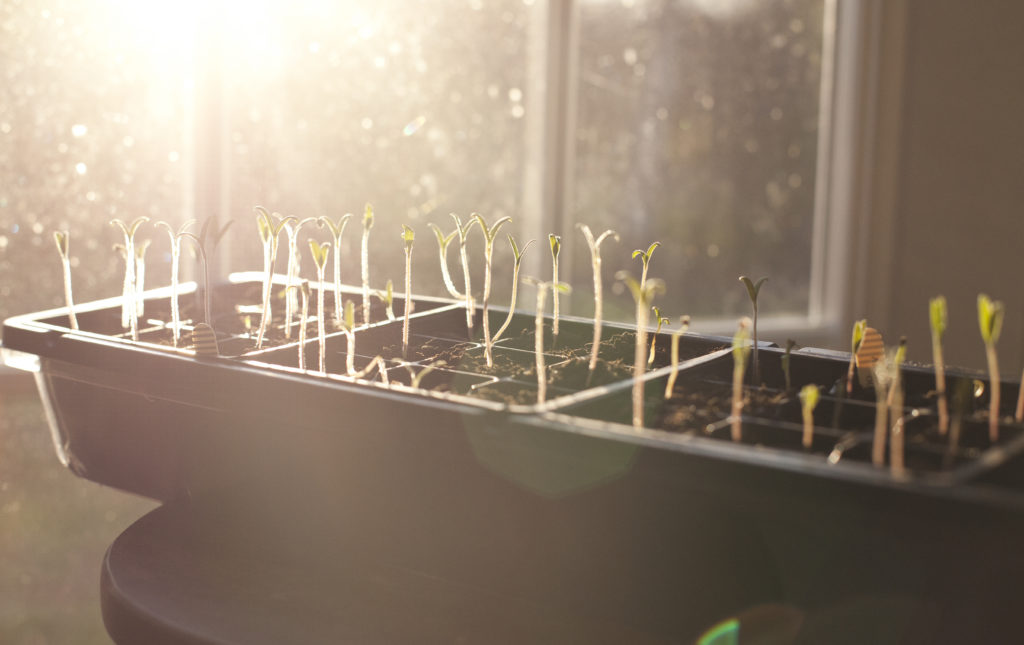
									<p style="text-align: center;"> This is the point where sunlight is the most important environmental factor to set your tomatoes up for success. Some people choose to use artificial growth lights to guarantee that their seedlings will get the maximum amount of light possible.  This is really the only solution if you lack ample natural sunlight.  If this is something you&#8217;re choosing to do, then you should provide 12-15 hours per day being careful that you&#8217;re keeping an eye on how close the lights are to your plants.  You don&#8217;t want to put the light source too close and burn the plants you&#8217;ve nurtured, but you don&#8217;t want them too far away where the plants will &#8220;reach&#8221; for the light and become leggy.<br />        However, if you&#8217;re like me and are too cheap to buy artificial growth lights, but have a south facing window, then you solely rely on natural sunlight.  Although this may not be the most ideal of situations (unless you live in Southern California where it is full sun 360 days a year) it will certainly do the trick! You just want to be sure that the plants are in direct sunlight.  Depending on the size of the window, number of windows, and the general setup of your room, you may want to rotate the planter halfway through daylight hours to ensure even sun exposure.  <br />         Your seedlings need ample sunlight in order to grow strong, thick stems that will set them up to thrive once transplanted outside.  If they are not getting sufficient light, you will find your plants are growing very tall and thin with very little leaves aka &#8220;leggy&#8221;. If you see this happening, you will want to consider getting some grow lights as they aren&#8217;t getting enough light naturally, or gently blow a fan on the seedlings a few hours a day.  This will essentially mimic a breeze, triggering the plants to strengthen up their stems.  But the root of the cause is probably lack of sunlight and there is no substitution for a lack in light.</p><h4 style="text-align: center;">What are &#8220;leggy&#8221; seedlings?</h4><p style="text-align: center;"><em><span style="color: #083752;">Legginess refers to seedlings that grow too tall too fast, with weak stems, and few leaves.  They can often be seen leaning to one side or another, often to the side of their light source.  This is referred to as <strong>&#8220;</strong>reaching<strong>&#8220;</strong> for light. Leggy seedlings typically do not hold up well to transplant outdoors as they have weaker stems that cannot hold up well against the elements such as wind or rain.</span></em></p>								</div>
				</div>
					</div>
		</div>
					</div>
		</section>
				<section class="elementor-section elementor-top-section elementor-element elementor-element-70ee494 elementor-section-boxed elementor-section-height-default elementor-section-height-default" data-id="70ee494" data-element_type="section">
						<div class="elementor-container elementor-column-gap-default">
					<div class="elementor-column elementor-col-100 elementor-top-column elementor-element elementor-element-74bf6b9" data-id="74bf6b9" data-element_type="column">
			<div class="elementor-widget-wrap elementor-element-populated">
						<div class="elementor-element elementor-element-2043ee7 elementor-widget elementor-widget-image" data-id="2043ee7" data-element_type="widget" data-widget_type="image.default">
				<div class="elementor-widget-container">
												<figure class="wp-caption">
										<img decoding="async" width="1024" height="683" src="https://themoderndaysettler.com/wp-content/uploads/2018/03/Seedlings-Starting-1024x683.jpg" class="attachment-large size-large wp-image-911" alt="starting-seedlings" srcset="https://themoderndaysettler.com/wp-content/uploads/2018/03/Seedlings-Starting-1024x683.jpg 1024w, https://themoderndaysettler.com/wp-content/uploads/2018/03/Seedlings-Starting-300x200.jpg 300w, https://themoderndaysettler.com/wp-content/uploads/2018/03/Seedlings-Starting-768x512.jpg 768w" sizes="(max-width: 1024px) 100vw, 1024px" />											<figcaption class="widget-image-caption wp-caption-text">Seedlings on the ends are " reaching" toward the center light</figcaption>
										</figure>
									</div>
				</div>
					</div>
		</div>
					</div>
		</section>
				<section class="elementor-section elementor-top-section elementor-element elementor-element-91bbc44 elementor-section-boxed elementor-section-height-default elementor-section-height-default" data-id="91bbc44" data-element_type="section">
						<div class="elementor-container elementor-column-gap-default">
					<div class="elementor-column elementor-col-100 elementor-top-column elementor-element elementor-element-731c214" data-id="731c214" data-element_type="column">
			<div class="elementor-widget-wrap elementor-element-populated">
						<div class="elementor-element elementor-element-f5cc2ef elementor-widget elementor-widget-heading" data-id="f5cc2ef" data-element_type="widget" data-widget_type="heading.default">
				<div class="elementor-widget-container">
					<h2 class="elementor-heading-title elementor-size-medium">Soil Temperature</h2>				</div>
				</div>
					</div>
		</div>
					</div>
		</section>
				<section class="elementor-section elementor-top-section elementor-element elementor-element-451ccbf elementor-section-boxed elementor-section-height-default elementor-section-height-default" data-id="451ccbf" data-element_type="section">
						<div class="elementor-container elementor-column-gap-default">
					<div class="elementor-column elementor-col-100 elementor-top-column elementor-element elementor-element-b5f8042" data-id="b5f8042" data-element_type="column">
			<div class="elementor-widget-wrap elementor-element-populated">
						<div class="elementor-element elementor-element-a27976a elementor-widget elementor-widget-text-editor" data-id="a27976a" data-element_type="widget" data-widget_type="text-editor.default">
				<div class="elementor-widget-container">
									<p style="text-align: center;">Soil temperature is another key factor in growing strong, healthy seedlings.  If the soil is very warm like required for germination, plants will wilt and die because they do not have enough leaves to produce energy to hold up to the stress of the heat.  If the soil is too cool, the seedling&#8217;s growth will be stunted and struggle to grow.  <br />        The soil temperature also has an affect on the legginess of the plants.  If the soil is too warm it will cause the seedlings to grow too high, too fast, without developing leaves.  Ideal temperature range is between 60°F-70°F.  As long as your ambient temperature is within this range consistently, the soil temperature will be okay. </p>								</div>
				</div>
					</div>
		</div>
					</div>
		</section>
				<section class="elementor-section elementor-top-section elementor-element elementor-element-6613629 elementor-section-boxed elementor-section-height-default elementor-section-height-default" data-id="6613629" data-element_type="section">
						<div class="elementor-container elementor-column-gap-default">
					<div class="elementor-column elementor-col-100 elementor-top-column elementor-element elementor-element-dbc9d4e" data-id="dbc9d4e" data-element_type="column">
			<div class="elementor-widget-wrap elementor-element-populated">
						<div class="elementor-element elementor-element-3b181fb elementor-widget elementor-widget-heading" data-id="3b181fb" data-element_type="widget" data-widget_type="heading.default">
				<div class="elementor-widget-container">
					<h2 class="elementor-heading-title elementor-size-medium">Water</h2>				</div>
				</div>
					</div>
		</div>
					</div>
		</section>
				<section class="elementor-section elementor-top-section elementor-element elementor-element-f662e67 elementor-section-boxed elementor-section-height-default elementor-section-height-default" data-id="f662e67" data-element_type="section">
						<div class="elementor-container elementor-column-gap-default">
					<div class="elementor-column elementor-col-100 elementor-top-column elementor-element elementor-element-11fec5e" data-id="11fec5e" data-element_type="column">
			<div class="elementor-widget-wrap elementor-element-populated">
						<div class="elementor-element elementor-element-5484946 elementor-widget elementor-widget-text-editor" data-id="5484946" data-element_type="widget" data-widget_type="text-editor.default">
				<div class="elementor-widget-container">
									<p style="text-align: center;">Just like when planting the seeds, careful attention needs to be paid to the watering of the seedlings.  Under watering is just as detrimental as overwatering and the soil should be consistently damp and wetted (as I like to refer to it), without being soaked and water logged.  You should check the seedlings daily, and it may be easier to gently give them a mist of water with a spray bottle each day rather than risk soaking them with a watering can.  <u>Even watering</u> is key here.  You do not want to shock the plants with too dry, then too wet soil.  Keep it consistently damp to keep your seedlings strong and healthy!</p>								</div>
				</div>
					</div>
		</div>
					</div>
		</section>
				<section class="elementor-section elementor-top-section elementor-element elementor-element-c3078a7 elementor-section-boxed elementor-section-height-default elementor-section-height-default" data-id="c3078a7" data-element_type="section">
						<div class="elementor-container elementor-column-gap-default">
					<div class="elementor-column elementor-col-100 elementor-top-column elementor-element elementor-element-214eb1b" data-id="214eb1b" data-element_type="column">
			<div class="elementor-widget-wrap elementor-element-populated">
						<div class="elementor-element elementor-element-ac76d92 elementor-widget elementor-widget-image" data-id="ac76d92" data-element_type="widget" data-widget_type="image.default">
				<div class="elementor-widget-container">
															<img decoding="async" width="1024" height="645" src="https://themoderndaysettler.com/wp-content/uploads/2019/02/Sunrise-Seedlings-1024x645.jpg" class="attachment-large size-large wp-image-898" alt="starting-seedlings" srcset="https://themoderndaysettler.com/wp-content/uploads/2019/02/Sunrise-Seedlings-1024x645.jpg 1024w, https://themoderndaysettler.com/wp-content/uploads/2019/02/Sunrise-Seedlings-300x189.jpg 300w, https://themoderndaysettler.com/wp-content/uploads/2019/02/Sunrise-Seedlings-768x484.jpg 768w" sizes="(max-width: 1024px) 100vw, 1024px" />															</div>
				</div>
					</div>
		</div>
					</div>
		</section>
				<section class="elementor-section elementor-top-section elementor-element elementor-element-2bc9c46 elementor-section-boxed elementor-section-height-default elementor-section-height-default" data-id="2bc9c46" data-element_type="section">
						<div class="elementor-container elementor-column-gap-default">
					<div class="elementor-column elementor-col-100 elementor-top-column elementor-element elementor-element-f6f30e8" data-id="f6f30e8" data-element_type="column">
			<div class="elementor-widget-wrap elementor-element-populated">
						<div class="elementor-element elementor-element-7a30074 elementor-widget elementor-widget-text-editor" data-id="7a30074" data-element_type="widget" data-widget_type="text-editor.default">
				<div class="elementor-widget-container">
									<p style="text-align: center;">This may all seem daunting, like a lot of work, or like it may not be worth it because the plants seem too finicky.  They really are quite hardy plants and as long as they have plenty of sunlight, a warm soil temperature, and are consistently watered, you will have strong seedlings that will be ready for transplant in a little over a month!<br />         Soon it will be time to <a href="https://themoderndaysettler.com/thinning-tomato-seedlings/" target="_blank" rel="noopener">thin out the weaker plants</a>, transplant to larger containers, and then get ready for the final plant! Stay tuned! </p>								</div>
				</div>
					</div>
		</div>
					</div>
		</section>
				</div>
		]]></content:encoded>
					
					<wfw:commentRss>https://themoderndaysettler.com/caring-for-tomato-seedlings/feed/</wfw:commentRss>
			<slash:comments>1</slash:comments>
		
		
			</item>
		<item>
		<title>Start Heirloom Tomatoes from Seed</title>
		<link>https://themoderndaysettler.com/starting-heirloom-tomatoes-from-seed/</link>
					<comments>https://themoderndaysettler.com/starting-heirloom-tomatoes-from-seed/#comments</comments>
		
		<dc:creator><![CDATA[The Modern Day Settler]]></dc:creator>
		<pubDate>Thu, 01 Mar 2018 08:00:30 +0000</pubDate>
				<category><![CDATA[Seed Starting]]></category>
		<category><![CDATA[growing tomatoes from seed]]></category>
		<category><![CDATA[heirloom tomatoes]]></category>
		<category><![CDATA[heirloom vegetables]]></category>
		<category><![CDATA[seed starting starting seeds]]></category>
		<category><![CDATA[spring]]></category>
		<category><![CDATA[tomato gardening]]></category>
		<category><![CDATA[tomatoes]]></category>
		<guid isPermaLink="false">https://themoderndaysettler.com/?p=877</guid>

					<description><![CDATA[With spring around the corner comes seed starting season! Starting plants from seed really is a simple process, and I start a majority of my plants this way. Most importantly,&#160; &#160; &#160;tomatoes. My family has kept the same two strains of heirloom tomatoes going for about forty years now. &#160;It all started with my great [&#8230;]]]></description>
										<content:encoded><![CDATA[		<div data-elementor-type="wp-post" data-elementor-id="877" class="elementor elementor-877">
						<section class="elementor-section elementor-top-section elementor-element elementor-element-c4c07f0 elementor-section-boxed elementor-section-height-default elementor-section-height-default" data-id="c4c07f0" data-element_type="section">
						<div class="elementor-container elementor-column-gap-default">
					<div class="elementor-column elementor-col-100 elementor-top-column elementor-element elementor-element-bc2343e" data-id="bc2343e" data-element_type="column">
			<div class="elementor-widget-wrap elementor-element-populated">
						<div class="elementor-element elementor-element-137fdd9 elementor-widget elementor-widget-text-editor" data-id="137fdd9" data-element_type="widget" data-widget_type="text-editor.default">
				<div class="elementor-widget-container">
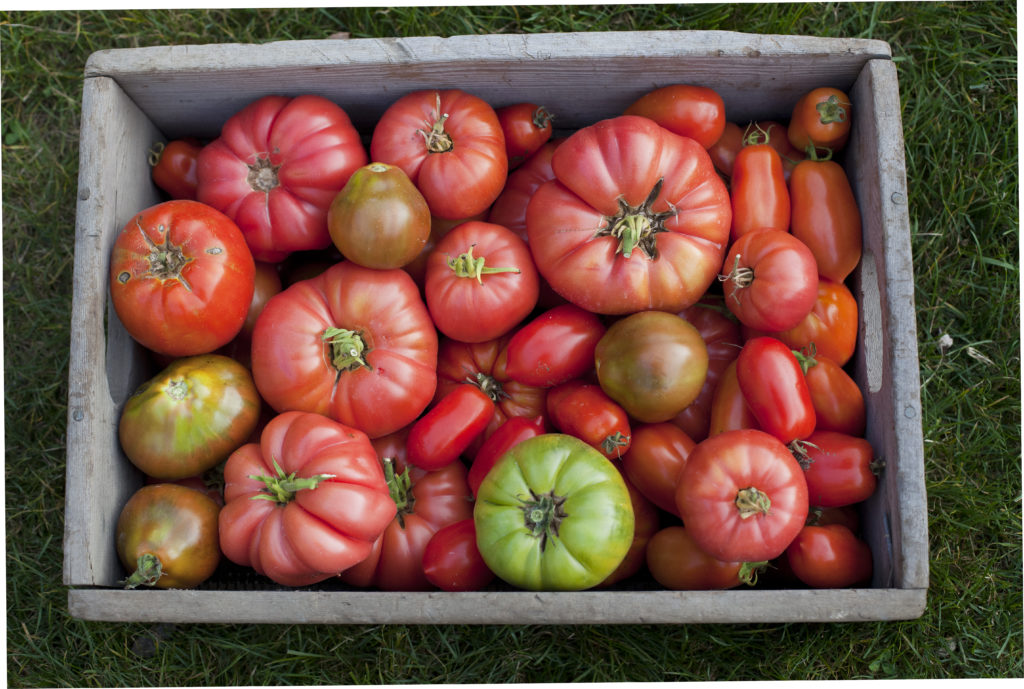
									<div class="paragraph" style="text-align: center;">With spring around the corner comes seed starting season! Starting plants from seed really is a simple process, and I start a majority of my plants this way. Most importantly,<br>&nbsp; &nbsp; &nbsp;tomatoes. My family has kept the same two strains of heirloom tomatoes going for about forty years now. &nbsp;It all started with my great grandmother who bought some plants from an Italian man that brought them over from a trip he took to Italy. &nbsp; So, year after year, the best tomato is reserved, the guts scraped out, and seeds are saved for next year&#8217;s crop. &nbsp;And here we are almost a half century later. &nbsp;<br>&nbsp; &nbsp; &nbsp; So what makes tomatoes heirloom, or any vegetable for that matter? &nbsp;&#8220;Heirloom&#8221; seems to be a buzzword a lot of people throw around like GMO and hybrid, although I&#8217;m not sure most people <em>really</em> know what it means, or how it&#8217;s different than any other vegetable you buy at the supermarket. &nbsp;</div>
<div class="paragraph" style="text-align: center;">&nbsp;</div>								</div>
				</div>
					</div>
		</div>
					</div>
		</section>
				<section class="elementor-section elementor-top-section elementor-element elementor-element-62edb42 elementor-section-boxed elementor-section-height-default elementor-section-height-default" data-id="62edb42" data-element_type="section">
						<div class="elementor-container elementor-column-gap-default">
					<div class="elementor-column elementor-col-100 elementor-top-column elementor-element elementor-element-73a3b33" data-id="73a3b33" data-element_type="column">
			<div class="elementor-widget-wrap elementor-element-populated">
						<div class="elementor-element elementor-element-535efa7 elementor-widget elementor-widget-image" data-id="535efa7" data-element_type="widget" data-widget_type="image.default">
				<div class="elementor-widget-container">
															<img loading="lazy" decoding="async" width="1024" height="689" src="https://themoderndaysettler.com/wp-content/uploads/2019/02/Tomatoes-Basket-1024x689.jpg" class="attachment-large size-large wp-image-885" alt="" srcset="https://themoderndaysettler.com/wp-content/uploads/2019/02/Tomatoes-Basket-1024x689.jpg 1024w, https://themoderndaysettler.com/wp-content/uploads/2019/02/Tomatoes-Basket-300x202.jpg 300w, https://themoderndaysettler.com/wp-content/uploads/2019/02/Tomatoes-Basket-768x517.jpg 768w" sizes="(max-width: 1024px) 100vw, 1024px" />															</div>
				</div>
					</div>
		</div>
					</div>
		</section>
				<section class="elementor-section elementor-top-section elementor-element elementor-element-8d9ed52 elementor-section-boxed elementor-section-height-default elementor-section-height-default" data-id="8d9ed52" data-element_type="section">
						<div class="elementor-container elementor-column-gap-default">
					<div class="elementor-column elementor-col-100 elementor-top-column elementor-element elementor-element-5e9d0f2" data-id="5e9d0f2" data-element_type="column">
			<div class="elementor-widget-wrap elementor-element-populated">
						<div class="elementor-element elementor-element-a0cc276 elementor-widget elementor-widget-text-editor" data-id="a0cc276" data-element_type="widget" data-widget_type="text-editor.default">
				<div class="elementor-widget-container">
									<p style="text-align: center;"> Heirloom refers to <em>old fashioned</em> varieties, genetically unaltered, where the seeds are reserved each year, and planted the next.  Hybrid vegetables nowadays are selected for traits to maximize the yield per plant, have tougher skins to hold up against long hauls from farm to supermarket, and to be picked green, so they will ripen during transport and on the store shelves.  In theory, this all sounds fine and good, how else is that tomato from Mexico going to make it all the way to Maine if it doesn&#8217;t have a little tougher skin and can&#8217;t be picked before it&#8217;s ripe?<br />       The problem(s) with these hybrids are higher yield plants equate to less nutritional veggies.  Vegetables now versus forty, fifty, sixty years ago are far less nutritious. Because emphasis has been placed on maximizing quantity, the nutritional quality suffers.  Nutrition aside, the skin on these tomatoes is so thick and tough to withstand long distance shipping, that it makes for a tougher flesh as well.  If you&#8217;ve never had a non-hybrid, vine ripened, tender flesh and skinned tomato that bruises if you look at it too hard, then you truly don&#8217;t know what you&#8217;re missing!<br />       The best part is starting your own heirloom tomatoes is not only easy and relatively hands off, but it&#8217;s cheap too!  Here&#8217;s how to do it.</p>								</div>
				</div>
					</div>
		</div>
					</div>
		</section>
				<section class="elementor-section elementor-top-section elementor-element elementor-element-83870bb elementor-section-boxed elementor-section-height-default elementor-section-height-default" data-id="83870bb" data-element_type="section">
						<div class="elementor-container elementor-column-gap-default">
					<div class="elementor-column elementor-col-100 elementor-top-column elementor-element elementor-element-455adcd" data-id="455adcd" data-element_type="column">
			<div class="elementor-widget-wrap elementor-element-populated">
						<div class="elementor-element elementor-element-a0f958e elementor-widget elementor-widget-heading" data-id="a0f958e" data-element_type="widget" data-widget_type="heading.default">
				<div class="elementor-widget-container">
					<h2 class="elementor-heading-title elementor-size-medium">Get Your Seeds</h2>				</div>
				</div>
					</div>
		</div>
					</div>
		</section>
				<section class="elementor-section elementor-top-section elementor-element elementor-element-728754d elementor-section-boxed elementor-section-height-default elementor-section-height-default" data-id="728754d" data-element_type="section">
						<div class="elementor-container elementor-column-gap-default">
					<div class="elementor-column elementor-col-100 elementor-top-column elementor-element elementor-element-51ce133" data-id="51ce133" data-element_type="column">
			<div class="elementor-widget-wrap elementor-element-populated">
						<div class="elementor-element elementor-element-060162a elementor-widget elementor-widget-text-editor" data-id="060162a" data-element_type="widget" data-widget_type="text-editor.default">
				<div class="elementor-widget-container">
									<p style="text-align: center;">Admittedly, this is the area that I have never had to personally experience due to the fact that I use seeds that were reserved from last years crop! But, never fear.  If this is your first year of growing heirlooms, they are quite easy to get your hands on through any online seed catalog.  Not to mention the options are endless for you to choose from! I actually have considered expanding my tomato horizons and growing a few colorful varieties.</p>								</div>
				</div>
					</div>
		</div>
					</div>
		</section>
				<section class="elementor-section elementor-top-section elementor-element elementor-element-11ccf65 elementor-section-boxed elementor-section-height-default elementor-section-height-default" data-id="11ccf65" data-element_type="section">
						<div class="elementor-container elementor-column-gap-default">
					<div class="elementor-column elementor-col-100 elementor-top-column elementor-element elementor-element-26258f5" data-id="26258f5" data-element_type="column">
			<div class="elementor-widget-wrap elementor-element-populated">
						<div class="elementor-element elementor-element-97fec39 elementor-widget elementor-widget-heading" data-id="97fec39" data-element_type="widget" data-widget_type="heading.default">
				<div class="elementor-widget-container">
					<h2 class="elementor-heading-title elementor-size-medium">Get Organized</h2>				</div>
				</div>
					</div>
		</div>
					</div>
		</section>
				<section class="elementor-section elementor-top-section elementor-element elementor-element-1c38dc4 elementor-section-boxed elementor-section-height-default elementor-section-height-default" data-id="1c38dc4" data-element_type="section">
						<div class="elementor-container elementor-column-gap-default">
					<div class="elementor-column elementor-col-100 elementor-top-column elementor-element elementor-element-f8d8f44" data-id="f8d8f44" data-element_type="column">
			<div class="elementor-widget-wrap elementor-element-populated">
						<div class="elementor-element elementor-element-edeb3b4 elementor-widget elementor-widget-text-editor" data-id="edeb3b4" data-element_type="widget" data-widget_type="text-editor.default">
				<div class="elementor-widget-container">
									<p>There are only a few things that are a necessity to grow your heirloom seedlings:</p><ul><li>Seeds</li><li>Planter with individual cells that includes a clear plastic lid (or saran wrap works as well)</li><li>Seed starting soil</li><li>A way to keep the soil warm ( seedling heat pad or if you&#8217;re fortunate enough to have a house that&#8217;s <em>actually</em>​ warm)</li><li>Ample sunlight (via natural sunlight or artificial growing lights)</li></ul>								</div>
				</div>
					</div>
		</div>
					</div>
		</section>
				<section class="elementor-section elementor-top-section elementor-element elementor-element-b01e032 elementor-section-boxed elementor-section-height-default elementor-section-height-default" data-id="b01e032" data-element_type="section">
						<div class="elementor-container elementor-column-gap-default">
					<div class="elementor-column elementor-col-100 elementor-top-column elementor-element elementor-element-ac9ae65" data-id="ac9ae65" data-element_type="column">
			<div class="elementor-widget-wrap elementor-element-populated">
						<div class="elementor-element elementor-element-0379d34 elementor-widget elementor-widget-heading" data-id="0379d34" data-element_type="widget" data-widget_type="heading.default">
				<div class="elementor-widget-container">
					<h2 class="elementor-heading-title elementor-size-medium">Step 1: Prepare Your Planter</h2>				</div>
				</div>
					</div>
		</div>
					</div>
		</section>
				<section class="elementor-section elementor-top-section elementor-element elementor-element-0b617a4 elementor-section-boxed elementor-section-height-default elementor-section-height-default" data-id="0b617a4" data-element_type="section">
						<div class="elementor-container elementor-column-gap-default">
					<div class="elementor-column elementor-col-100 elementor-top-column elementor-element elementor-element-b134610" data-id="b134610" data-element_type="column">
			<div class="elementor-widget-wrap elementor-element-populated">
						<div class="elementor-element elementor-element-185fe88 elementor-widget elementor-widget-image" data-id="185fe88" data-element_type="widget" data-widget_type="image.default">
				<div class="elementor-widget-container">
															<img loading="lazy" decoding="async" width="1024" height="683" src="https://themoderndaysettler.com/wp-content/uploads/2019/02/Seed-Starting-with-Label-1024x683.jpg" class="attachment-large size-large wp-image-880" alt="starting-seedlings" srcset="https://themoderndaysettler.com/wp-content/uploads/2019/02/Seed-Starting-with-Label-1024x683.jpg 1024w, https://themoderndaysettler.com/wp-content/uploads/2019/02/Seed-Starting-with-Label-300x200.jpg 300w, https://themoderndaysettler.com/wp-content/uploads/2019/02/Seed-Starting-with-Label-768x512.jpg 768w" sizes="(max-width: 1024px) 100vw, 1024px" />															</div>
				</div>
					</div>
		</div>
					</div>
		</section>
				<section class="elementor-section elementor-top-section elementor-element elementor-element-99ff943 elementor-section-boxed elementor-section-height-default elementor-section-height-default" data-id="99ff943" data-element_type="section">
						<div class="elementor-container elementor-column-gap-default">
					<div class="elementor-column elementor-col-100 elementor-top-column elementor-element elementor-element-b350f33" data-id="b350f33" data-element_type="column">
			<div class="elementor-widget-wrap elementor-element-populated">
						<div class="elementor-element elementor-element-8f77038 elementor-widget elementor-widget-text-editor" data-id="8f77038" data-element_type="widget" data-widget_type="text-editor.default">
				<div class="elementor-widget-container">
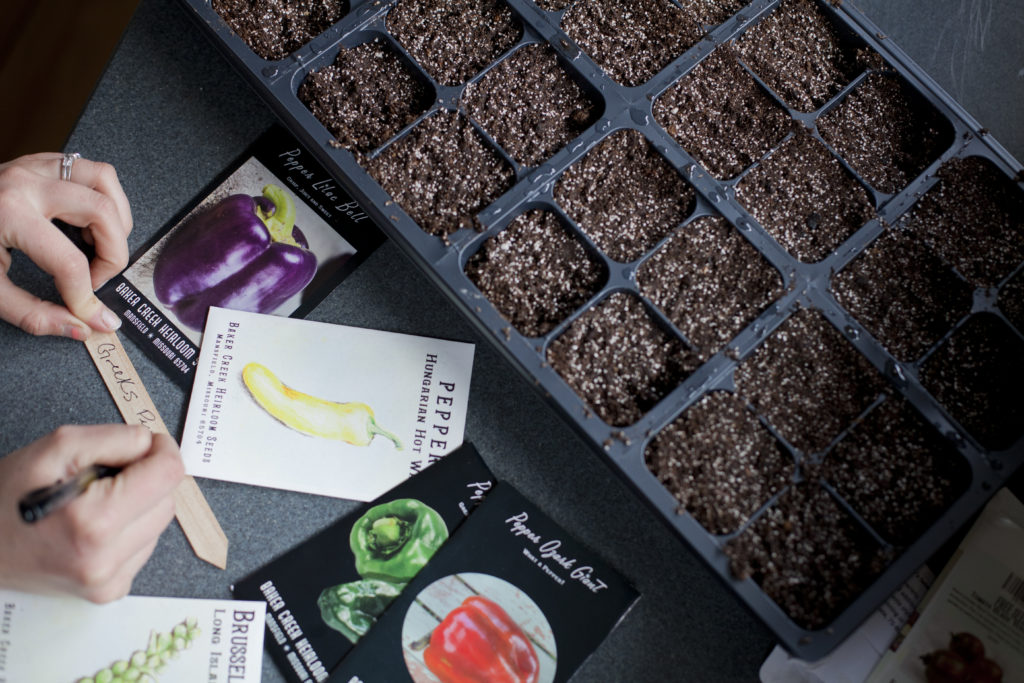
									<p style="text-align: center;"><em><strong>First,</strong></em> you want to choose a planter that has a clear plastic lid that fits over the top.  I stupidly didn&#8217;t photograph it, but it&#8217;s there underneath the black plastic.  When it comes to size of the individual squares, it all depends on what you have available and if you are wanting to transplant later or not.  Due to my lack of preparation and last minute shopping, the nursery I went to only had a 36 cell planter with 1.5&#8243; x 1.5&#8243; squares.  Typically, I would plant them in larger 3&#8243; x 3&#8243; squares so I don&#8217;t have to transplant them as they grow, but I guess it&#8217;s my own fault for lack of preparedness.  This size will work just fine though for starting your seeds.  In fact, I&#8217;ve actually heard that it&#8217;s best to start in smaller size containers because it&#8217;s easier to keep the soil warmer? Looks like I lucked out!</p><p style="text-align: center;"><br />       <em><strong>Second</strong></em>, get your potting soil and throw some in a bucket that you can easily mix in.  Slowly add hot water to the soil, stopping to thoroughly mix before adding anymore.  You don&#8217;t want soaking wet soil, but you do want it to be well moistened.  When you squeeze it in your hands it should hold form and not be dripping wet.  There are some conflicting theories on regular ole&#8217; potting soil versus a seed specific starting soil. Basically, the difference is potting soil will have larger clumps, some sticks maybe, and seed starting soil is very fine.  If you can find the seed starting soil then great, but, yet again I wasn&#8217;t prepared and got just regular potting soil.  Pick out the big chunks and you&#8217;ll be fine, just please don&#8217;t use dirt you dug out of your yard.</p><p style="text-align: center;"><br />       <strong><em>Third, </em></strong>add your well moistened soil to the cells of your planter gently pressing down to fill.  Don&#8217;t jam it in there and overpack it, but you want to apply some pressure to fill it.  Level off the tops of each cell.  </p>								</div>
				</div>
					</div>
		</div>
					</div>
		</section>
				<section class="elementor-section elementor-top-section elementor-element elementor-element-d942dec elementor-section-boxed elementor-section-height-default elementor-section-height-default" data-id="d942dec" data-element_type="section">
						<div class="elementor-container elementor-column-gap-default">
					<div class="elementor-column elementor-col-100 elementor-top-column elementor-element elementor-element-250818b" data-id="250818b" data-element_type="column">
			<div class="elementor-widget-wrap elementor-element-populated">
						<div class="elementor-element elementor-element-357acbe elementor-widget elementor-widget-heading" data-id="357acbe" data-element_type="widget" data-widget_type="heading.default">
				<div class="elementor-widget-container">
					<h2 class="elementor-heading-title elementor-size-medium">Step 2: Plant the Seeds!</h2>				</div>
				</div>
					</div>
		</div>
					</div>
		</section>
				<section class="elementor-section elementor-top-section elementor-element elementor-element-c0125de elementor-section-boxed elementor-section-height-default elementor-section-height-default" data-id="c0125de" data-element_type="section">
						<div class="elementor-container elementor-column-gap-default">
					<div class="elementor-column elementor-col-100 elementor-top-column elementor-element elementor-element-046dff9" data-id="046dff9" data-element_type="column">
			<div class="elementor-widget-wrap elementor-element-populated">
						<div class="elementor-element elementor-element-cc9668a elementor-widget elementor-widget-text-editor" data-id="cc9668a" data-element_type="widget" data-widget_type="text-editor.default">
				<div class="elementor-widget-container">
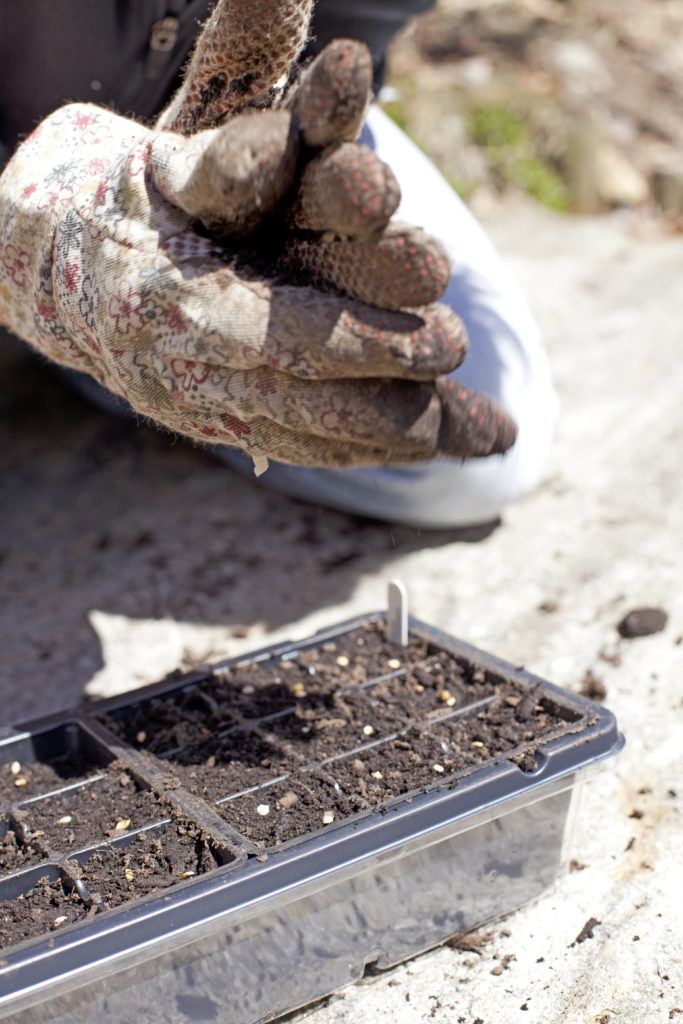
									<p style="text-align: center;">Now that your individual cells are prepared, it&#8217;s time to start planting!  Simply add 2-3 seeds per cell carefully spaced apart.   After your seedlings start to grow, you will thin out the weaker ones leaving one tomato per cell to transplant.  So, don&#8217;t worry about them having to be absolutely perfect as far as a set distance apart.  As you can see from my picture, I put two seeds per, and put them diagonally one each towards a corner.</p>								</div>
				</div>
					</div>
		</div>
					</div>
		</section>
				<section class="elementor-section elementor-top-section elementor-element elementor-element-a9853f0 elementor-section-boxed elementor-section-height-default elementor-section-height-default" data-id="a9853f0" data-element_type="section">
						<div class="elementor-container elementor-column-gap-default">
					<div class="elementor-column elementor-col-100 elementor-top-column elementor-element elementor-element-053a15e" data-id="053a15e" data-element_type="column">
			<div class="elementor-widget-wrap elementor-element-populated">
						<div class="elementor-element elementor-element-ad113fa elementor-widget elementor-widget-heading" data-id="ad113fa" data-element_type="widget" data-widget_type="heading.default">
				<div class="elementor-widget-container">
					<h2 class="elementor-heading-title elementor-size-medium">Step 3: Cover your Seeds</h2>				</div>
				</div>
					</div>
		</div>
					</div>
		</section>
				<section class="elementor-section elementor-top-section elementor-element elementor-element-a532236 elementor-section-boxed elementor-section-height-default elementor-section-height-default" data-id="a532236" data-element_type="section">
						<div class="elementor-container elementor-column-gap-default">
					<div class="elementor-column elementor-col-100 elementor-top-column elementor-element elementor-element-81a89b0" data-id="81a89b0" data-element_type="column">
			<div class="elementor-widget-wrap elementor-element-populated">
						<div class="elementor-element elementor-element-9f73456 elementor-widget elementor-widget-text-editor" data-id="9f73456" data-element_type="widget" data-widget_type="text-editor.default">
				<div class="elementor-widget-container">
									<p style="text-align: center;">So, your seeds are all placed in their cells, it&#8217;s time to cover them with some soil.  If you&#8217;re new to gardening let me forewarn you: this is actually a very critical part.  If you cover the seeds with too thick of a layer of soil, then the seedling will not be able to break out when it germinates.  The common rule of thumb is to plant the seeds 3-5 times the diameter of the seed&#8230;huh?! I don&#8217;t know about you, but I am <strong>not</strong> measuring the depth of each seed with a micrometer! I prefer the eyeball it method instead.  </p><p style="text-align: center;">       Simply grab yourself a handful of soil (and this is where the benefit of seed starting soil comes in as it is light and doesn&#8217;t have any clumps or sticks- if you managed to find some, good for you!) and pick out the larger sticks if you used regular ole&#8217; potting soil like I did.  Now rub it between your hands like you&#8217;re starting a fire the old fashioned way with a stick and some flint rocks- this will break up the soil into a finer consistency.  Don&#8217;t be willy nilly and start moving quickly down the planter, pay close attention to how much soil is covering the cells you&#8217;re focusing on before moving on.  You&#8217;re looking for a thin covering, this is the science of the eyeballing it method. Continue to do this making your way down the planter.  Once finished, go back through with your fingers and <em>lightly</em> tamp the soil down.  Again, you don&#8217;t want to pack it!  But, apply some pressure and tamp it down.<br />       Because you already pre-watered your potting soil, at this point you only need a <em>very light</em>water.  To prevent erosion, use a watering can that has a head with several small holes.  Give it a quick pass or two, so the top layer of soil is wetted (&lt;- not a word but it should be), but not to erode the soil from the seeds.  Cover with clear plastic top to maintain a humid atmosphere.</p>								</div>
				</div>
					</div>
		</div>
					</div>
		</section>
				<section class="elementor-section elementor-top-section elementor-element elementor-element-45a1948 elementor-section-boxed elementor-section-height-default elementor-section-height-default" data-id="45a1948" data-element_type="section">
						<div class="elementor-container elementor-column-gap-default">
					<div class="elementor-column elementor-col-100 elementor-top-column elementor-element elementor-element-9f504ae" data-id="9f504ae" data-element_type="column">
			<div class="elementor-widget-wrap elementor-element-populated">
						<div class="elementor-element elementor-element-733213b elementor-widget elementor-widget-image" data-id="733213b" data-element_type="widget" data-widget_type="image.default">
				<div class="elementor-widget-container">
															<img loading="lazy" decoding="async" width="683" height="1024" src="https://themoderndaysettler.com/wp-content/uploads/2019/02/Planting-Seeds-Dirt-Covering-683x1024.jpg" class="attachment-large size-large wp-image-881" alt="starting-seedlings" srcset="https://themoderndaysettler.com/wp-content/uploads/2019/02/Planting-Seeds-Dirt-Covering-683x1024.jpg 683w, https://themoderndaysettler.com/wp-content/uploads/2019/02/Planting-Seeds-Dirt-Covering-200x300.jpg 200w, https://themoderndaysettler.com/wp-content/uploads/2019/02/Planting-Seeds-Dirt-Covering-768x1152.jpg 768w" sizes="(max-width: 683px) 100vw, 683px" />															</div>
				</div>
					</div>
		</div>
					</div>
		</section>
				<section class="elementor-section elementor-top-section elementor-element elementor-element-66a40f9 elementor-section-boxed elementor-section-height-default elementor-section-height-default" data-id="66a40f9" data-element_type="section">
						<div class="elementor-container elementor-column-gap-default">
					<div class="elementor-column elementor-col-100 elementor-top-column elementor-element elementor-element-c5fb4e1" data-id="c5fb4e1" data-element_type="column">
			<div class="elementor-widget-wrap elementor-element-populated">
						<div class="elementor-element elementor-element-ecb86e8 elementor-widget elementor-widget-heading" data-id="ecb86e8" data-element_type="widget" data-widget_type="heading.default">
				<div class="elementor-widget-container">
					<h2 class="elementor-heading-title elementor-size-medium">Step 4: Set Up Your Environment for Germination</h2>				</div>
				</div>
					</div>
		</div>
					</div>
		</section>
				<section class="elementor-section elementor-top-section elementor-element elementor-element-4c8cc3d elementor-section-boxed elementor-section-height-default elementor-section-height-default" data-id="4c8cc3d" data-element_type="section">
						<div class="elementor-container elementor-column-gap-default">
					<div class="elementor-column elementor-col-100 elementor-top-column elementor-element elementor-element-7900628" data-id="7900628" data-element_type="column">
			<div class="elementor-widget-wrap elementor-element-populated">
						<div class="elementor-element elementor-element-15b9b93 elementor-widget elementor-widget-text-editor" data-id="15b9b93" data-element_type="widget" data-widget_type="text-editor.default">
				<div class="elementor-widget-container">
									<p style="text-align: center;">Now that the planting is over, the most important and crucial part comes to ensure sprouting and strong seedlings.  Germination is a fairly simple concept, and has only a few requirements for success:  </p>								</div>
				</div>
					</div>
		</div>
					</div>
		</section>
				<section class="elementor-section elementor-top-section elementor-element elementor-element-71191a3 elementor-section-boxed elementor-section-height-default elementor-section-height-default" data-id="71191a3" data-element_type="section">
						<div class="elementor-container elementor-column-gap-default">
					<div class="elementor-column elementor-col-100 elementor-top-column elementor-element elementor-element-da45305" data-id="da45305" data-element_type="column">
			<div class="elementor-widget-wrap elementor-element-populated">
						<div class="elementor-element elementor-element-669517b elementor-widget elementor-widget-text-editor" data-id="669517b" data-element_type="widget" data-widget_type="text-editor.default">
				<div class="elementor-widget-container">
									<ul><li><strong>Pressure: </strong>Seeds need pressure from the soil to help trigger the germination process.  Remember how I told you to lightly press down on the soil before and after planting the seeds?  It was for a reason! </li><li><strong>Water</strong><strong>: </strong>Yes, everyone knows this.  But there is a fine line between providing sufficient water, and drowning your seeds in water.  It doesn&#8217;t take a lot (remember how little soil there actually is in there) and the plastic cover will keep the soil wetter (there&#8217;s that word again) longer by creating a humid environment. You can get trays to put under your planter that allow you to add water to, and the soil absorbs water from underneath.  If you find one like this, this is your best option to prevent overwatering but isn&#8217;t necessary.  You may even consider using a spray bottle.   Just make sure to always use warm water, and be very careful not to overwater, as not only may your seeds not germinate, but you could run into a mold issue as well.</li><li><strong>Warmth:</strong>  I can&#8217;t stress this one enough.  The temperature of the soil is <em>so</em> important.  I don&#8217;t keep track of exact temperature, but I do know that my sunroom I leave my planter in tends to cool off at night.  And since soil temperature should be between 75°F-85°F, I lay my planter directly on a heating pad, turn it on in the evening and leave it on all night until the room has warmed up the next morning.  If you&#8217;re fortunate enough to have a warm house and this isn&#8217;t an issue, I&#8217;m envious for more reasons than just starting seeds.</li><li><strong>Sunlight: </strong>For strictly germination purposes of tomatoes, direct sunlight is not necessary.  As long as the planter is in a well lit room, soil is warm, and sufficiently moist, the seeds will sprout.  However, once they do emerge from the soil, sunlight becomes crucial for strong seedlings.</li></ul><p style="text-align: center;">For someone who has never started their own seeds before, this may seem a little overwhelming, but I assure you it is not that difficult.  It is very gratifying growing your own unaltered food, knowing it&#8217;s the way it should be! <strong>Warning:</strong>  it is addicting, and tomatoes may just be the start!</p><p style="text-align: center;">Depending on the type of tomato, and the age of the seeds, you should expect to see seedlings emerge within 7-10 days.  Once your seedlings have popped through the soil <a href="https://themoderndaysettler.com/caring-for-tomato-seedlings/" target="_blank" rel="noopener">learn how to take care of them post germination.  </a></p>								</div>
				</div>
					</div>
		</div>
					</div>
		</section>
				</div>
		]]></content:encoded>
					
					<wfw:commentRss>https://themoderndaysettler.com/starting-heirloom-tomatoes-from-seed/feed/</wfw:commentRss>
			<slash:comments>2</slash:comments>
		
		
			</item>
	</channel>
</rss>