<br />
<b>Notice</b>:  Function _load_textdomain_just_in_time was called <strong>incorrectly</strong>. Translation loading for the <code>burst-statistics</code> domain was triggered too early. This is usually an indicator for some code in the plugin or theme running too early. Translations should be loaded at the <code>init</code> action or later. Please see <a href="https://developer.wordpress.org/advanced-administration/debug/debug-wordpress/">Debugging in WordPress</a> for more information. (This message was added in version 6.7.0.) in <b>/home3/themoew1/public_html/wp-includes/functions.php</b> on line <b>6170</b><br />
<?xml version="1.0" encoding="UTF-8"?><rss version="2.0"
	xmlns:content="http://purl.org/rss/1.0/modules/content/"
	xmlns:wfw="http://wellformedweb.org/CommentAPI/"
	xmlns:dc="http://purl.org/dc/elements/1.1/"
	xmlns:atom="http://www.w3.org/2005/Atom"
	xmlns:sy="http://purl.org/rss/1.0/modules/syndication/"
	xmlns:slash="http://purl.org/rss/1.0/modules/slash/"
	>

<channel>
	<title>In the Garden &#8211; The Modern Day Settler</title>
	<atom:link href="https://themoderndaysettler.com/category/in-the-garden/feed/" rel="self" type="application/rss+xml" />
	<link>https://themoderndaysettler.com</link>
	<description>Homesteading on an Antique New England Farm</description>
	<lastBuildDate>Wed, 10 Jun 2020 12:21:12 +0000</lastBuildDate>
	<language>en-US</language>
	<sy:updatePeriod>
	hourly	</sy:updatePeriod>
	<sy:updateFrequency>
	1	</sy:updateFrequency>
	

<image>
	<url>https://themoderndaysettler.com/wp-content/uploads/2020/02/cropped-pig-icon-21-32x32.png</url>
	<title>In the Garden &#8211; The Modern Day Settler</title>
	<link>https://themoderndaysettler.com</link>
	<width>32</width>
	<height>32</height>
</image> 
	<item>
		<title>Designing a Potager Garden</title>
		<link>https://themoderndaysettler.com/designing-a-potager-garden/</link>
					<comments>https://themoderndaysettler.com/designing-a-potager-garden/#comments</comments>
		
		<dc:creator><![CDATA[The Modern Day Settler]]></dc:creator>
		<pubDate>Mon, 18 May 2020 10:54:01 +0000</pubDate>
				<category><![CDATA[In the Garden]]></category>
		<guid isPermaLink="false">https://themoderndaysettler.com/?p=3199</guid>

					<description><![CDATA[The following post was originally written for the March/April 2019 issue of Grit Magazine. A potager garden, also known as a “kitchen garden,” is historically a French style of gardening that incorporates herbs, fruits, and vegetables with flowers and ornamentals to create a functional, aesthetically pleasing space. Traditionally, these gardens are located right outside the [&#8230;]]]></description>
										<content:encoded><![CDATA[		<div data-elementor-type="wp-post" data-elementor-id="3199" class="elementor elementor-3199">
						<section class="elementor-section elementor-top-section elementor-element elementor-element-c37e684 elementor-section-boxed elementor-section-height-default elementor-section-height-default" data-id="c37e684" data-element_type="section">
						<div class="elementor-container elementor-column-gap-default">
					<div class="elementor-column elementor-col-100 elementor-top-column elementor-element elementor-element-dc32af0" data-id="dc32af0" data-element_type="column">
			<div class="elementor-widget-wrap elementor-element-populated">
						<div class="elementor-element elementor-element-e4e579f elementor-widget elementor-widget-text-editor" data-id="e4e579f" data-element_type="widget" data-widget_type="text-editor.default">
				<div class="elementor-widget-container">
									<p style="text-align: center;"><strong><em>The following post was originally written for the March/April 2019 issue of </em></strong><strong><em><a href="https://www.grit.com/farm-and-garden/design-a-potager-garden-zm0z19mazhoe" target="_blank" rel="noopener">Grit Magazine</a>.</em></strong></p>								</div>
				</div>
					</div>
		</div>
					</div>
		</section>
				<section class="elementor-section elementor-top-section elementor-element elementor-element-1bad46a elementor-section-boxed elementor-section-height-default elementor-section-height-default" data-id="1bad46a" data-element_type="section">
						<div class="elementor-container elementor-column-gap-default">
					<div class="elementor-column elementor-col-100 elementor-top-column elementor-element elementor-element-27abb47" data-id="27abb47" data-element_type="column">
			<div class="elementor-widget-wrap elementor-element-populated">
						<div class="elementor-element elementor-element-b316f31 elementor-widget elementor-widget-text-editor" data-id="b316f31" data-element_type="widget" data-widget_type="text-editor.default">
				<div class="elementor-widget-container">
									<p style="text-align: center;">A potager garden, also known as a “kitchen garden,” is historically a French style of gardening that incorporates herbs, fruits, and vegetables with flowers and ornamentals to create a functional, aesthetically pleasing space. Traditionally, these gardens are located right outside the home and intended to be enjoyed on a daily basis. Walk-throughs allow you to enjoy the garden’s beauty, while also providing quick and easy access to its bounty of food. You can step outside your door and pick fresh vegetables for the evening meal, as well as cut a bouquet of flowers for the table. Because there are no set rules for this type of garden, potagers come in all shapes and sizes, and vary drastically from the freestyle flow of a cottage garden, to the geometric rigidity of a knot garden, and everything in between.</p><p style="text-align: center;">With a growing interest in knowing where our food comes from, the “grow food not lawns” movement is taking hold. Gardeners in urban and country homes alike are choosing gardens over grass. Why waste prime gardening real estate on grass, when you could create an edible landscape? I asked myself just that when I bought my house. Right out my back door was a south-facing lawn, an ideal spot for a garden, yet I was wasting it on grass. I decided it was a misuse of perfect garden space and could better serve as a potager filled with flowers, herbs, and a variety of vegetables to enjoy throughout the growing season.</p>								</div>
				</div>
					</div>
		</div>
					</div>
		</section>
				<section class="elementor-section elementor-top-section elementor-element elementor-element-4ab136c elementor-section-boxed elementor-section-height-default elementor-section-height-default" data-id="4ab136c" data-element_type="section">
						<div class="elementor-container elementor-column-gap-default">
					<div class="elementor-column elementor-col-100 elementor-top-column elementor-element elementor-element-39fa7ee" data-id="39fa7ee" data-element_type="column">
			<div class="elementor-widget-wrap elementor-element-populated">
						<div class="elementor-element elementor-element-e6987b2 elementor-widget elementor-widget-image" data-id="e6987b2" data-element_type="widget" data-widget_type="image.default">
				<div class="elementor-widget-container">
															<img fetchpriority="high" decoding="async" width="1024" height="683" src="https://themoderndaysettler.com/wp-content/uploads/2019/01/Potager-7.9.18-1024x683.jpg" class="attachment-large size-large wp-image-580" alt="" srcset="https://themoderndaysettler.com/wp-content/uploads/2019/01/Potager-7.9.18-1024x683.jpg 1024w, https://themoderndaysettler.com/wp-content/uploads/2019/01/Potager-7.9.18-300x200.jpg 300w, https://themoderndaysettler.com/wp-content/uploads/2019/01/Potager-7.9.18-768x512.jpg 768w, https://themoderndaysettler.com/wp-content/uploads/2019/01/Potager-7.9.18-e1589800197508.jpg 1500w" sizes="(max-width: 1024px) 100vw, 1024px" />															</div>
				</div>
					</div>
		</div>
					</div>
		</section>
				<section class="elementor-section elementor-top-section elementor-element elementor-element-c6f7fd1 elementor-section-boxed elementor-section-height-default elementor-section-height-default" data-id="c6f7fd1" data-element_type="section">
						<div class="elementor-container elementor-column-gap-default">
					<div class="elementor-column elementor-col-100 elementor-top-column elementor-element elementor-element-020b380" data-id="020b380" data-element_type="column">
			<div class="elementor-widget-wrap elementor-element-populated">
						<div class="elementor-element elementor-element-ee0b345 elementor-widget elementor-widget-heading" data-id="ee0b345" data-element_type="widget" data-widget_type="heading.default">
				<div class="elementor-widget-container">
					<h2 class="elementor-heading-title elementor-size-default">Starting Your Design</h2>				</div>
				</div>
					</div>
		</div>
					</div>
		</section>
				<section class="elementor-section elementor-top-section elementor-element elementor-element-96a40b3 elementor-section-boxed elementor-section-height-default elementor-section-height-default" data-id="96a40b3" data-element_type="section">
						<div class="elementor-container elementor-column-gap-default">
					<div class="elementor-column elementor-col-100 elementor-top-column elementor-element elementor-element-e7d3a25" data-id="e7d3a25" data-element_type="column">
			<div class="elementor-widget-wrap elementor-element-populated">
						<div class="elementor-element elementor-element-8d83b1f elementor-widget elementor-widget-text-editor" data-id="8d83b1f" data-element_type="widget" data-widget_type="text-editor.default">
				<div class="elementor-widget-container">
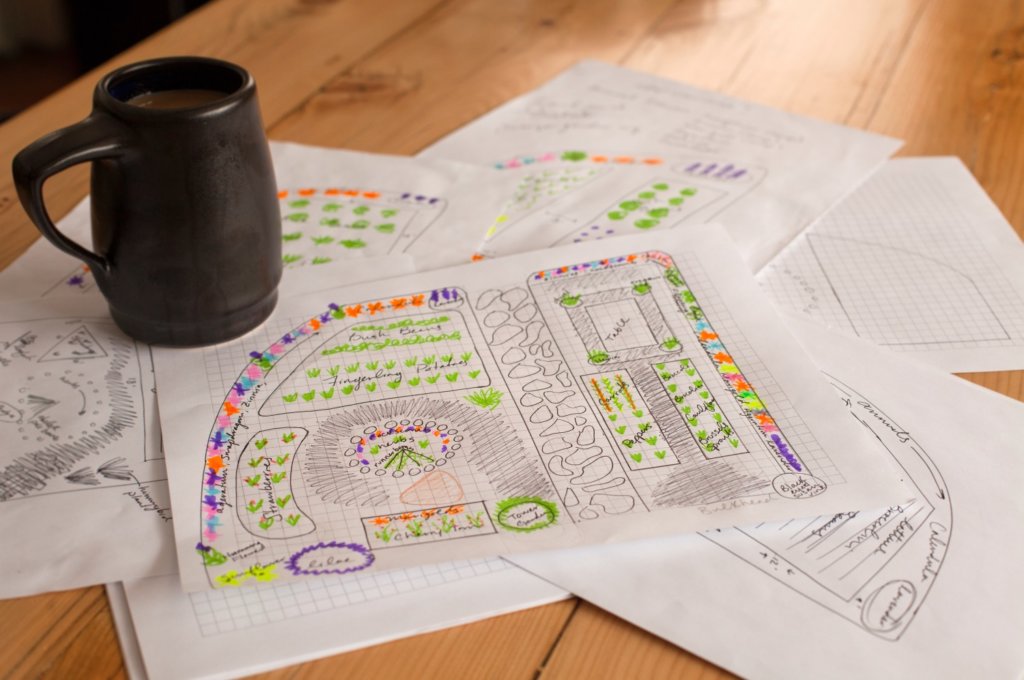
									<p style="text-align: center;">Because there’s no right or wrong way to create a potager garden, this style of gardening is very forgiving for any landscape or budget. Whether the area is flat or hilly, square or irregular, rocky or smooth, the design is adaptable. And if you want to minimize expenses, you can forage what you need to create walkways, bed borders, and other design features.<span style="font-size: 15px;"> </span></p><div id="ReadMore"><p style="text-align: center;">When I decided to make the transition from lawn to garden, the first and most important step was figuring out the overall design. Did I want my potager to be geometric, free-flowing and random, or somewhere in between? What kind of garden beds did I want, and where would I put them? What kind of plants did I want to include, and how would I maximize the garden space?</p><p style="text-align: center;">The design process can feel overwhelming, so the best way to start is by walking through the space and sketching out ideas. While a scale drawing is helpful, you may change your mind after you walk the space and see it physically laid out. Once a rough idea is sketched out, use scrap materials, such as logs, to outline your bed placement, which allows you to easily adjust the design if need be. Your layout will likely change several times before a single plant hits the soil, and it’s important to get a feel for the layout early on. That way, when it comes time to start building and planting, you have it exactly as you want it.</p></div>								</div>
				</div>
					</div>
		</div>
					</div>
		</section>
				<section class="elementor-section elementor-top-section elementor-element elementor-element-8592121 elementor-section-boxed elementor-section-height-default elementor-section-height-default" data-id="8592121" data-element_type="section">
						<div class="elementor-container elementor-column-gap-default">
					<div class="elementor-column elementor-col-100 elementor-top-column elementor-element elementor-element-5cd524c" data-id="5cd524c" data-element_type="column">
			<div class="elementor-widget-wrap elementor-element-populated">
						<div class="elementor-element elementor-element-5d338b0 elementor-widget elementor-widget-image" data-id="5d338b0" data-element_type="widget" data-widget_type="image.default">
				<div class="elementor-widget-container">
															<img decoding="async" width="1024" height="680" src="https://themoderndaysettler.com/wp-content/uploads/2020/04/Potager-Drawing-final_Fotor-1024x680.jpg" class="attachment-large size-large wp-image-3202" alt="" srcset="https://themoderndaysettler.com/wp-content/uploads/2020/04/Potager-Drawing-final_Fotor-1024x680.jpg 1024w, https://themoderndaysettler.com/wp-content/uploads/2020/04/Potager-Drawing-final_Fotor-300x199.jpg 300w, https://themoderndaysettler.com/wp-content/uploads/2020/04/Potager-Drawing-final_Fotor-768x510.jpg 768w, https://themoderndaysettler.com/wp-content/uploads/2020/04/Potager-Drawing-final_Fotor.jpg 1500w" sizes="(max-width: 1024px) 100vw, 1024px" />															</div>
				</div>
					</div>
		</div>
					</div>
		</section>
				<section class="elementor-section elementor-top-section elementor-element elementor-element-9df017e elementor-section-boxed elementor-section-height-default elementor-section-height-default" data-id="9df017e" data-element_type="section">
						<div class="elementor-container elementor-column-gap-default">
					<div class="elementor-column elementor-col-100 elementor-top-column elementor-element elementor-element-7ba709e" data-id="7ba709e" data-element_type="column">
			<div class="elementor-widget-wrap elementor-element-populated">
						<div class="elementor-element elementor-element-a26de48 elementor-widget elementor-widget-heading" data-id="a26de48" data-element_type="widget" data-widget_type="heading.default">
				<div class="elementor-widget-container">
					<h2 class="elementor-heading-title elementor-size-default">Building Beds</h2>				</div>
				</div>
					</div>
		</div>
					</div>
		</section>
				<section class="elementor-section elementor-top-section elementor-element elementor-element-2088a77 elementor-section-boxed elementor-section-height-default elementor-section-height-default" data-id="2088a77" data-element_type="section">
						<div class="elementor-container elementor-column-gap-default">
					<div class="elementor-column elementor-col-100 elementor-top-column elementor-element elementor-element-c351d92" data-id="c351d92" data-element_type="column">
			<div class="elementor-widget-wrap elementor-element-populated">
						<div class="elementor-element elementor-element-78899f3 elementor-widget elementor-widget-text-editor" data-id="78899f3" data-element_type="widget" data-widget_type="text-editor.default">
				<div class="elementor-widget-container">
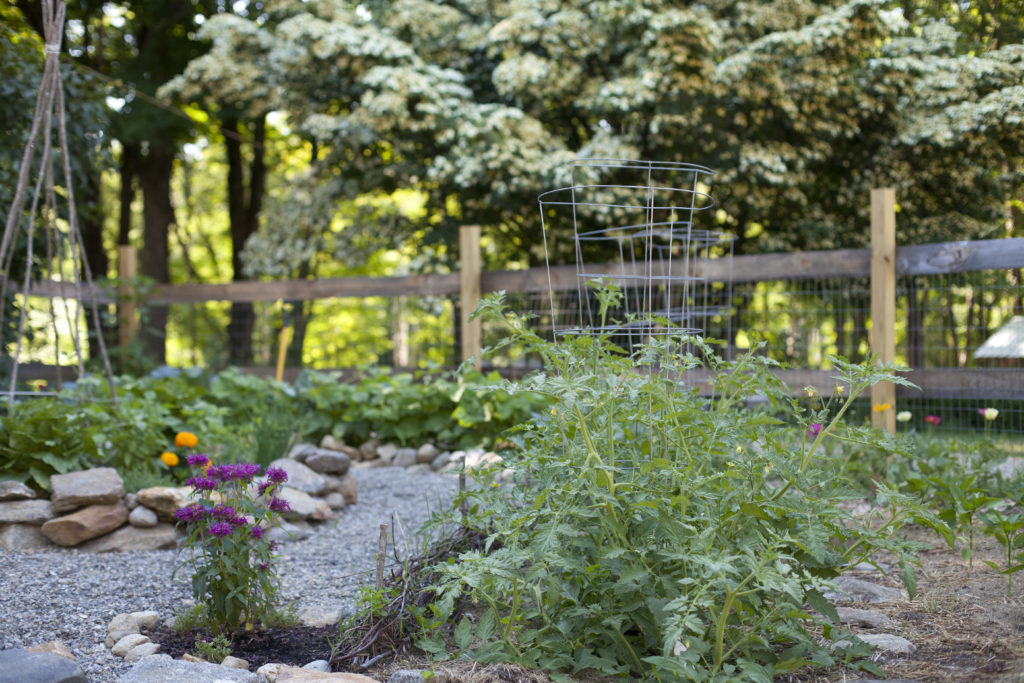
									<p style="text-align: center;">Because potager gardens don’t have set rules, they can encompass various styles of planting within a single garden. Depending on the shape of the area, the landscape, and the amount of available space, you can implement pretty much any gardening style you desire, including raised beds, traditional rows, square-foot gardening, “Back to Eden” gardening, or even containers. Raised and in-ground beds alike can be made into any shape necessary, whether that’s rectangular, circular, L-shaped, or something else entirely.</p><p style="text-align: center;">After deciding on a final design and layout, my potager ended up being a combination of one large, in-ground plot and raised beds of varying sizes and shapes. I found that using long-lasting untreated lumber, such as cedar or redwood, to build the raised beds would be too expensive and began looking into alternate materials. Inspired by the stone walls on my New England farm, I realized I had all of the material I could possibly need to build my raised beds, I just had to collect it. I utilized flat rocks to create mini stone walls for the deeper beds, and mounded smaller, round rocks haphazardly to create a border around the shallower beds. Not only do these beds serve their purpose, but they’ll last forever, and they add beautiful textures and colors to my garden. Rocks are a natural resource for me, but raised beds and bed borders can be made out of many other types of free or cheap materials, depending on what’s readily available to you. Some other options include slab wood, logs, bricks, masonry stone, galvanized metal, and wattle fence.</p>								</div>
				</div>
					</div>
		</div>
					</div>
		</section>
				<section class="elementor-section elementor-top-section elementor-element elementor-element-73d1edd elementor-section-boxed elementor-section-height-default elementor-section-height-default" data-id="73d1edd" data-element_type="section">
						<div class="elementor-container elementor-column-gap-default">
					<div class="elementor-column elementor-col-100 elementor-top-column elementor-element elementor-element-d9c1018" data-id="d9c1018" data-element_type="column">
			<div class="elementor-widget-wrap elementor-element-populated">
						<div class="elementor-element elementor-element-c6aa9ed elementor-widget elementor-widget-image" data-id="c6aa9ed" data-element_type="widget" data-widget_type="image.default">
				<div class="elementor-widget-container">
												<figure class="wp-caption">
										<img decoding="async" width="1024" height="678" src="https://themoderndaysettler.com/wp-content/uploads/2020/04/Potager-Rocks_Fotor-1024x678.jpg" class="attachment-large size-large wp-image-3203" alt="" srcset="https://themoderndaysettler.com/wp-content/uploads/2020/04/Potager-Rocks_Fotor-1024x678.jpg 1024w, https://themoderndaysettler.com/wp-content/uploads/2020/04/Potager-Rocks_Fotor-300x199.jpg 300w, https://themoderndaysettler.com/wp-content/uploads/2020/04/Potager-Rocks_Fotor-768x508.jpg 768w, https://themoderndaysettler.com/wp-content/uploads/2020/04/Potager-Rocks_Fotor.jpg 1500w" sizes="(max-width: 1024px) 100vw, 1024px" />											<figcaption class="widget-image-caption wp-caption-text">Rocks are a free resource to create raised beds</figcaption>
										</figure>
									</div>
				</div>
					</div>
		</div>
					</div>
		</section>
				<section class="elementor-section elementor-top-section elementor-element elementor-element-3dbb81d elementor-section-boxed elementor-section-height-default elementor-section-height-default" data-id="3dbb81d" data-element_type="section">
						<div class="elementor-container elementor-column-gap-default">
					<div class="elementor-column elementor-col-100 elementor-top-column elementor-element elementor-element-c4c3118" data-id="c4c3118" data-element_type="column">
			<div class="elementor-widget-wrap elementor-element-populated">
						<div class="elementor-element elementor-element-132d35d elementor-widget elementor-widget-heading" data-id="132d35d" data-element_type="widget" data-widget_type="heading.default">
				<div class="elementor-widget-container">
					<h2 class="elementor-heading-title elementor-size-default">Creating Walkways</h2>				</div>
				</div>
					</div>
		</div>
					</div>
		</section>
				<section class="elementor-section elementor-top-section elementor-element elementor-element-19f7378 elementor-section-boxed elementor-section-height-default elementor-section-height-default" data-id="19f7378" data-element_type="section">
						<div class="elementor-container elementor-column-gap-default">
					<div class="elementor-column elementor-col-100 elementor-top-column elementor-element elementor-element-5d816a7" data-id="5d816a7" data-element_type="column">
			<div class="elementor-widget-wrap elementor-element-populated">
						<div class="elementor-element elementor-element-ef03f55 elementor-widget elementor-widget-text-editor" data-id="ef03f55" data-element_type="widget" data-widget_type="text-editor.default">
				<div class="elementor-widget-container">
									<p style="text-align: center;">Setting up paths and walkways is one of the key parts of designing a potager garden, as the space is intended to be walked through. The most important thing to consider is that the flow and direction of the pathways should feel natural. Like potager garden shapes, there are endless possibilities as to how paths can be laid out. With a central walkway already in place leading out my back door, I had a focal point to work away from, and that helped guide me. When I laid out my beds and planting areas with logs to help determine their size, I was able to see how easily I could move around and visualize my path through the garden. If something felt unnatural, I adjusted the walking paths to make them wider or narrower, or changed directions altogether. When designing your pathways, remember to consider the size of your gardening equipment, such as wheelbarrows or carts. There are endless materials you can use to create walkways, each bringing different colors and textures to the space. Pea gravel, wood chips, brick, fieldstone, and pavers all make good walkway material.</p>								</div>
				</div>
					</div>
		</div>
					</div>
		</section>
				<section class="elementor-section elementor-top-section elementor-element elementor-element-dc56a0e elementor-section-boxed elementor-section-height-default elementor-section-height-default" data-id="dc56a0e" data-element_type="section">
						<div class="elementor-container elementor-column-gap-default">
					<div class="elementor-column elementor-col-100 elementor-top-column elementor-element elementor-element-2c59aab" data-id="2c59aab" data-element_type="column">
			<div class="elementor-widget-wrap elementor-element-populated">
						<div class="elementor-element elementor-element-c2454c6 elementor-widget elementor-widget-image" data-id="c2454c6" data-element_type="widget" data-widget_type="image.default">
				<div class="elementor-widget-container">
															<img loading="lazy" decoding="async" width="1024" height="672" src="https://themoderndaysettler.com/wp-content/uploads/2020/05/Potager-Walkway-3_Fotor-1024x672.jpg" class="attachment-large size-large wp-image-3396" alt="" srcset="https://themoderndaysettler.com/wp-content/uploads/2020/05/Potager-Walkway-3_Fotor-1024x672.jpg 1024w, https://themoderndaysettler.com/wp-content/uploads/2020/05/Potager-Walkway-3_Fotor-300x197.jpg 300w, https://themoderndaysettler.com/wp-content/uploads/2020/05/Potager-Walkway-3_Fotor-768x504.jpg 768w, https://themoderndaysettler.com/wp-content/uploads/2020/05/Potager-Walkway-3_Fotor.jpg 1500w" sizes="(max-width: 1024px) 100vw, 1024px" />															</div>
				</div>
					</div>
		</div>
					</div>
		</section>
				<section class="elementor-section elementor-top-section elementor-element elementor-element-e0853ee elementor-section-boxed elementor-section-height-default elementor-section-height-default" data-id="e0853ee" data-element_type="section">
						<div class="elementor-container elementor-column-gap-default">
					<div class="elementor-column elementor-col-100 elementor-top-column elementor-element elementor-element-52982e0" data-id="52982e0" data-element_type="column">
			<div class="elementor-widget-wrap elementor-element-populated">
						<div class="elementor-element elementor-element-5e4e49d elementor-widget elementor-widget-heading" data-id="5e4e49d" data-element_type="widget" data-widget_type="heading.default">
				<div class="elementor-widget-container">
					<h2 class="elementor-heading-title elementor-size-default">Strategic Planting</h2>				</div>
				</div>
					</div>
		</div>
					</div>
		</section>
				<section class="elementor-section elementor-top-section elementor-element elementor-element-5ed783d elementor-section-boxed elementor-section-height-default elementor-section-height-default" data-id="5ed783d" data-element_type="section">
						<div class="elementor-container elementor-column-gap-default">
					<div class="elementor-column elementor-col-100 elementor-top-column elementor-element elementor-element-3798d39" data-id="3798d39" data-element_type="column">
			<div class="elementor-widget-wrap elementor-element-populated">
						<div class="elementor-element elementor-element-05f886d elementor-widget elementor-widget-text-editor" data-id="05f886d" data-element_type="widget" data-widget_type="text-editor.default">
				<div class="elementor-widget-container">
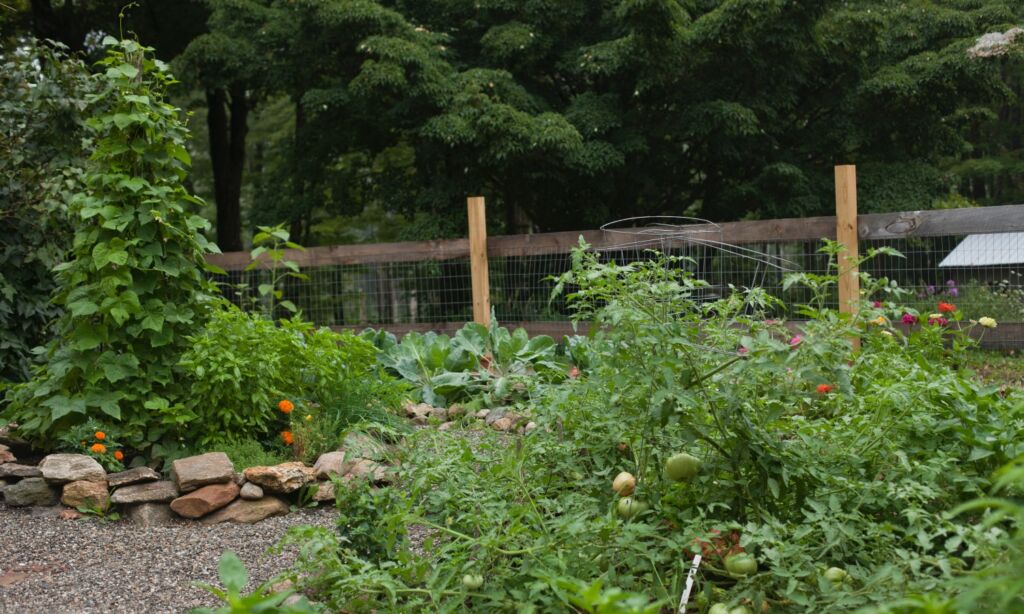
									<p style="text-align: center;">Once you’ve settled on a garden design, it’s time to make a strategy for planting. In addition to vegetables, I knew that I wanted to incorporate some low-maintenance, pollinator-friendly perennials that would fill out over the years and give early spring blooms. I also wanted to include a wide variety of annuals to give a pop of color all summer long. By utilizing “layering” and planting shorter plants in the front of the beds and progressively taller plants in the back, the beds are full of color, texture, and artistic appeal.</p><p style="text-align: center;">Incorporating vertical accents is another way to create depth and interest, and vining plants climbing a trellis, fence line, or pergola can take advantage of vertical growing space. They can also be used as a natural barrier to purposely block something unsightly, such as a bulkhead, propane tank, or electric meter. The same concept can be applied with taller bushes or dwarf trees to create a natural softscape fence line for more privacy in the garden.</p><p style="text-align: center;">When it came to planting vegetables, my main goal was to make the potager as productive as possible, utilizing the space efficiently to maximize yield. To do this, I couldn’t leave any space barren at any point in the growing season. By implementing two main planting methods, I was able to make the most of my space.</p><p style="text-align: center;">■  <b><u>Succession planting</u></b>: Succession planting is the rotation of crops and recycling of space to increase crop production throughout the growing season. Essentially, this planting method allows you to grow as much as possible in a given space by making efficient use of the timing. While it may take some forethought and planning, it’s one way to maximize your garden space and produce as much as possible. Cole crops, such as broccoli and cauliflower, can be planted early in the season and will produce shortly after the last frost date, allowing them to quickly be replaced by short-season vegetables, such as bush beans and slow-bolting lettuce, to produce a mid- to late-summer harvest. Vegetables with a longer growing season, such as tomatoes and peppers, produce at the end of summer and are ready for harvest just in time to be pulled out and replaced with a second planting of fall cole crop seedlings. By utilizing succession planting, you can maximize your yield by ensuring that valuable garden space doesn’t lie barren.</p><p style="text-align: center;">■  <u><b>Companion planting</b></u>: Companion planting is the close pairing of different plants that enhance each other’s growth, or protect each other from pests. The benefits of companion planting include shade regulation, natural supports, improved plant health, weed suppression, and increased soil health. Another benefit of companion planting is that it allows you to plant closer together, maximizing your space. Vegetables that take longer to mature, such as Brussels sprouts, require a considerable amount of space between plants to grow properly. Bush beans, however, make a wonderful companion for them and can be planted in rows on either side of the Brussels sprouts. Not only do the plants benefit from being planted next to each other, but the quick-growing bush beans will utilize the otherwise wasted space and be ready for harvest before the Brussels sprouts plants get too large and shade them. Some other ways to utilize companion planting to increase yield and maximize space are by planting garlic in the fall among strawberry plants; radishes between rows of carrots; onions between rows of peppers; lettuce between rows of broccoli and cauliflower; basil between rows of tomatoes; and calendula among herbs.</p>								</div>
				</div>
					</div>
		</div>
					</div>
		</section>
				<section class="elementor-section elementor-top-section elementor-element elementor-element-3dfe4f0 elementor-section-boxed elementor-section-height-default elementor-section-height-default" data-id="3dfe4f0" data-element_type="section">
						<div class="elementor-container elementor-column-gap-default">
					<div class="elementor-column elementor-col-100 elementor-top-column elementor-element elementor-element-3624524" data-id="3624524" data-element_type="column">
			<div class="elementor-widget-wrap elementor-element-populated">
						<div class="elementor-element elementor-element-2ceda44 elementor-widget elementor-widget-image" data-id="2ceda44" data-element_type="widget" data-widget_type="image.default">
				<div class="elementor-widget-container">
															<img loading="lazy" decoding="async" width="1024" height="614" src="https://themoderndaysettler.com/wp-content/uploads/2020/05/Potager-8_Fotor-1024x614.jpg" class="attachment-large size-large wp-image-3395" alt="" srcset="https://themoderndaysettler.com/wp-content/uploads/2020/05/Potager-8_Fotor-1024x614.jpg 1024w, https://themoderndaysettler.com/wp-content/uploads/2020/05/Potager-8_Fotor-300x180.jpg 300w, https://themoderndaysettler.com/wp-content/uploads/2020/05/Potager-8_Fotor-768x461.jpg 768w, https://themoderndaysettler.com/wp-content/uploads/2020/05/Potager-8_Fotor.jpg 1500w" sizes="(max-width: 1024px) 100vw, 1024px" />															</div>
				</div>
					</div>
		</div>
					</div>
		</section>
				<section class="elementor-section elementor-top-section elementor-element elementor-element-c7c4d1e elementor-section-boxed elementor-section-height-default elementor-section-height-default" data-id="c7c4d1e" data-element_type="section">
						<div class="elementor-container elementor-column-gap-default">
					<div class="elementor-column elementor-col-100 elementor-top-column elementor-element elementor-element-bfb354f" data-id="bfb354f" data-element_type="column">
			<div class="elementor-widget-wrap elementor-element-populated">
						<div class="elementor-element elementor-element-8304adf elementor-widget elementor-widget-text-editor" data-id="8304adf" data-element_type="widget" data-widget_type="text-editor.default">
				<div class="elementor-widget-container">
									<p style="text-align: center;"><strong><em> </em></strong>After I converted the lawn outside my kitchen to a potager garden, it quickly became one of my favorite places to be. In addition to providing me with fresh produce all summer long, it also became a pollinator haven. Endless meals were enjoyed in the small dining area while hummingbirds, butterflies, and honeybees buzzed around in the habitat I had created.</p><p style="text-align: center;">Regardless of the shape, size, or location, the beauty of a potager garden is in how adaptable it is. Whether the space gets full sun, part sun, or full shade, there are plants available that will thrive. No matter your taste, style, or budget, with the right design and some imagination, you can create a garden oasis of your own to be enjoyed year after year. </p>								</div>
				</div>
					</div>
		</div>
					</div>
		</section>
				<section class="elementor-section elementor-top-section elementor-element elementor-element-7b011002 elementor-section-boxed elementor-section-height-default elementor-section-height-default" data-id="7b011002" data-element_type="section">
						<div class="elementor-container elementor-column-gap-default">
					<div class="elementor-column elementor-col-100 elementor-top-column elementor-element elementor-element-1cb3000c" data-id="1cb3000c" data-element_type="column">
			<div class="elementor-widget-wrap elementor-element-populated">
						<div class="elementor-element elementor-element-adf608f elementor-widget elementor-widget-spacer" data-id="adf608f" data-element_type="widget" data-widget_type="spacer.default">
				<div class="elementor-widget-container">
							<div class="elementor-spacer">
			<div class="elementor-spacer-inner"></div>
		</div>
						</div>
				</div>
				<div class="elementor-element elementor-element-1b391ac7 elementor-widget elementor-widget-heading" data-id="1b391ac7" data-element_type="widget" data-widget_type="heading.default">
				<div class="elementor-widget-container">
					<h2 class="elementor-heading-title elementor-size-default">Happy Gardening,</h2>				</div>
				</div>
				<div class="elementor-element elementor-element-28ea1a33 elementor-widget elementor-widget-image" data-id="28ea1a33" data-element_type="widget" data-widget_type="image.default">
				<div class="elementor-widget-container">
															<img decoding="async" src="https://themoderndaysettler.com/wp-content/uploads/elementor/thumbs/Screen-Shot-2019-03-25-at-8.16.29-PM-ooosm0hgfip3rnqrhl5ih78k404sib2xvyxjyk5o8u.png" title="Screen Shot 2019-03-25 at 8.16.29 PM" alt="Screen Shot 2019-03-25 at 8.16.29 PM" loading="lazy" />															</div>
				</div>
					</div>
		</div>
					</div>
		</section>
				</div>
		]]></content:encoded>
					
					<wfw:commentRss>https://themoderndaysettler.com/designing-a-potager-garden/feed/</wfw:commentRss>
			<slash:comments>2</slash:comments>
		
		
			</item>
		<item>
		<title>Natural Weed Killer</title>
		<link>https://themoderndaysettler.com/natural-weed-killer/</link>
					<comments>https://themoderndaysettler.com/natural-weed-killer/#respond</comments>
		
		<dc:creator><![CDATA[The Modern Day Settler]]></dc:creator>
		<pubDate>Sat, 16 Feb 2019 13:18:26 +0000</pubDate>
				<category><![CDATA[In the Garden]]></category>
		<guid isPermaLink="false">https://themoderndaysettler.com/?p=1204</guid>

					<description><![CDATA[I have a problem&#8230;I tend to get a little overzealous and excited, want instant gratification and maaaaaayybe cut corners just so I can get something done. All so I can step back and marvel at my completed project. Sometimes my short cuts come back to bite me. This happened in the early stages of my [&#8230;]]]></description>
										<content:encoded><![CDATA[		<div data-elementor-type="wp-post" data-elementor-id="1204" class="elementor elementor-1204">
						<section class="elementor-section elementor-top-section elementor-element elementor-element-199cf83 elementor-section-boxed elementor-section-height-default elementor-section-height-default" data-id="199cf83" data-element_type="section">
						<div class="elementor-container elementor-column-gap-default">
					<div class="elementor-column elementor-col-100 elementor-top-column elementor-element elementor-element-a21dba4" data-id="a21dba4" data-element_type="column">
			<div class="elementor-widget-wrap elementor-element-populated">
						<div class="elementor-element elementor-element-976159d elementor-widget elementor-widget-text-editor" data-id="976159d" data-element_type="widget" data-widget_type="text-editor.default">
				<div class="elementor-widget-container">
									<p style="text-align: center;">I have a problem&#8230;I tend to get a little overzealous and excited, want instant gratification and maaaaaayybe cut corners just so I can get something done. All so I can step back and marvel at my completed project. Sometimes my short cuts come back to bite me. This happened in the early stages of my Potager. I didn&#8217;t necessarily do things &#8220;wrong&#8221;. I was just so anxious to get my pea gravel and wood chips laid I didn&#8217;t go through all the prep work that I could have done to prevent weeds from popping up. &nbsp;Live and learn.</p>
<p style="text-align: center;">&nbsp; &nbsp; &nbsp;Fact: you may think that several inches of pea gravel and/or wood chips will keep any grass or weeds from popping up, but sadly it does not!&nbsp; I laid my pretty gravel and woodchips, and within a matter of merely a week the grass and weeds crept their way through to say hello.&nbsp; I needed a solution to my problem.&nbsp; An organic way to kill the grass and weeds running rampant through my walkways and along the outside of my beds.&nbsp; Something that could kill some pretty thick and stubborn unwanted greenery, that wasn&#8217;t Roundup.&nbsp; Once again, vinegar to the rescue!!!&nbsp; This incredibly easy and&nbsp;<em>highly</em>&nbsp;effective solution has completely eradicated anything and everything that I have sprayed it on with only one application.&nbsp; It is amazing, and I can&#8217;t shut up about how fantastic it works.&nbsp; So please, ditch the Roundup, buy yourself some vinegar, and destroy those unwanted weeds and grass that are plaguing your beautiful garden the organic way.&nbsp; Read on.&nbsp;</p>								</div>
				</div>
					</div>
		</div>
					</div>
		</section>
				<section class="elementor-section elementor-top-section elementor-element elementor-element-ce2ac30 elementor-section-boxed elementor-section-height-default elementor-section-height-default" data-id="ce2ac30" data-element_type="section">
						<div class="elementor-container elementor-column-gap-default">
					<div class="elementor-column elementor-col-100 elementor-top-column elementor-element elementor-element-5e36711" data-id="5e36711" data-element_type="column">
			<div class="elementor-widget-wrap elementor-element-populated">
						<div class="elementor-element elementor-element-03b9825 elementor-widget elementor-widget-heading" data-id="03b9825" data-element_type="widget" data-widget_type="heading.default">
				<div class="elementor-widget-container">
					<h2 class="elementor-heading-title elementor-size-medium">The Solution</h2>				</div>
				</div>
					</div>
		</div>
					</div>
		</section>
				<section class="elementor-section elementor-top-section elementor-element elementor-element-7219b5d elementor-section-boxed elementor-section-height-default elementor-section-height-default" data-id="7219b5d" data-element_type="section">
						<div class="elementor-container elementor-column-gap-default">
					<div class="elementor-column elementor-col-100 elementor-top-column elementor-element elementor-element-b777c5c" data-id="b777c5c" data-element_type="column">
			<div class="elementor-widget-wrap elementor-element-populated">
						<div class="elementor-element elementor-element-9bc85dc elementor-widget elementor-widget-text-editor" data-id="9bc85dc" data-element_type="widget" data-widget_type="text-editor.default">
				<div class="elementor-widget-container">
									<p>The solution is an incredibly simple mixture of high concentrated vinegar (not the regular white distilled grocery store stuff) and a few pumps of dish soap. That&#8217;s it!  The dish soap helps the vinegar adhere and coat whatever you&#8217;re spraying it on. I use<a href="https://www.amazon.com/30-Pure-Vinegar-Garden-Gallon/dp/B00VVMTM14/ref=sr_1_5?keywords=300%2Bgrain%2Bvinegar&amp;qid=1550352685&amp;s=gateway&amp;sr=8-5&amp;th=1" target="_blank" rel="noopener"> this vinegar</a>, a 30% solution. I tried the grocery store stuff and it just isn&#8217;t strong enough.  It will eventually die after several applications but at that point you&#8217;re going through vinegar like crazy and it just isn&#8217;t worth it.  And on the real thick stuff, forget it. Trust me on this, higher concentration = more potent.  </p><p>    That&#8217;s all there is to it it! You can dilute if you&#8217;d like, but that will decrease potency and may require multiple applications.  I go for the straight vinegar.  I have heard people add salt, but we are a course salt household.  No way that&#8217;s gonna work round&#8217; these parts.  So, take your spray bottle and fill it up with your high concentrated vinegar, add a few pumps of liquid dish soap, give it a gentle shake and that&#8217;s it! Spray on, and watch those weeds shrivel up and die!  Well, not watch but yes you will see results pretty dang fast.  After a few days, I left the dead weeds in my wood chip walkways because they blended right in, but pulled out the dead grass/weeds around the borders of my stone beds as well as what was growing through my wattle fence.  Why didn&#8217;t I just do that before and not spray you ask? I would have ended up pulling out a ton of dirt, which could literally cause my rock beds to fall apart. This way, I preserved the dirt that is acting as a foundation in a lot of places while removing the pesky and unsightly grass and weeds.</p>								</div>
				</div>
					</div>
		</div>
					</div>
		</section>
				<section class="elementor-section elementor-top-section elementor-element elementor-element-37cca8d elementor-section-boxed elementor-section-height-default elementor-section-height-default" data-id="37cca8d" data-element_type="section">
						<div class="elementor-container elementor-column-gap-default">
					<div class="elementor-column elementor-col-100 elementor-top-column elementor-element elementor-element-4c910e0" data-id="4c910e0" data-element_type="column">
			<div class="elementor-widget-wrap elementor-element-populated">
						<div class="elementor-element elementor-element-fde8b9f elementor-widget elementor-widget-image" data-id="fde8b9f" data-element_type="widget" data-widget_type="image.default">
				<div class="elementor-widget-container">
															<img loading="lazy" decoding="async" width="1024" height="683" src="https://themoderndaysettler.com/wp-content/uploads/2019/02/dead-grass-1024x683.jpg" class="attachment-large size-large wp-image-1205" alt="" srcset="https://themoderndaysettler.com/wp-content/uploads/2019/02/dead-grass-1024x683.jpg 1024w, https://themoderndaysettler.com/wp-content/uploads/2019/02/dead-grass-300x200.jpg 300w, https://themoderndaysettler.com/wp-content/uploads/2019/02/dead-grass-768x512.jpg 768w" sizes="(max-width: 1024px) 100vw, 1024px" />															</div>
				</div>
					</div>
		</div>
					</div>
		</section>
				<section class="elementor-section elementor-top-section elementor-element elementor-element-79d5c38 elementor-section-boxed elementor-section-height-default elementor-section-height-default" data-id="79d5c38" data-element_type="section">
						<div class="elementor-container elementor-column-gap-default">
					<div class="elementor-column elementor-col-100 elementor-top-column elementor-element elementor-element-36fac16" data-id="36fac16" data-element_type="column">
			<div class="elementor-widget-wrap elementor-element-populated">
						<div class="elementor-element elementor-element-0c3d551 elementor-widget elementor-widget-heading" data-id="0c3d551" data-element_type="widget" data-widget_type="heading.default">
				<div class="elementor-widget-container">
					<h2 class="elementor-heading-title elementor-size-medium">Spraying Tips</h2>				</div>
				</div>
					</div>
		</div>
					</div>
		</section>
				<section class="elementor-section elementor-top-section elementor-element elementor-element-a907070 elementor-section-boxed elementor-section-height-default elementor-section-height-default" data-id="a907070" data-element_type="section">
						<div class="elementor-container elementor-column-gap-default">
					<div class="elementor-column elementor-col-100 elementor-top-column elementor-element elementor-element-2b05d61" data-id="2b05d61" data-element_type="column">
			<div class="elementor-widget-wrap elementor-element-populated">
						<div class="elementor-element elementor-element-c70911a elementor-widget elementor-widget-text-editor" data-id="c70911a" data-element_type="widget" data-widget_type="text-editor.default">
				<div class="elementor-widget-container">
									<ul><li>I have to say it again, <b>use the high concentrated vinegar! (</b><i>** FYI I am not endorsed by, receiving compensation, etc for recommending this vinegar.<span class="Apple-converted-space">  </span>Knowledge is power, and I want to share mine! If you find another brand, awesome.<span class="Apple-converted-space">  </span>This is just what I found on Amazon Prime that was 30% concentrate)</i></li><li>Plan on spraying when you have at least a day (preferably more) in the forecast without rain.<span class="Apple-converted-space">  </span>You want the vinegar to stay on the weeds as long as possible to absorb and do its thing.<span class="Apple-converted-space">  </span>You don&#8217;t want it to rain on your parade.</li><li>Give it a heavy dose of spray, but you don&#8217;t need to completely saturate it to the point of dripping.<span class="Apple-converted-space">  </span>Which brings me to:</li><li>This stuff kills!!!!! Seriously, it will kill anything you spray it on.<span class="Apple-converted-space">  </span>So use extreme caution when spraying near vegetables, flowers, etc.<span class="Apple-converted-space">  </span>If it&#8217;s windy, maybe it would be best to not spray at that point.<span class="Apple-converted-space">  </span>It&#8217;s always windy here, so I used a piece of cardboard to block my plants from any potential overspray of the vinegar.</li><li>I have heard that this will prevent anything from growing in the spot you sprayed in the future.<span class="Apple-converted-space">  </span>Because I can&#8217;t attest to this yet from personal experience, I can only urge you to be cautious about what and where you spray. For instance, I use it in my walkways and on the weeds growing right around my beds.<span class="Apple-converted-space">  </span>I would never spray it on weeds creeping up <i>in</i> my flower bed because I may want to put a flower there next year!<span class="Apple-converted-space">  </span>I still hand weed those babies.</li><li>If you are going to pull the weeds once they are dead make sure they are very brown and dead first where it will break off at ground level so you don&#8217;t pull up soil in the process.</li></ul>								</div>
				</div>
					</div>
		</div>
					</div>
		</section>
				<section class="elementor-section elementor-top-section elementor-element elementor-element-0354e36 elementor-section-boxed elementor-section-height-default elementor-section-height-default" data-id="0354e36" data-element_type="section">
						<div class="elementor-container elementor-column-gap-default">
					<div class="elementor-column elementor-col-100 elementor-top-column elementor-element elementor-element-5f886e8" data-id="5f886e8" data-element_type="column">
			<div class="elementor-widget-wrap elementor-element-populated">
						<div class="elementor-element elementor-element-5756a57 elementor-widget elementor-widget-text-editor" data-id="5756a57" data-element_type="widget" data-widget_type="text-editor.default">
				<div class="elementor-widget-container">
									<p style="text-align: center;">That&#8217;s all there is to it folks.  Organic doesn&#8217;t have to equate to expensive or ineffective.  This stuff really and truly works!  My Potager is looking top notch and there isn&#8217;t a single unsightly weed thanks to this stuff.  Give it a try and you will be amazed as well.  Happy Gardening!</p>								</div>
				</div>
					</div>
		</div>
					</div>
		</section>
				</div>
		]]></content:encoded>
					
					<wfw:commentRss>https://themoderndaysettler.com/natural-weed-killer/feed/</wfw:commentRss>
			<slash:comments>0</slash:comments>
		
		
			</item>
		<item>
		<title>Thinning Tomato Seedlings</title>
		<link>https://themoderndaysettler.com/thinning-tomato-seedlings/</link>
					<comments>https://themoderndaysettler.com/thinning-tomato-seedlings/#comments</comments>
		
		<dc:creator><![CDATA[The Modern Day Settler]]></dc:creator>
		<pubDate>Mon, 04 Feb 2019 00:00:31 +0000</pubDate>
				<category><![CDATA[Seed Starting]]></category>
		<category><![CDATA[growing tomatoes]]></category>
		<category><![CDATA[growing tomatoes from seed]]></category>
		<category><![CDATA[heirloom tomatoes]]></category>
		<category><![CDATA[heirloom vegetables]]></category>
		<category><![CDATA[seed starting starting seeds]]></category>
		<category><![CDATA[thinning tomatoes]]></category>
		<category><![CDATA[tomato gardening]]></category>
		<category><![CDATA[tomatoes]]></category>
		<guid isPermaLink="false">https://themoderndaysettler.com//?p=939</guid>

					<description><![CDATA[Up until this point in your tomato growing journey you have fussed over and doted on these seedlings as if they were your babies. You started them from seed and nurtured them to help them grow big and strong. Now, I&#8217;m going to tell you that you have to pick the strongest and best ones [&#8230;]]]></description>
										<content:encoded><![CDATA[		<div data-elementor-type="wp-post" data-elementor-id="939" class="elementor elementor-939">
						<section class="elementor-section elementor-top-section elementor-element elementor-element-a92435c elementor-section-boxed elementor-section-height-default elementor-section-height-default" data-id="a92435c" data-element_type="section">
						<div class="elementor-container elementor-column-gap-default">
					<div class="elementor-column elementor-col-100 elementor-top-column elementor-element elementor-element-4ac32ab" data-id="4ac32ab" data-element_type="column">
			<div class="elementor-widget-wrap elementor-element-populated">
						<div class="elementor-element elementor-element-3f93906 elementor-widget elementor-widget-text-editor" data-id="3f93906" data-element_type="widget" data-widget_type="text-editor.default">
				<div class="elementor-widget-container">
									<p style="text-align: center;">Up until this point in your tomato growing journey you have fussed over and doted on these seedlings as if they were your babies. You <a href="https://themoderndaysettler.com/starting-heirloom-tomatoes-from-seed/" target="_blank" rel="noopener">started them from seed</a> and <a href="https://themoderndaysettler.com/caring-for-tomato-seedlings/" target="_blank" rel="noopener">nurtured them</a> to help them grow big and strong. Now, I&#8217;m going to tell you that you have to pick the strongest and best ones and cut out all the rest. Yes, I said it. This process is called thinning your seedlings and it is unfortunately necessary. &nbsp;I know, I know. &nbsp;All that work, all that doting, and now you have to remove the weak ones so that the strong can thrive.</p>
<p style="text-align: center;">Now, honestly I don&#8217;t like doing this. &nbsp;No one does! &nbsp;I hate having to cut out perfectly healthy tomato seedlings because there is another one a little bigger or healthier looking. But guess what? That&#8217;s why you plant so many seeds per cell. &nbsp;You want the best of the best! &nbsp;The purpose of planting 2-3 seeds per cell is to ensure that you end up with one strong healthy seedling in each. &nbsp;Survival of the fittest in action. &nbsp;</p>
<p style="text-align: center;">&nbsp;&nbsp; &nbsp; &nbsp; The process of thinning seedlings is quite easy. &nbsp;You pick the strongest seedling in the cell, and then cut the others at the soil level with scissors. &nbsp;This will allow the strongest to grow without any competition. &nbsp;I do not recommend pulling the seedlings out, as at this point the root systems are very fragile and if the roots are connected to the one you&#8217;re keeping it could pull it up as well. Snipping them off at the soil line is the quickest method and ensures you don&#8217;t cause any damage to the ones you&#8217;re sparing.</p>								</div>
				</div>
					</div>
		</div>
					</div>
		</section>
				<section class="elementor-section elementor-top-section elementor-element elementor-element-6195adf elementor-section-boxed elementor-section-height-default elementor-section-height-default" data-id="6195adf" data-element_type="section">
						<div class="elementor-container elementor-column-gap-default">
					<div class="elementor-column elementor-col-100 elementor-top-column elementor-element elementor-element-5811537" data-id="5811537" data-element_type="column">
			<div class="elementor-widget-wrap elementor-element-populated">
						<div class="elementor-element elementor-element-5cb2a0f elementor-widget elementor-widget-heading" data-id="5cb2a0f" data-element_type="widget" data-widget_type="heading.default">
				<div class="elementor-widget-container">
					<h2 class="elementor-heading-title elementor-size-medium">Who Stays and Who Goes?</h2>				</div>
				</div>
					</div>
		</div>
					</div>
		</section>
				<section class="elementor-section elementor-top-section elementor-element elementor-element-2500347 elementor-section-boxed elementor-section-height-default elementor-section-height-default" data-id="2500347" data-element_type="section">
						<div class="elementor-container elementor-column-gap-default">
					<div class="elementor-column elementor-col-100 elementor-top-column elementor-element elementor-element-f4228ff" data-id="f4228ff" data-element_type="column">
			<div class="elementor-widget-wrap elementor-element-populated">
						<div class="elementor-element elementor-element-379f884 elementor-widget elementor-widget-text-editor" data-id="379f884" data-element_type="widget" data-widget_type="text-editor.default">
				<div class="elementor-widget-container">
									<p style="text-align: center;">So how do you determine which seedlings are weak and which is the strongest? First you want to just go by general look.  If one obviously looks weak or sickly in comparison to the others then snip it.  Aside from that there are some general things to look for if it isn&#8217;t immediately obvious:</p>								</div>
				</div>
					</div>
		</div>
					</div>
		</section>
				<section class="elementor-section elementor-top-section elementor-element elementor-element-f569edc elementor-section-boxed elementor-section-height-default elementor-section-height-default" data-id="f569edc" data-element_type="section">
						<div class="elementor-container elementor-column-gap-default">
					<div class="elementor-column elementor-col-100 elementor-top-column elementor-element elementor-element-08f036d" data-id="08f036d" data-element_type="column">
			<div class="elementor-widget-wrap elementor-element-populated">
						<div class="elementor-element elementor-element-f9a4d71 elementor-widget elementor-widget-heading" data-id="f9a4d71" data-element_type="widget" data-widget_type="heading.default">
				<div class="elementor-widget-container">
					<h2 class="elementor-heading-title elementor-size-medium">Stems</h2>				</div>
				</div>
					</div>
		</div>
					</div>
		</section>
				<section class="elementor-section elementor-top-section elementor-element elementor-element-39d1225 elementor-section-boxed elementor-section-height-default elementor-section-height-default" data-id="39d1225" data-element_type="section">
						<div class="elementor-container elementor-column-gap-default">
					<div class="elementor-column elementor-col-100 elementor-top-column elementor-element elementor-element-aca7a76" data-id="aca7a76" data-element_type="column">
			<div class="elementor-widget-wrap elementor-element-populated">
						<div class="elementor-element elementor-element-445fa03 elementor-widget elementor-widget-text-editor" data-id="445fa03" data-element_type="widget" data-widget_type="text-editor.default">
				<div class="elementor-widget-container">
									<ul><li>If the stem of the seedling looks thin in comparison to some others, then this is a good indication of a weaker seedling.  Thin stemmed seedlings don&#8217;t transplant well outside because they aren&#8217;t strong enough to withstand the elements.</li><li>If the stem tapers as you get closer to the soil line this is an indication of inconsistent watering (over or under) and again is a sign it should be snipped.</li><li>The straightness of the stem is something that I take into consideration as well.  Some have a tendency to grow curved or wavy and I will always choose a straight stem in leu of these.</li><li>If all of your seedlings have thin stems, then I would move what you have left after you thin outside during the day (weather permitting) as much as you possibly can.  Put them in a well lit area but not under direct sun as this can burn the seedlings.  The stems will thicken and get stringer when they are subjected to a breeze.  If you can&#8217;t move them outside, then put a fan on them on low a few hours a day for the same affect.</li></ul>								</div>
				</div>
					</div>
		</div>
					</div>
		</section>
				<section class="elementor-section elementor-top-section elementor-element elementor-element-8c3b489 elementor-section-boxed elementor-section-height-default elementor-section-height-default" data-id="8c3b489" data-element_type="section">
						<div class="elementor-container elementor-column-gap-default">
					<div class="elementor-column elementor-col-100 elementor-top-column elementor-element elementor-element-148fc03" data-id="148fc03" data-element_type="column">
			<div class="elementor-widget-wrap elementor-element-populated">
						<div class="elementor-element elementor-element-42f5673 elementor-widget elementor-widget-heading" data-id="42f5673" data-element_type="widget" data-widget_type="heading.default">
				<div class="elementor-widget-container">
					<h2 class="elementor-heading-title elementor-size-medium">True Leaves</h2>				</div>
				</div>
					</div>
		</div>
					</div>
		</section>
				<section class="elementor-section elementor-top-section elementor-element elementor-element-06cd2db elementor-section-boxed elementor-section-height-default elementor-section-height-default" data-id="06cd2db" data-element_type="section">
						<div class="elementor-container elementor-column-gap-default">
					<div class="elementor-column elementor-col-100 elementor-top-column elementor-element elementor-element-ed5575d" data-id="ed5575d" data-element_type="column">
			<div class="elementor-widget-wrap elementor-element-populated">
						<div class="elementor-element elementor-element-1661695 elementor-widget elementor-widget-text-editor" data-id="1661695" data-element_type="widget" data-widget_type="text-editor.default">
				<div class="elementor-widget-container">
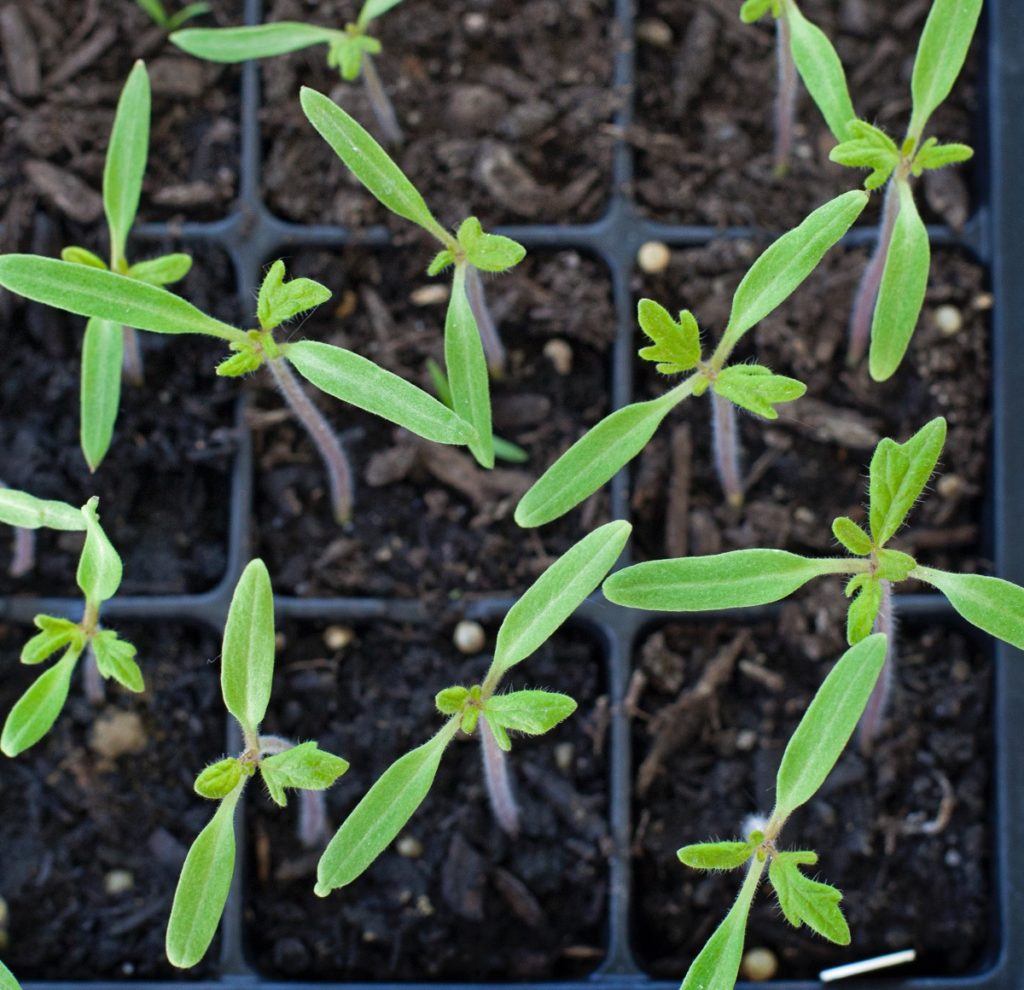
									<p style="text-align: center;">The first oval shaped leaves that appear on a seedling are called cotyledons or &#8220;seed leaves&#8221;.  The second set of leaves that appear after the cotyledons are referred to as the &#8220;true leaves&#8221; .  These leaves look like miniature versions of the plant&#8217;s mature leaf and are more decorative in shape.  </p>								</div>
				</div>
					</div>
		</div>
					</div>
		</section>
				<section class="elementor-section elementor-top-section elementor-element elementor-element-f9d49ab elementor-section-boxed elementor-section-height-default elementor-section-height-default" data-id="f9d49ab" data-element_type="section">
						<div class="elementor-container elementor-column-gap-default">
					<div class="elementor-column elementor-col-100 elementor-top-column elementor-element elementor-element-0695652" data-id="0695652" data-element_type="column">
			<div class="elementor-widget-wrap elementor-element-populated">
						<div class="elementor-element elementor-element-376e46f elementor-widget elementor-widget-image" data-id="376e46f" data-element_type="widget" data-widget_type="image.default">
				<div class="elementor-widget-container">
															<img loading="lazy" decoding="async" width="1024" height="990" src="https://themoderndaysettler.com/wp-content/uploads/2019/02/Tomato-Seedlings-true-1024x990.jpg" class="attachment-large size-large wp-image-1013" alt="thinning-tomato-seedlings" srcset="https://themoderndaysettler.com/wp-content/uploads/2019/02/Tomato-Seedlings-true-1024x990.jpg 1024w, https://themoderndaysettler.com/wp-content/uploads/2019/02/Tomato-Seedlings-true-300x290.jpg 300w, https://themoderndaysettler.com/wp-content/uploads/2019/02/Tomato-Seedlings-true-768x742.jpg 768w, https://themoderndaysettler.com/wp-content/uploads/2019/02/Tomato-Seedlings-true.jpg 1200w" sizes="(max-width: 1024px) 100vw, 1024px" />															</div>
				</div>
					</div>
		</div>
					</div>
		</section>
				<section class="elementor-section elementor-top-section elementor-element elementor-element-5704df1 elementor-section-boxed elementor-section-height-default elementor-section-height-default" data-id="5704df1" data-element_type="section">
						<div class="elementor-container elementor-column-gap-default">
					<div class="elementor-column elementor-col-100 elementor-top-column elementor-element elementor-element-3e23260" data-id="3e23260" data-element_type="column">
			<div class="elementor-widget-wrap elementor-element-populated">
						<div class="elementor-element elementor-element-b9a6573 elementor-widget elementor-widget-text-editor" data-id="b9a6573" data-element_type="widget" data-widget_type="text-editor.default">
				<div class="elementor-widget-container">
									<ul><li>Presence of true leaves is an indication that the seedling is further along and getting the basic requirements to grow.  Their presence alone however doesn&#8217;t necessarily mean it is the strongest seedling.  Seeds germinate at different rates, and it may have been a late bloomer.  The stems should be the primary factor in determining weaker seedlings, then take into consideration the presence of true leaves secondary.  This is why I <em>always</em> wait until the true leaves come in before thinning.</li></ul>								</div>
				</div>
					</div>
		</div>
					</div>
		</section>
				<section class="elementor-section elementor-top-section elementor-element elementor-element-6a70bda elementor-section-boxed elementor-section-height-default elementor-section-height-default" data-id="6a70bda" data-element_type="section">
						<div class="elementor-container elementor-column-gap-default">
					<div class="elementor-column elementor-col-100 elementor-top-column elementor-element elementor-element-afac5f7" data-id="afac5f7" data-element_type="column">
			<div class="elementor-widget-wrap elementor-element-populated">
						<div class="elementor-element elementor-element-6a84e12 elementor-widget elementor-widget-heading" data-id="6a84e12" data-element_type="widget" data-widget_type="heading.default">
				<div class="elementor-widget-container">
					<h2 class="elementor-heading-title elementor-size-medium">Height</h2>				</div>
				</div>
					</div>
		</div>
					</div>
		</section>
				<section class="elementor-section elementor-top-section elementor-element elementor-element-e4a9dfa elementor-section-boxed elementor-section-height-default elementor-section-height-default" data-id="e4a9dfa" data-element_type="section">
						<div class="elementor-container elementor-column-gap-default">
					<div class="elementor-column elementor-col-100 elementor-top-column elementor-element elementor-element-fe04bf0" data-id="fe04bf0" data-element_type="column">
			<div class="elementor-widget-wrap elementor-element-populated">
						<div class="elementor-element elementor-element-63b4d3e elementor-widget elementor-widget-text-editor" data-id="63b4d3e" data-element_type="widget" data-widget_type="text-editor.default">
				<div class="elementor-widget-container">
									<ul><li>This is not something I take into consideration or get too worked up about unless the seedlings are identical in terms of their stem thickness and presence of true leaves. Just because it is taller in no way means it&#8217;s stronger.  Some of my best tomato plants have come from short and stalky seedlings.  In fact, leggy seedlings tend to be very tall, and don&#8217;t do well outside because they&#8217;re weak. </li></ul>								</div>
				</div>
					</div>
		</div>
					</div>
		</section>
				<section class="elementor-section elementor-top-section elementor-element elementor-element-e3e86c8 elementor-section-boxed elementor-section-height-default elementor-section-height-default" data-id="e3e86c8" data-element_type="section">
						<div class="elementor-container elementor-column-gap-default">
					<div class="elementor-column elementor-col-100 elementor-top-column elementor-element elementor-element-2e65a57" data-id="2e65a57" data-element_type="column">
			<div class="elementor-widget-wrap elementor-element-populated">
						<div class="elementor-element elementor-element-17b19e6 elementor-widget elementor-widget-text-editor" data-id="17b19e6" data-element_type="widget" data-widget_type="text-editor.default">
				<div class="elementor-widget-container">
									<p style="text-align: center;">Everyone has heard the saying &#8220;<em>do as I say not as I do</em>&#8220;.  I said that the reason that you plant so many extra seeds is so that you can thin them and get the best of the best.  Yes, this is true and although I do not &#8220;recommend&#8221; separating seedlings because the root systems really are quite fragile and you can end up killing all of the ones you&#8217;re trying to save&#8230; I do it.  Every year I have a few in the same cell that are textbook perfect and I can&#8217;t bring myself to choose just one.  <br />       If you&#8217;re going to go against what I say, and do what I do, just make sure you thoroughly water them first.  This will give you the best chance of separating the root systems while keeping them in tact.  If the soil is dry forget about it, it will crumble away and you&#8217;ll destroy the roots.  I also recommend (and actually do this) that you do not try to separate more than two seedlings.  With the little soil that there is, your chances are not good you will get a clean separation with soil to protect the roots.  If you have two perfect seedlings though and feel like chancing it, I can&#8217;t say anything!  </p>								</div>
				</div>
					</div>
		</div>
					</div>
		</section>
				</div>
		]]></content:encoded>
					
					<wfw:commentRss>https://themoderndaysettler.com/thinning-tomato-seedlings/feed/</wfw:commentRss>
			<slash:comments>7</slash:comments>
		
		
			</item>
		<item>
		<title>Caring for Tomato Seedlings</title>
		<link>https://themoderndaysettler.com/caring-for-tomato-seedlings/</link>
					<comments>https://themoderndaysettler.com/caring-for-tomato-seedlings/#comments</comments>
		
		<dc:creator><![CDATA[The Modern Day Settler]]></dc:creator>
		<pubDate>Tue, 20 Mar 2018 14:31:32 +0000</pubDate>
				<category><![CDATA[Seed Starting]]></category>
		<category><![CDATA[growing tomatoes from seed]]></category>
		<category><![CDATA[heirloom tomatoes]]></category>
		<category><![CDATA[heirloom vegetables]]></category>
		<category><![CDATA[seed starting starting seeds]]></category>
		<category><![CDATA[seedlings]]></category>
		<category><![CDATA[tomato gardening]]></category>
		<category><![CDATA[tomato seedlings]]></category>
		<category><![CDATA[tomatoes]]></category>
		<guid isPermaLink="false">https://themoderndaysettler.com/?p=894</guid>

					<description><![CDATA[Assuming you planted your seeds properly and have kept them nice and warm, you should have beautiful seedlings emerging right about now! Once your seedlings have &#8220;popped&#8221; out of the soil you will want to remove the plastic cover as it has served its purpose. Ã‚Â&#160;If you leave it on too long, the seedlings will [&#8230;]]]></description>
										<content:encoded><![CDATA[		<div data-elementor-type="wp-post" data-elementor-id="894" class="elementor elementor-894 elementor-bc-flex-widget">
						<section class="elementor-section elementor-top-section elementor-element elementor-element-b89543d elementor-section-boxed elementor-section-height-default elementor-section-height-default" data-id="b89543d" data-element_type="section">
						<div class="elementor-container elementor-column-gap-default">
					<div class="elementor-column elementor-col-100 elementor-top-column elementor-element elementor-element-4077def" data-id="4077def" data-element_type="column">
			<div class="elementor-widget-wrap elementor-element-populated">
						<div class="elementor-element elementor-element-f40e20c elementor-widget elementor-widget-text-editor" data-id="f40e20c" data-element_type="widget" data-widget_type="text-editor.default">
				<div class="elementor-widget-container">
									<p style="text-align: center;">Assuming you<a href="https://themoderndaysettler.com/starting-heirloom-tomatoes-from-seed/" target="_blank" rel="noopener"> planted your seeds</a> properly and have kept them nice and warm, you should have beautiful seedlings emerging right about now! Once your seedlings have &#8220;popped&#8221; out of the soil you will want to remove the plastic cover as it has served its purpose.  If you leave it on too long, the seedlings will begin to turn white at the soil line and essentially rot. <br />       If they have not broken through after ten days or so, then a condition wasn&#8217;t properly met whether it be over/under watering, not warm enough soil, or the seeds were planted too deep.  Luckily, you still have time to replant at this point (assuming you still have seeds) to get your plants in the ground in time!  If everything went well though and your seedlings are thriving, now it&#8217;s time to pay attention to the three main factors that affect growth:</p>								</div>
				</div>
					</div>
		</div>
					</div>
		</section>
				<section class="elementor-section elementor-top-section elementor-element elementor-element-3486d49 elementor-section-boxed elementor-section-height-default elementor-section-height-default" data-id="3486d49" data-element_type="section">
						<div class="elementor-container elementor-column-gap-default">
					<div class="elementor-column elementor-col-100 elementor-top-column elementor-element elementor-element-93c2c23" data-id="93c2c23" data-element_type="column">
			<div class="elementor-widget-wrap elementor-element-populated">
						<div class="elementor-element elementor-element-75fc0bb elementor-widget elementor-widget-heading" data-id="75fc0bb" data-element_type="widget" data-widget_type="heading.default">
				<div class="elementor-widget-container">
					<h2 class="elementor-heading-title elementor-size-medium">Light</h2>				</div>
				</div>
					</div>
		</div>
					</div>
		</section>
				<section class="elementor-section elementor-top-section elementor-element elementor-element-ee41e3a elementor-section-boxed elementor-section-height-default elementor-section-height-default" data-id="ee41e3a" data-element_type="section">
						<div class="elementor-container elementor-column-gap-default">
					<div class="elementor-column elementor-col-100 elementor-top-column elementor-element elementor-element-8efa0e8" data-id="8efa0e8" data-element_type="column">
			<div class="elementor-widget-wrap elementor-element-populated">
						<div class="elementor-element elementor-element-13009af elementor-widget elementor-widget-text-editor" data-id="13009af" data-element_type="widget" data-widget_type="text-editor.default">
				<div class="elementor-widget-container">
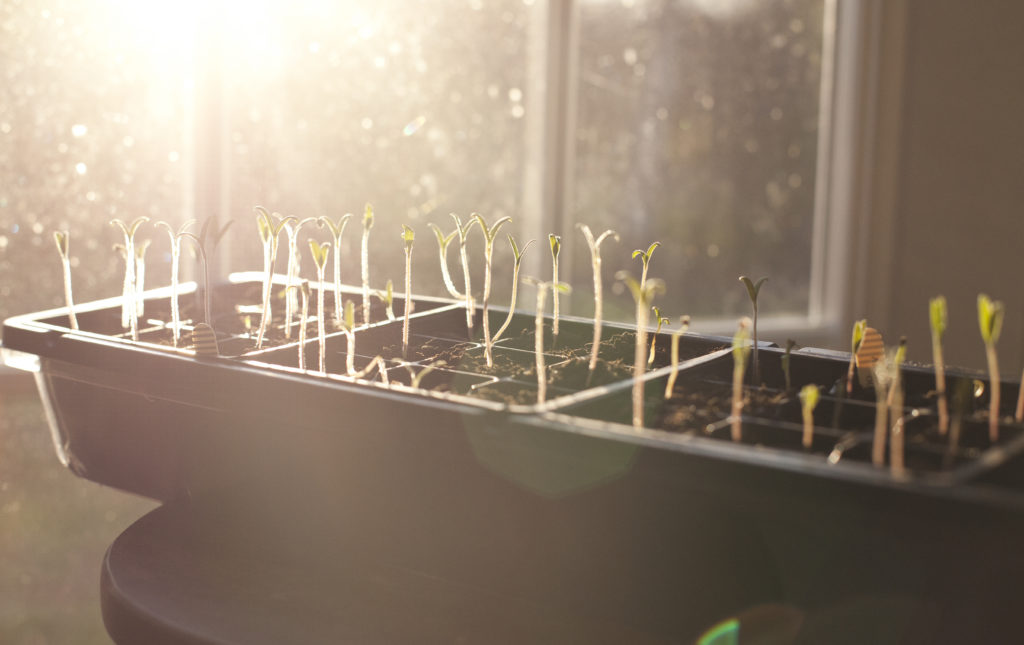
									<p style="text-align: center;"> This is the point where sunlight is the most important environmental factor to set your tomatoes up for success. Some people choose to use artificial growth lights to guarantee that their seedlings will get the maximum amount of light possible.  This is really the only solution if you lack ample natural sunlight.  If this is something you&#8217;re choosing to do, then you should provide 12-15 hours per day being careful that you&#8217;re keeping an eye on how close the lights are to your plants.  You don&#8217;t want to put the light source too close and burn the plants you&#8217;ve nurtured, but you don&#8217;t want them too far away where the plants will &#8220;reach&#8221; for the light and become leggy.<br />        However, if you&#8217;re like me and are too cheap to buy artificial growth lights, but have a south facing window, then you solely rely on natural sunlight.  Although this may not be the most ideal of situations (unless you live in Southern California where it is full sun 360 days a year) it will certainly do the trick! You just want to be sure that the plants are in direct sunlight.  Depending on the size of the window, number of windows, and the general setup of your room, you may want to rotate the planter halfway through daylight hours to ensure even sun exposure.  <br />         Your seedlings need ample sunlight in order to grow strong, thick stems that will set them up to thrive once transplanted outside.  If they are not getting sufficient light, you will find your plants are growing very tall and thin with very little leaves aka &#8220;leggy&#8221;. If you see this happening, you will want to consider getting some grow lights as they aren&#8217;t getting enough light naturally, or gently blow a fan on the seedlings a few hours a day.  This will essentially mimic a breeze, triggering the plants to strengthen up their stems.  But the root of the cause is probably lack of sunlight and there is no substitution for a lack in light.</p><h4 style="text-align: center;">What are &#8220;leggy&#8221; seedlings?</h4><p style="text-align: center;"><em><span style="color: #083752;">Legginess refers to seedlings that grow too tall too fast, with weak stems, and few leaves.  They can often be seen leaning to one side or another, often to the side of their light source.  This is referred to as <strong>&#8220;</strong>reaching<strong>&#8220;</strong> for light. Leggy seedlings typically do not hold up well to transplant outdoors as they have weaker stems that cannot hold up well against the elements such as wind or rain.</span></em></p>								</div>
				</div>
					</div>
		</div>
					</div>
		</section>
				<section class="elementor-section elementor-top-section elementor-element elementor-element-70ee494 elementor-section-boxed elementor-section-height-default elementor-section-height-default" data-id="70ee494" data-element_type="section">
						<div class="elementor-container elementor-column-gap-default">
					<div class="elementor-column elementor-col-100 elementor-top-column elementor-element elementor-element-74bf6b9" data-id="74bf6b9" data-element_type="column">
			<div class="elementor-widget-wrap elementor-element-populated">
						<div class="elementor-element elementor-element-2043ee7 elementor-widget elementor-widget-image" data-id="2043ee7" data-element_type="widget" data-widget_type="image.default">
				<div class="elementor-widget-container">
												<figure class="wp-caption">
										<img loading="lazy" decoding="async" width="1024" height="683" src="https://themoderndaysettler.com/wp-content/uploads/2018/03/Seedlings-Starting-1024x683.jpg" class="attachment-large size-large wp-image-911" alt="starting-seedlings" srcset="https://themoderndaysettler.com/wp-content/uploads/2018/03/Seedlings-Starting-1024x683.jpg 1024w, https://themoderndaysettler.com/wp-content/uploads/2018/03/Seedlings-Starting-300x200.jpg 300w, https://themoderndaysettler.com/wp-content/uploads/2018/03/Seedlings-Starting-768x512.jpg 768w" sizes="(max-width: 1024px) 100vw, 1024px" />											<figcaption class="widget-image-caption wp-caption-text">Seedlings on the ends are " reaching" toward the center light</figcaption>
										</figure>
									</div>
				</div>
					</div>
		</div>
					</div>
		</section>
				<section class="elementor-section elementor-top-section elementor-element elementor-element-91bbc44 elementor-section-boxed elementor-section-height-default elementor-section-height-default" data-id="91bbc44" data-element_type="section">
						<div class="elementor-container elementor-column-gap-default">
					<div class="elementor-column elementor-col-100 elementor-top-column elementor-element elementor-element-731c214" data-id="731c214" data-element_type="column">
			<div class="elementor-widget-wrap elementor-element-populated">
						<div class="elementor-element elementor-element-f5cc2ef elementor-widget elementor-widget-heading" data-id="f5cc2ef" data-element_type="widget" data-widget_type="heading.default">
				<div class="elementor-widget-container">
					<h2 class="elementor-heading-title elementor-size-medium">Soil Temperature</h2>				</div>
				</div>
					</div>
		</div>
					</div>
		</section>
				<section class="elementor-section elementor-top-section elementor-element elementor-element-451ccbf elementor-section-boxed elementor-section-height-default elementor-section-height-default" data-id="451ccbf" data-element_type="section">
						<div class="elementor-container elementor-column-gap-default">
					<div class="elementor-column elementor-col-100 elementor-top-column elementor-element elementor-element-b5f8042" data-id="b5f8042" data-element_type="column">
			<div class="elementor-widget-wrap elementor-element-populated">
						<div class="elementor-element elementor-element-a27976a elementor-widget elementor-widget-text-editor" data-id="a27976a" data-element_type="widget" data-widget_type="text-editor.default">
				<div class="elementor-widget-container">
									<p style="text-align: center;">Soil temperature is another key factor in growing strong, healthy seedlings.  If the soil is very warm like required for germination, plants will wilt and die because they do not have enough leaves to produce energy to hold up to the stress of the heat.  If the soil is too cool, the seedling&#8217;s growth will be stunted and struggle to grow.  <br />        The soil temperature also has an affect on the legginess of the plants.  If the soil is too warm it will cause the seedlings to grow too high, too fast, without developing leaves.  Ideal temperature range is between 60°F-70°F.  As long as your ambient temperature is within this range consistently, the soil temperature will be okay. </p>								</div>
				</div>
					</div>
		</div>
					</div>
		</section>
				<section class="elementor-section elementor-top-section elementor-element elementor-element-6613629 elementor-section-boxed elementor-section-height-default elementor-section-height-default" data-id="6613629" data-element_type="section">
						<div class="elementor-container elementor-column-gap-default">
					<div class="elementor-column elementor-col-100 elementor-top-column elementor-element elementor-element-dbc9d4e" data-id="dbc9d4e" data-element_type="column">
			<div class="elementor-widget-wrap elementor-element-populated">
						<div class="elementor-element elementor-element-3b181fb elementor-widget elementor-widget-heading" data-id="3b181fb" data-element_type="widget" data-widget_type="heading.default">
				<div class="elementor-widget-container">
					<h2 class="elementor-heading-title elementor-size-medium">Water</h2>				</div>
				</div>
					</div>
		</div>
					</div>
		</section>
				<section class="elementor-section elementor-top-section elementor-element elementor-element-f662e67 elementor-section-boxed elementor-section-height-default elementor-section-height-default" data-id="f662e67" data-element_type="section">
						<div class="elementor-container elementor-column-gap-default">
					<div class="elementor-column elementor-col-100 elementor-top-column elementor-element elementor-element-11fec5e" data-id="11fec5e" data-element_type="column">
			<div class="elementor-widget-wrap elementor-element-populated">
						<div class="elementor-element elementor-element-5484946 elementor-widget elementor-widget-text-editor" data-id="5484946" data-element_type="widget" data-widget_type="text-editor.default">
				<div class="elementor-widget-container">
									<p style="text-align: center;">Just like when planting the seeds, careful attention needs to be paid to the watering of the seedlings.  Under watering is just as detrimental as overwatering and the soil should be consistently damp and wetted (as I like to refer to it), without being soaked and water logged.  You should check the seedlings daily, and it may be easier to gently give them a mist of water with a spray bottle each day rather than risk soaking them with a watering can.  <u>Even watering</u> is key here.  You do not want to shock the plants with too dry, then too wet soil.  Keep it consistently damp to keep your seedlings strong and healthy!</p>								</div>
				</div>
					</div>
		</div>
					</div>
		</section>
				<section class="elementor-section elementor-top-section elementor-element elementor-element-c3078a7 elementor-section-boxed elementor-section-height-default elementor-section-height-default" data-id="c3078a7" data-element_type="section">
						<div class="elementor-container elementor-column-gap-default">
					<div class="elementor-column elementor-col-100 elementor-top-column elementor-element elementor-element-214eb1b" data-id="214eb1b" data-element_type="column">
			<div class="elementor-widget-wrap elementor-element-populated">
						<div class="elementor-element elementor-element-ac76d92 elementor-widget elementor-widget-image" data-id="ac76d92" data-element_type="widget" data-widget_type="image.default">
				<div class="elementor-widget-container">
															<img loading="lazy" decoding="async" width="1024" height="645" src="https://themoderndaysettler.com/wp-content/uploads/2019/02/Sunrise-Seedlings-1024x645.jpg" class="attachment-large size-large wp-image-898" alt="starting-seedlings" srcset="https://themoderndaysettler.com/wp-content/uploads/2019/02/Sunrise-Seedlings-1024x645.jpg 1024w, https://themoderndaysettler.com/wp-content/uploads/2019/02/Sunrise-Seedlings-300x189.jpg 300w, https://themoderndaysettler.com/wp-content/uploads/2019/02/Sunrise-Seedlings-768x484.jpg 768w" sizes="(max-width: 1024px) 100vw, 1024px" />															</div>
				</div>
					</div>
		</div>
					</div>
		</section>
				<section class="elementor-section elementor-top-section elementor-element elementor-element-2bc9c46 elementor-section-boxed elementor-section-height-default elementor-section-height-default" data-id="2bc9c46" data-element_type="section">
						<div class="elementor-container elementor-column-gap-default">
					<div class="elementor-column elementor-col-100 elementor-top-column elementor-element elementor-element-f6f30e8" data-id="f6f30e8" data-element_type="column">
			<div class="elementor-widget-wrap elementor-element-populated">
						<div class="elementor-element elementor-element-7a30074 elementor-widget elementor-widget-text-editor" data-id="7a30074" data-element_type="widget" data-widget_type="text-editor.default">
				<div class="elementor-widget-container">
									<p style="text-align: center;">This may all seem daunting, like a lot of work, or like it may not be worth it because the plants seem too finicky.  They really are quite hardy plants and as long as they have plenty of sunlight, a warm soil temperature, and are consistently watered, you will have strong seedlings that will be ready for transplant in a little over a month!<br />         Soon it will be time to <a href="https://themoderndaysettler.com/thinning-tomato-seedlings/" target="_blank" rel="noopener">thin out the weaker plants</a>, transplant to larger containers, and then get ready for the final plant! Stay tuned! </p>								</div>
				</div>
					</div>
		</div>
					</div>
		</section>
				</div>
		]]></content:encoded>
					
					<wfw:commentRss>https://themoderndaysettler.com/caring-for-tomato-seedlings/feed/</wfw:commentRss>
			<slash:comments>1</slash:comments>
		
		
			</item>
		<item>
		<title>Start Heirloom Tomatoes from Seed</title>
		<link>https://themoderndaysettler.com/starting-heirloom-tomatoes-from-seed/</link>
					<comments>https://themoderndaysettler.com/starting-heirloom-tomatoes-from-seed/#comments</comments>
		
		<dc:creator><![CDATA[The Modern Day Settler]]></dc:creator>
		<pubDate>Thu, 01 Mar 2018 08:00:30 +0000</pubDate>
				<category><![CDATA[Seed Starting]]></category>
		<category><![CDATA[growing tomatoes from seed]]></category>
		<category><![CDATA[heirloom tomatoes]]></category>
		<category><![CDATA[heirloom vegetables]]></category>
		<category><![CDATA[seed starting starting seeds]]></category>
		<category><![CDATA[spring]]></category>
		<category><![CDATA[tomato gardening]]></category>
		<category><![CDATA[tomatoes]]></category>
		<guid isPermaLink="false">https://themoderndaysettler.com/?p=877</guid>

					<description><![CDATA[With spring around the corner comes seed starting season! Starting plants from seed really is a simple process, and I start a majority of my plants this way. Most importantly,&#160; &#160; &#160;tomatoes. My family has kept the same two strains of heirloom tomatoes going for about forty years now. &#160;It all started with my great [&#8230;]]]></description>
										<content:encoded><![CDATA[		<div data-elementor-type="wp-post" data-elementor-id="877" class="elementor elementor-877">
						<section class="elementor-section elementor-top-section elementor-element elementor-element-c4c07f0 elementor-section-boxed elementor-section-height-default elementor-section-height-default" data-id="c4c07f0" data-element_type="section">
						<div class="elementor-container elementor-column-gap-default">
					<div class="elementor-column elementor-col-100 elementor-top-column elementor-element elementor-element-bc2343e" data-id="bc2343e" data-element_type="column">
			<div class="elementor-widget-wrap elementor-element-populated">
						<div class="elementor-element elementor-element-137fdd9 elementor-widget elementor-widget-text-editor" data-id="137fdd9" data-element_type="widget" data-widget_type="text-editor.default">
				<div class="elementor-widget-container">
									<div class="paragraph" style="text-align: center;">With spring around the corner comes seed starting season! Starting plants from seed really is a simple process, and I start a majority of my plants this way. Most importantly,<br>&nbsp; &nbsp; &nbsp;tomatoes. My family has kept the same two strains of heirloom tomatoes going for about forty years now. &nbsp;It all started with my great grandmother who bought some plants from an Italian man that brought them over from a trip he took to Italy. &nbsp; So, year after year, the best tomato is reserved, the guts scraped out, and seeds are saved for next year&#8217;s crop. &nbsp;And here we are almost a half century later. &nbsp;<br>&nbsp; &nbsp; &nbsp; So what makes tomatoes heirloom, or any vegetable for that matter? &nbsp;&#8220;Heirloom&#8221; seems to be a buzzword a lot of people throw around like GMO and hybrid, although I&#8217;m not sure most people <em>really</em> know what it means, or how it&#8217;s different than any other vegetable you buy at the supermarket. &nbsp;</div>
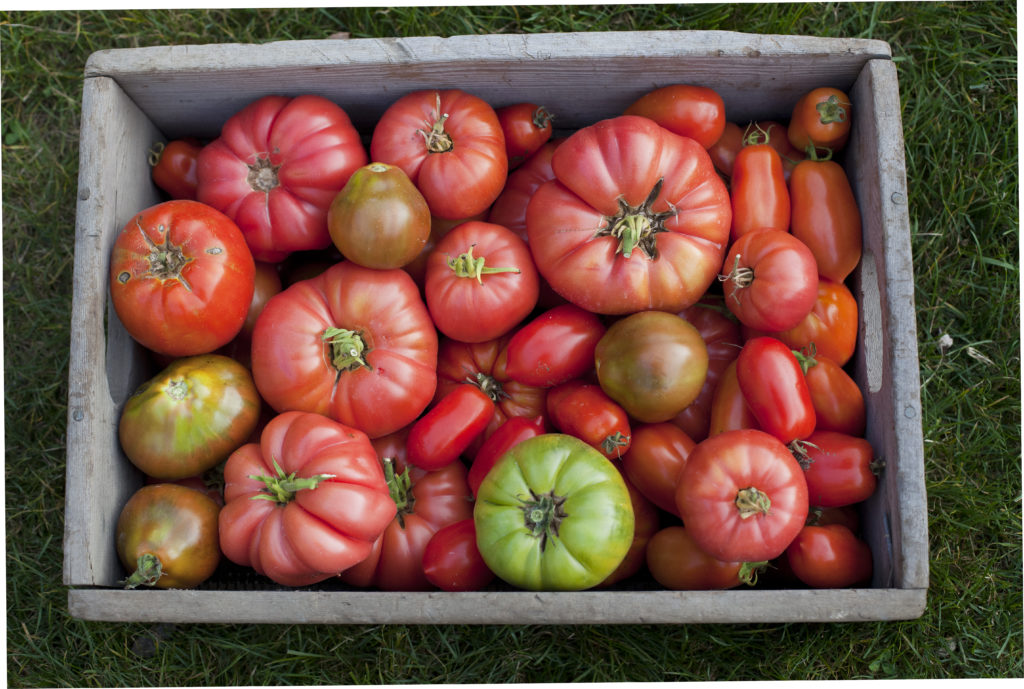
<div class="paragraph" style="text-align: center;">&nbsp;</div>								</div>
				</div>
					</div>
		</div>
					</div>
		</section>
				<section class="elementor-section elementor-top-section elementor-element elementor-element-62edb42 elementor-section-boxed elementor-section-height-default elementor-section-height-default" data-id="62edb42" data-element_type="section">
						<div class="elementor-container elementor-column-gap-default">
					<div class="elementor-column elementor-col-100 elementor-top-column elementor-element elementor-element-73a3b33" data-id="73a3b33" data-element_type="column">
			<div class="elementor-widget-wrap elementor-element-populated">
						<div class="elementor-element elementor-element-535efa7 elementor-widget elementor-widget-image" data-id="535efa7" data-element_type="widget" data-widget_type="image.default">
				<div class="elementor-widget-container">
															<img loading="lazy" decoding="async" width="1024" height="689" src="https://themoderndaysettler.com/wp-content/uploads/2019/02/Tomatoes-Basket-1024x689.jpg" class="attachment-large size-large wp-image-885" alt="" srcset="https://themoderndaysettler.com/wp-content/uploads/2019/02/Tomatoes-Basket-1024x689.jpg 1024w, https://themoderndaysettler.com/wp-content/uploads/2019/02/Tomatoes-Basket-300x202.jpg 300w, https://themoderndaysettler.com/wp-content/uploads/2019/02/Tomatoes-Basket-768x517.jpg 768w" sizes="(max-width: 1024px) 100vw, 1024px" />															</div>
				</div>
					</div>
		</div>
					</div>
		</section>
				<section class="elementor-section elementor-top-section elementor-element elementor-element-8d9ed52 elementor-section-boxed elementor-section-height-default elementor-section-height-default" data-id="8d9ed52" data-element_type="section">
						<div class="elementor-container elementor-column-gap-default">
					<div class="elementor-column elementor-col-100 elementor-top-column elementor-element elementor-element-5e9d0f2" data-id="5e9d0f2" data-element_type="column">
			<div class="elementor-widget-wrap elementor-element-populated">
						<div class="elementor-element elementor-element-a0cc276 elementor-widget elementor-widget-text-editor" data-id="a0cc276" data-element_type="widget" data-widget_type="text-editor.default">
				<div class="elementor-widget-container">
									<p style="text-align: center;"> Heirloom refers to <em>old fashioned</em> varieties, genetically unaltered, where the seeds are reserved each year, and planted the next.  Hybrid vegetables nowadays are selected for traits to maximize the yield per plant, have tougher skins to hold up against long hauls from farm to supermarket, and to be picked green, so they will ripen during transport and on the store shelves.  In theory, this all sounds fine and good, how else is that tomato from Mexico going to make it all the way to Maine if it doesn&#8217;t have a little tougher skin and can&#8217;t be picked before it&#8217;s ripe?<br />       The problem(s) with these hybrids are higher yield plants equate to less nutritional veggies.  Vegetables now versus forty, fifty, sixty years ago are far less nutritious. Because emphasis has been placed on maximizing quantity, the nutritional quality suffers.  Nutrition aside, the skin on these tomatoes is so thick and tough to withstand long distance shipping, that it makes for a tougher flesh as well.  If you&#8217;ve never had a non-hybrid, vine ripened, tender flesh and skinned tomato that bruises if you look at it too hard, then you truly don&#8217;t know what you&#8217;re missing!<br />       The best part is starting your own heirloom tomatoes is not only easy and relatively hands off, but it&#8217;s cheap too!  Here&#8217;s how to do it.</p>								</div>
				</div>
					</div>
		</div>
					</div>
		</section>
				<section class="elementor-section elementor-top-section elementor-element elementor-element-83870bb elementor-section-boxed elementor-section-height-default elementor-section-height-default" data-id="83870bb" data-element_type="section">
						<div class="elementor-container elementor-column-gap-default">
					<div class="elementor-column elementor-col-100 elementor-top-column elementor-element elementor-element-455adcd" data-id="455adcd" data-element_type="column">
			<div class="elementor-widget-wrap elementor-element-populated">
						<div class="elementor-element elementor-element-a0f958e elementor-widget elementor-widget-heading" data-id="a0f958e" data-element_type="widget" data-widget_type="heading.default">
				<div class="elementor-widget-container">
					<h2 class="elementor-heading-title elementor-size-medium">Get Your Seeds</h2>				</div>
				</div>
					</div>
		</div>
					</div>
		</section>
				<section class="elementor-section elementor-top-section elementor-element elementor-element-728754d elementor-section-boxed elementor-section-height-default elementor-section-height-default" data-id="728754d" data-element_type="section">
						<div class="elementor-container elementor-column-gap-default">
					<div class="elementor-column elementor-col-100 elementor-top-column elementor-element elementor-element-51ce133" data-id="51ce133" data-element_type="column">
			<div class="elementor-widget-wrap elementor-element-populated">
						<div class="elementor-element elementor-element-060162a elementor-widget elementor-widget-text-editor" data-id="060162a" data-element_type="widget" data-widget_type="text-editor.default">
				<div class="elementor-widget-container">
									<p style="text-align: center;">Admittedly, this is the area that I have never had to personally experience due to the fact that I use seeds that were reserved from last years crop! But, never fear.  If this is your first year of growing heirlooms, they are quite easy to get your hands on through any online seed catalog.  Not to mention the options are endless for you to choose from! I actually have considered expanding my tomato horizons and growing a few colorful varieties.</p>								</div>
				</div>
					</div>
		</div>
					</div>
		</section>
				<section class="elementor-section elementor-top-section elementor-element elementor-element-11ccf65 elementor-section-boxed elementor-section-height-default elementor-section-height-default" data-id="11ccf65" data-element_type="section">
						<div class="elementor-container elementor-column-gap-default">
					<div class="elementor-column elementor-col-100 elementor-top-column elementor-element elementor-element-26258f5" data-id="26258f5" data-element_type="column">
			<div class="elementor-widget-wrap elementor-element-populated">
						<div class="elementor-element elementor-element-97fec39 elementor-widget elementor-widget-heading" data-id="97fec39" data-element_type="widget" data-widget_type="heading.default">
				<div class="elementor-widget-container">
					<h2 class="elementor-heading-title elementor-size-medium">Get Organized</h2>				</div>
				</div>
					</div>
		</div>
					</div>
		</section>
				<section class="elementor-section elementor-top-section elementor-element elementor-element-1c38dc4 elementor-section-boxed elementor-section-height-default elementor-section-height-default" data-id="1c38dc4" data-element_type="section">
						<div class="elementor-container elementor-column-gap-default">
					<div class="elementor-column elementor-col-100 elementor-top-column elementor-element elementor-element-f8d8f44" data-id="f8d8f44" data-element_type="column">
			<div class="elementor-widget-wrap elementor-element-populated">
						<div class="elementor-element elementor-element-edeb3b4 elementor-widget elementor-widget-text-editor" data-id="edeb3b4" data-element_type="widget" data-widget_type="text-editor.default">
				<div class="elementor-widget-container">
									<p>There are only a few things that are a necessity to grow your heirloom seedlings:</p><ul><li>Seeds</li><li>Planter with individual cells that includes a clear plastic lid (or saran wrap works as well)</li><li>Seed starting soil</li><li>A way to keep the soil warm ( seedling heat pad or if you&#8217;re fortunate enough to have a house that&#8217;s <em>actually</em>​ warm)</li><li>Ample sunlight (via natural sunlight or artificial growing lights)</li></ul>								</div>
				</div>
					</div>
		</div>
					</div>
		</section>
				<section class="elementor-section elementor-top-section elementor-element elementor-element-b01e032 elementor-section-boxed elementor-section-height-default elementor-section-height-default" data-id="b01e032" data-element_type="section">
						<div class="elementor-container elementor-column-gap-default">
					<div class="elementor-column elementor-col-100 elementor-top-column elementor-element elementor-element-ac9ae65" data-id="ac9ae65" data-element_type="column">
			<div class="elementor-widget-wrap elementor-element-populated">
						<div class="elementor-element elementor-element-0379d34 elementor-widget elementor-widget-heading" data-id="0379d34" data-element_type="widget" data-widget_type="heading.default">
				<div class="elementor-widget-container">
					<h2 class="elementor-heading-title elementor-size-medium">Step 1: Prepare Your Planter</h2>				</div>
				</div>
					</div>
		</div>
					</div>
		</section>
				<section class="elementor-section elementor-top-section elementor-element elementor-element-0b617a4 elementor-section-boxed elementor-section-height-default elementor-section-height-default" data-id="0b617a4" data-element_type="section">
						<div class="elementor-container elementor-column-gap-default">
					<div class="elementor-column elementor-col-100 elementor-top-column elementor-element elementor-element-b134610" data-id="b134610" data-element_type="column">
			<div class="elementor-widget-wrap elementor-element-populated">
						<div class="elementor-element elementor-element-185fe88 elementor-widget elementor-widget-image" data-id="185fe88" data-element_type="widget" data-widget_type="image.default">
				<div class="elementor-widget-container">
															<img loading="lazy" decoding="async" width="1024" height="683" src="https://themoderndaysettler.com/wp-content/uploads/2019/02/Seed-Starting-with-Label-1024x683.jpg" class="attachment-large size-large wp-image-880" alt="starting-seedlings" srcset="https://themoderndaysettler.com/wp-content/uploads/2019/02/Seed-Starting-with-Label-1024x683.jpg 1024w, https://themoderndaysettler.com/wp-content/uploads/2019/02/Seed-Starting-with-Label-300x200.jpg 300w, https://themoderndaysettler.com/wp-content/uploads/2019/02/Seed-Starting-with-Label-768x512.jpg 768w" sizes="(max-width: 1024px) 100vw, 1024px" />															</div>
				</div>
					</div>
		</div>
					</div>
		</section>
				<section class="elementor-section elementor-top-section elementor-element elementor-element-99ff943 elementor-section-boxed elementor-section-height-default elementor-section-height-default" data-id="99ff943" data-element_type="section">
						<div class="elementor-container elementor-column-gap-default">
					<div class="elementor-column elementor-col-100 elementor-top-column elementor-element elementor-element-b350f33" data-id="b350f33" data-element_type="column">
			<div class="elementor-widget-wrap elementor-element-populated">
						<div class="elementor-element elementor-element-8f77038 elementor-widget elementor-widget-text-editor" data-id="8f77038" data-element_type="widget" data-widget_type="text-editor.default">
				<div class="elementor-widget-container">
									<p style="text-align: center;"><em><strong>First,</strong></em> you want to choose a planter that has a clear plastic lid that fits over the top.  I stupidly didn&#8217;t photograph it, but it&#8217;s there underneath the black plastic.  When it comes to size of the individual squares, it all depends on what you have available and if you are wanting to transplant later or not.  Due to my lack of preparation and last minute shopping, the nursery I went to only had a 36 cell planter with 1.5&#8243; x 1.5&#8243; squares.  Typically, I would plant them in larger 3&#8243; x 3&#8243; squares so I don&#8217;t have to transplant them as they grow, but I guess it&#8217;s my own fault for lack of preparedness.  This size will work just fine though for starting your seeds.  In fact, I&#8217;ve actually heard that it&#8217;s best to start in smaller size containers because it&#8217;s easier to keep the soil warmer? Looks like I lucked out!</p><p style="text-align: center;"><br />       <em><strong>Second</strong></em>, get your potting soil and throw some in a bucket that you can easily mix in.  Slowly add hot water to the soil, stopping to thoroughly mix before adding anymore.  You don&#8217;t want soaking wet soil, but you do want it to be well moistened.  When you squeeze it in your hands it should hold form and not be dripping wet.  There are some conflicting theories on regular ole&#8217; potting soil versus a seed specific starting soil. Basically, the difference is potting soil will have larger clumps, some sticks maybe, and seed starting soil is very fine.  If you can find the seed starting soil then great, but, yet again I wasn&#8217;t prepared and got just regular potting soil.  Pick out the big chunks and you&#8217;ll be fine, just please don&#8217;t use dirt you dug out of your yard.</p><p style="text-align: center;"><br />       <strong><em>Third, </em></strong>add your well moistened soil to the cells of your planter gently pressing down to fill.  Don&#8217;t jam it in there and overpack it, but you want to apply some pressure to fill it.  Level off the tops of each cell.  </p>								</div>
				</div>
					</div>
		</div>
					</div>
		</section>
				<section class="elementor-section elementor-top-section elementor-element elementor-element-d942dec elementor-section-boxed elementor-section-height-default elementor-section-height-default" data-id="d942dec" data-element_type="section">
						<div class="elementor-container elementor-column-gap-default">
					<div class="elementor-column elementor-col-100 elementor-top-column elementor-element elementor-element-250818b" data-id="250818b" data-element_type="column">
			<div class="elementor-widget-wrap elementor-element-populated">
						<div class="elementor-element elementor-element-357acbe elementor-widget elementor-widget-heading" data-id="357acbe" data-element_type="widget" data-widget_type="heading.default">
				<div class="elementor-widget-container">
					<h2 class="elementor-heading-title elementor-size-medium">Step 2: Plant the Seeds!</h2>				</div>
				</div>
					</div>
		</div>
					</div>
		</section>
				<section class="elementor-section elementor-top-section elementor-element elementor-element-c0125de elementor-section-boxed elementor-section-height-default elementor-section-height-default" data-id="c0125de" data-element_type="section">
						<div class="elementor-container elementor-column-gap-default">
					<div class="elementor-column elementor-col-100 elementor-top-column elementor-element elementor-element-046dff9" data-id="046dff9" data-element_type="column">
			<div class="elementor-widget-wrap elementor-element-populated">
						<div class="elementor-element elementor-element-cc9668a elementor-widget elementor-widget-text-editor" data-id="cc9668a" data-element_type="widget" data-widget_type="text-editor.default">
				<div class="elementor-widget-container">
									<p style="text-align: center;">Now that your individual cells are prepared, it&#8217;s time to start planting!  Simply add 2-3 seeds per cell carefully spaced apart.   After your seedlings start to grow, you will thin out the weaker ones leaving one tomato per cell to transplant.  So, don&#8217;t worry about them having to be absolutely perfect as far as a set distance apart.  As you can see from my picture, I put two seeds per, and put them diagonally one each towards a corner.</p>								</div>
				</div>
					</div>
		</div>
					</div>
		</section>
				<section class="elementor-section elementor-top-section elementor-element elementor-element-a9853f0 elementor-section-boxed elementor-section-height-default elementor-section-height-default" data-id="a9853f0" data-element_type="section">
						<div class="elementor-container elementor-column-gap-default">
					<div class="elementor-column elementor-col-100 elementor-top-column elementor-element elementor-element-053a15e" data-id="053a15e" data-element_type="column">
			<div class="elementor-widget-wrap elementor-element-populated">
						<div class="elementor-element elementor-element-ad113fa elementor-widget elementor-widget-heading" data-id="ad113fa" data-element_type="widget" data-widget_type="heading.default">
				<div class="elementor-widget-container">
					<h2 class="elementor-heading-title elementor-size-medium">Step 3: Cover your Seeds</h2>				</div>
				</div>
					</div>
		</div>
					</div>
		</section>
				<section class="elementor-section elementor-top-section elementor-element elementor-element-a532236 elementor-section-boxed elementor-section-height-default elementor-section-height-default" data-id="a532236" data-element_type="section">
						<div class="elementor-container elementor-column-gap-default">
					<div class="elementor-column elementor-col-100 elementor-top-column elementor-element elementor-element-81a89b0" data-id="81a89b0" data-element_type="column">
			<div class="elementor-widget-wrap elementor-element-populated">
						<div class="elementor-element elementor-element-9f73456 elementor-widget elementor-widget-text-editor" data-id="9f73456" data-element_type="widget" data-widget_type="text-editor.default">
				<div class="elementor-widget-container">
									<p style="text-align: center;">So, your seeds are all placed in their cells, it&#8217;s time to cover them with some soil.  If you&#8217;re new to gardening let me forewarn you: this is actually a very critical part.  If you cover the seeds with too thick of a layer of soil, then the seedling will not be able to break out when it germinates.  The common rule of thumb is to plant the seeds 3-5 times the diameter of the seed&#8230;huh?! I don&#8217;t know about you, but I am <strong>not</strong> measuring the depth of each seed with a micrometer! I prefer the eyeball it method instead.  </p><p style="text-align: center;">       Simply grab yourself a handful of soil (and this is where the benefit of seed starting soil comes in as it is light and doesn&#8217;t have any clumps or sticks- if you managed to find some, good for you!) and pick out the larger sticks if you used regular ole&#8217; potting soil like I did.  Now rub it between your hands like you&#8217;re starting a fire the old fashioned way with a stick and some flint rocks- this will break up the soil into a finer consistency.  Don&#8217;t be willy nilly and start moving quickly down the planter, pay close attention to how much soil is covering the cells you&#8217;re focusing on before moving on.  You&#8217;re looking for a thin covering, this is the science of the eyeballing it method. Continue to do this making your way down the planter.  Once finished, go back through with your fingers and <em>lightly</em> tamp the soil down.  Again, you don&#8217;t want to pack it!  But, apply some pressure and tamp it down.<br />       Because you already pre-watered your potting soil, at this point you only need a <em>very light</em>water.  To prevent erosion, use a watering can that has a head with several small holes.  Give it a quick pass or two, so the top layer of soil is wetted (&lt;- not a word but it should be), but not to erode the soil from the seeds.  Cover with clear plastic top to maintain a humid atmosphere.</p>								</div>
				</div>
					</div>
		</div>
					</div>
		</section>
				<section class="elementor-section elementor-top-section elementor-element elementor-element-45a1948 elementor-section-boxed elementor-section-height-default elementor-section-height-default" data-id="45a1948" data-element_type="section">
						<div class="elementor-container elementor-column-gap-default">
					<div class="elementor-column elementor-col-100 elementor-top-column elementor-element elementor-element-9f504ae" data-id="9f504ae" data-element_type="column">
			<div class="elementor-widget-wrap elementor-element-populated">
						<div class="elementor-element elementor-element-733213b elementor-widget elementor-widget-image" data-id="733213b" data-element_type="widget" data-widget_type="image.default">
				<div class="elementor-widget-container">
															<img loading="lazy" decoding="async" width="683" height="1024" src="https://themoderndaysettler.com/wp-content/uploads/2019/02/Planting-Seeds-Dirt-Covering-683x1024.jpg" class="attachment-large size-large wp-image-881" alt="starting-seedlings" srcset="https://themoderndaysettler.com/wp-content/uploads/2019/02/Planting-Seeds-Dirt-Covering-683x1024.jpg 683w, https://themoderndaysettler.com/wp-content/uploads/2019/02/Planting-Seeds-Dirt-Covering-200x300.jpg 200w, https://themoderndaysettler.com/wp-content/uploads/2019/02/Planting-Seeds-Dirt-Covering-768x1152.jpg 768w" sizes="(max-width: 683px) 100vw, 683px" />															</div>
				</div>
					</div>
		</div>
					</div>
		</section>
				<section class="elementor-section elementor-top-section elementor-element elementor-element-66a40f9 elementor-section-boxed elementor-section-height-default elementor-section-height-default" data-id="66a40f9" data-element_type="section">
						<div class="elementor-container elementor-column-gap-default">
					<div class="elementor-column elementor-col-100 elementor-top-column elementor-element elementor-element-c5fb4e1" data-id="c5fb4e1" data-element_type="column">
			<div class="elementor-widget-wrap elementor-element-populated">
						<div class="elementor-element elementor-element-ecb86e8 elementor-widget elementor-widget-heading" data-id="ecb86e8" data-element_type="widget" data-widget_type="heading.default">
				<div class="elementor-widget-container">
					<h2 class="elementor-heading-title elementor-size-medium">Step 4: Set Up Your Environment for Germination</h2>				</div>
				</div>
					</div>
		</div>
					</div>
		</section>
				<section class="elementor-section elementor-top-section elementor-element elementor-element-4c8cc3d elementor-section-boxed elementor-section-height-default elementor-section-height-default" data-id="4c8cc3d" data-element_type="section">
						<div class="elementor-container elementor-column-gap-default">
					<div class="elementor-column elementor-col-100 elementor-top-column elementor-element elementor-element-7900628" data-id="7900628" data-element_type="column">
			<div class="elementor-widget-wrap elementor-element-populated">
						<div class="elementor-element elementor-element-15b9b93 elementor-widget elementor-widget-text-editor" data-id="15b9b93" data-element_type="widget" data-widget_type="text-editor.default">
				<div class="elementor-widget-container">
									<p style="text-align: center;">Now that the planting is over, the most important and crucial part comes to ensure sprouting and strong seedlings.  Germination is a fairly simple concept, and has only a few requirements for success:  </p>								</div>
				</div>
					</div>
		</div>
					</div>
		</section>
				<section class="elementor-section elementor-top-section elementor-element elementor-element-71191a3 elementor-section-boxed elementor-section-height-default elementor-section-height-default" data-id="71191a3" data-element_type="section">
						<div class="elementor-container elementor-column-gap-default">
					<div class="elementor-column elementor-col-100 elementor-top-column elementor-element elementor-element-da45305" data-id="da45305" data-element_type="column">
			<div class="elementor-widget-wrap elementor-element-populated">
						<div class="elementor-element elementor-element-669517b elementor-widget elementor-widget-text-editor" data-id="669517b" data-element_type="widget" data-widget_type="text-editor.default">
				<div class="elementor-widget-container">
									<ul><li><strong>Pressure: </strong>Seeds need pressure from the soil to help trigger the germination process.  Remember how I told you to lightly press down on the soil before and after planting the seeds?  It was for a reason! </li><li><strong>Water</strong><strong>: </strong>Yes, everyone knows this.  But there is a fine line between providing sufficient water, and drowning your seeds in water.  It doesn&#8217;t take a lot (remember how little soil there actually is in there) and the plastic cover will keep the soil wetter (there&#8217;s that word again) longer by creating a humid environment. You can get trays to put under your planter that allow you to add water to, and the soil absorbs water from underneath.  If you find one like this, this is your best option to prevent overwatering but isn&#8217;t necessary.  You may even consider using a spray bottle.   Just make sure to always use warm water, and be very careful not to overwater, as not only may your seeds not germinate, but you could run into a mold issue as well.</li><li><strong>Warmth:</strong>  I can&#8217;t stress this one enough.  The temperature of the soil is <em>so</em> important.  I don&#8217;t keep track of exact temperature, but I do know that my sunroom I leave my planter in tends to cool off at night.  And since soil temperature should be between 75°F-85°F, I lay my planter directly on a heating pad, turn it on in the evening and leave it on all night until the room has warmed up the next morning.  If you&#8217;re fortunate enough to have a warm house and this isn&#8217;t an issue, I&#8217;m envious for more reasons than just starting seeds.</li><li><strong>Sunlight: </strong>For strictly germination purposes of tomatoes, direct sunlight is not necessary.  As long as the planter is in a well lit room, soil is warm, and sufficiently moist, the seeds will sprout.  However, once they do emerge from the soil, sunlight becomes crucial for strong seedlings.</li></ul><p style="text-align: center;">For someone who has never started their own seeds before, this may seem a little overwhelming, but I assure you it is not that difficult.  It is very gratifying growing your own unaltered food, knowing it&#8217;s the way it should be! <strong>Warning:</strong>  it is addicting, and tomatoes may just be the start!</p><p style="text-align: center;">Depending on the type of tomato, and the age of the seeds, you should expect to see seedlings emerge within 7-10 days.  Once your seedlings have popped through the soil <a href="https://themoderndaysettler.com/caring-for-tomato-seedlings/" target="_blank" rel="noopener">learn how to take care of them post germination.  </a></p>								</div>
				</div>
					</div>
		</div>
					</div>
		</section>
				</div>
		]]></content:encoded>
					
					<wfw:commentRss>https://themoderndaysettler.com/starting-heirloom-tomatoes-from-seed/feed/</wfw:commentRss>
			<slash:comments>2</slash:comments>
		
		
			</item>
	</channel>
</rss>