<br />
<b>Notice</b>:  Function _load_textdomain_just_in_time was called <strong>incorrectly</strong>. Translation loading for the <code>insert-headers-and-footers</code> domain was triggered too early. This is usually an indicator for some code in the plugin or theme running too early. Translations should be loaded at the <code>init</code> action or later. Please see <a href="https://developer.wordpress.org/advanced-administration/debug/debug-wordpress/">Debugging in WordPress</a> for more information. (This message was added in version 6.7.0.) in <b>/home3/themoew1/public_html/wp-includes/functions.php</b> on line <b>6131</b><br />
<br />
<b>Notice</b>:  Function _load_textdomain_just_in_time was called <strong>incorrectly</strong>. Translation loading for the <code>burst-statistics</code> domain was triggered too early. This is usually an indicator for some code in the plugin or theme running too early. Translations should be loaded at the <code>init</code> action or later. Please see <a href="https://developer.wordpress.org/advanced-administration/debug/debug-wordpress/">Debugging in WordPress</a> for more information. (This message was added in version 6.7.0.) in <b>/home3/themoew1/public_html/wp-includes/functions.php</b> on line <b>6131</b><br />
<?xml version="1.0" encoding="UTF-8"?><rss version="2.0"
	xmlns:content="http://purl.org/rss/1.0/modules/content/"
	xmlns:wfw="http://wellformedweb.org/CommentAPI/"
	xmlns:dc="http://purl.org/dc/elements/1.1/"
	xmlns:atom="http://www.w3.org/2005/Atom"
	xmlns:sy="http://purl.org/rss/1.0/modules/syndication/"
	xmlns:slash="http://purl.org/rss/1.0/modules/slash/"
	>

<channel>
	<title>leaf lard &#8211; The Modern Day Settler</title>
	<atom:link href="https://themoderndaysettler.com/tag/leaf-lard/feed/" rel="self" type="application/rss+xml" />
	<link>https://themoderndaysettler.com</link>
	<description>Homesteading on an Antique New England Farm</description>
	<lastBuildDate>Wed, 06 Apr 2022 12:33:17 +0000</lastBuildDate>
	<language>en-US</language>
	<sy:updatePeriod>
	hourly	</sy:updatePeriod>
	<sy:updateFrequency>
	1	</sy:updateFrequency>
	

<image>
	<url>https://themoderndaysettler.com/wp-content/uploads/2020/02/cropped-pig-icon-21-32x32.png</url>
	<title>leaf lard &#8211; The Modern Day Settler</title>
	<link>https://themoderndaysettler.com</link>
	<width>32</width>
	<height>32</height>
</image> 
	<item>
		<title>For the Love of Lard</title>
		<link>https://themoderndaysettler.com/for-the-love-of-lard/</link>
					<comments>https://themoderndaysettler.com/for-the-love-of-lard/#comments</comments>
		
		<dc:creator><![CDATA[The Modern Day Settler]]></dc:creator>
		<pubDate>Sun, 06 Jan 2019 18:31:46 +0000</pubDate>
				<category><![CDATA[In the Kitchen]]></category>
		<category><![CDATA[back fat]]></category>
		<category><![CDATA[healthy fats]]></category>
		<category><![CDATA[lard]]></category>
		<category><![CDATA[leaf lard]]></category>
		<category><![CDATA[pastured pork]]></category>
		<category><![CDATA[pork lard]]></category>
		<category><![CDATA[rendered lard]]></category>
		<category><![CDATA[rendering lard]]></category>
		<guid isPermaLink="false">https://themoderndaysettler.com/?p=625</guid>

					<description><![CDATA[It&#8217;s about time I finally wrote a blog post about my sweet sweet lard. It is no secret that I have a&#160;serious&#160;love for lard and how magical it is. A healthy animal fat that has been villainized due to the shift away from pastured pork to commercial factory farming has resulted in a general opinion [&#8230;]]]></description>
										<content:encoded><![CDATA[		<div data-elementor-type="wp-post" data-elementor-id="625" class="elementor elementor-625">
						<section class="elementor-section elementor-top-section elementor-element elementor-element-152c5eb0 elementor-section-boxed elementor-section-height-default elementor-section-height-default" data-id="152c5eb0" data-element_type="section">
						<div class="elementor-container elementor-column-gap-default">
					<div class="elementor-column elementor-col-100 elementor-top-column elementor-element elementor-element-5fcf1489" data-id="5fcf1489" data-element_type="column">
			<div class="elementor-widget-wrap elementor-element-populated">
						<div class="elementor-element elementor-element-5366277e elementor-widget elementor-widget-text-editor" data-id="5366277e" data-element_type="widget" data-widget_type="text-editor.default">
				<div class="elementor-widget-container">
									<p style="text-align: center;">It&#8217;s about time I finally wrote a blog post about my sweet sweet lard. It is no secret that I have a&nbsp;<em>serious</em>&nbsp;love for lard and how magical it is. A healthy animal fat that has been villainized due to the shift away from pastured pork to commercial factory farming has resulted in a general opinion that lard is an evil fat. Now, let me be clear. &nbsp;When I am speaking about all of the benefits of pork fat/lard, I am referring to&nbsp;<a href="https://themoderndaysettler.com/finishing-pigs-in-the-fall/" target="_blank" rel="noopener"><strong>pastured pork</strong></a>. &nbsp;Pigs raised outside, in the sun, rooting around in the soil and eating greens as nature intended. &nbsp;This does not apply to feedlot raised, barn stall raised, confined pork&#8230;because yes that is the villain. &nbsp;<br>&nbsp; &nbsp; &nbsp; &nbsp; &nbsp;Lard rendered from pastured pork is a healthy and stable animal fat. There is a perceived idea that lard is an artery clogging, heart attack causing, unhealthy fat. &nbsp;Yes, this is the case when you are talking about pigs raised in confined factory operations (CFO) or similar housing. &nbsp;But, we aren&#8217;t about those pigs here! &nbsp;Pigs store the vitamin D they get from spending all day in the sun and foraging on greens in their fat. &nbsp;Once rendered into lard, only a couple tablespoons a day can provide you with your daily requirement of liquid sun. &nbsp;&nbsp;Lard is also high in fatty acids such as oleic acid, and when you raise <u>pastured pigs finished on acorns</u>, the high level of omega-3&#8217;s they get from the acorns are stored in the fat as well! Lard also has a well balanced ratio of saturated: monounsaturated fats, and next to olive oil, &nbsp;it contains the highest quantity of monounsaturated fats of any cooking oil. &nbsp;I could go on and on, but I think you get the gist of it. &nbsp;Lard truly is a nutrient dense super fat in the kitchen.&nbsp; &nbsp; &nbsp; &nbsp; &nbsp; &nbsp;&nbsp;</p>								</div>
				</div>
					</div>
		</div>
					</div>
		</section>
				<section class="elementor-section elementor-top-section elementor-element elementor-element-1a853ea6 elementor-section-boxed elementor-section-height-default elementor-section-height-default" data-id="1a853ea6" data-element_type="section">
						<div class="elementor-container elementor-column-gap-default">
					<div class="elementor-column elementor-col-100 elementor-top-column elementor-element elementor-element-1c9b2b73" data-id="1c9b2b73" data-element_type="column">
			<div class="elementor-widget-wrap elementor-element-populated">
						<div class="elementor-element elementor-element-3c4c8d12 elementor-widget elementor-widget-image" data-id="3c4c8d12" data-element_type="widget" data-widget_type="image.default">
				<div class="elementor-widget-container">
												<figure class="wp-caption">
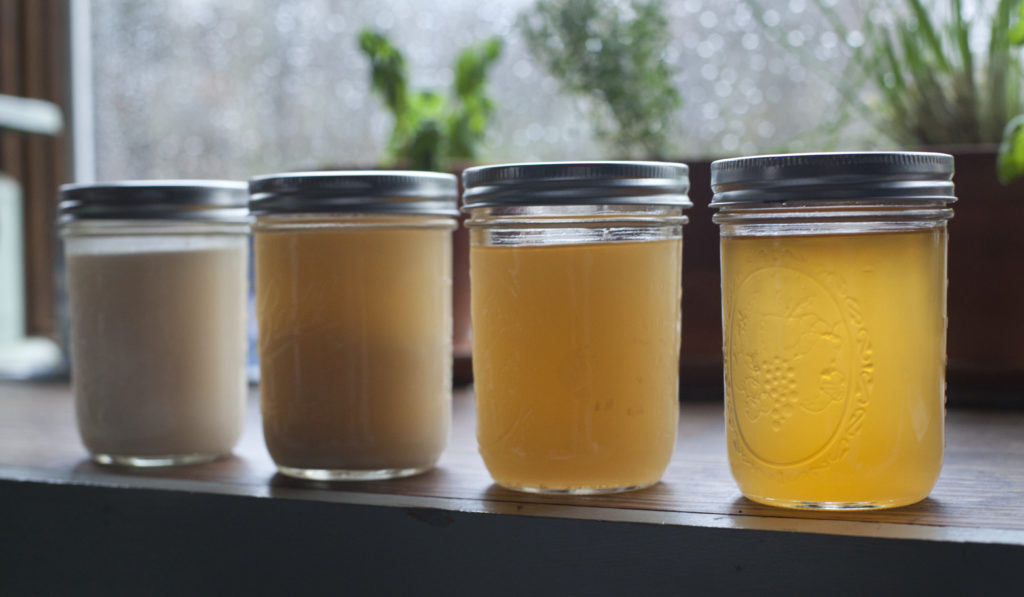
										<img fetchpriority="high" decoding="async" width="1024" height="597" src="https://themoderndaysettler.com/wp-content/uploads/2019/02/Lard-changing-1024x597.jpg" class="attachment-large size-large wp-image-806" alt="rendering-lard" srcset="https://themoderndaysettler.com/wp-content/uploads/2019/02/Lard-changing-1024x597.jpg 1024w, https://themoderndaysettler.com/wp-content/uploads/2019/02/Lard-changing-300x175.jpg 300w, https://themoderndaysettler.com/wp-content/uploads/2019/02/Lard-changing-768x448.jpg 768w, https://themoderndaysettler.com/wp-content/uploads/2019/02/Lard-changing-e1549075061607.jpg 1200w" sizes="(max-width: 1024px) 100vw, 1024px" />											<figcaption class="widget-image-caption wp-caption-text">Beautifully rendered lard changing color as it cools. Fresh from the stockpot (right) and once cools to room temperature turns snow white (left)</figcaption>
										</figure>
									</div>
				</div>
					</div>
		</div>
					</div>
		</section>
				<section class="elementor-section elementor-top-section elementor-element elementor-element-2ae4e3a1 elementor-section-boxed elementor-section-height-default elementor-section-height-default" data-id="2ae4e3a1" data-element_type="section">
						<div class="elementor-container elementor-column-gap-default">
					<div class="elementor-column elementor-col-100 elementor-top-column elementor-element elementor-element-3df02772" data-id="3df02772" data-element_type="column">
			<div class="elementor-widget-wrap elementor-element-populated">
						<div class="elementor-element elementor-element-2cd1fc2c elementor-widget elementor-widget-heading" data-id="2cd1fc2c" data-element_type="widget" data-widget_type="heading.default">
				<div class="elementor-widget-container">
					<h2 class="elementor-heading-title elementor-size-large">So What Is It?</h2>				</div>
				</div>
					</div>
		</div>
					</div>
		</section>
				<section class="elementor-section elementor-top-section elementor-element elementor-element-493e1430 elementor-section-boxed elementor-section-height-default elementor-section-height-default" data-id="493e1430" data-element_type="section">
						<div class="elementor-container elementor-column-gap-default">
					<div class="elementor-column elementor-col-100 elementor-top-column elementor-element elementor-element-785cfd2e" data-id="785cfd2e" data-element_type="column">
			<div class="elementor-widget-wrap elementor-element-populated">
						<div class="elementor-element elementor-element-1c882371 elementor-widget elementor-widget-text-editor" data-id="1c882371" data-element_type="widget" data-widget_type="text-editor.default">
				<div class="elementor-widget-container">
									<p style="text-align: center;">Lard simply put is pork fat rendered and clarified.  So, you have solid pork fat that is very slowly melted (renders) where it collected, strained, and stored.  Lard is a multipurpose cooking oil that can be used for sautéing, frying, and baking.  However, not all pork fat is created equal.  There really are two main types of fat that I personally use:</p><ul><li style="text-align: center;">Back fat: this is the thick fat layer that runs along the pig&#8217;s back and is attached to the skin.  When rendered, back fat still can have a slight &#8220;piggy&#8221; flavor to it which doesn&#8217;t make it ideal for baking but is perfect for frying.  French fries cooked in lard? Yummmmm</li><li>   Leaf fat: this is the soft fat found around the kidneys of the pig and is the purest and most neutral in flavor (you also get less of it than the back fat)  When properly rendered, this highly coveted lard is wonderful in baked goods.  Cookies, scones, pies, you name it.  You haven&#8217;t lived until you&#8217;ve had a lard pie crust&#8230; there&#8217;s nothing that can top the tenderness and flakiness!</li></ul><p style="text-align: center;"><em>** Because of the differences in the lard caused by the types of fats I render them separately and label them so I know I don&#8217;t use my precious leaf lard for frying and vice versa!</em></p><div class="paragraph" style="text-align: center;"> </div>								</div>
				</div>
					</div>
		</div>
					</div>
		</section>
				<section class="elementor-section elementor-top-section elementor-element elementor-element-6acad8be elementor-section-boxed elementor-section-height-default elementor-section-height-default" data-id="6acad8be" data-element_type="section">
						<div class="elementor-container elementor-column-gap-default">
					<div class="elementor-column elementor-col-100 elementor-top-column elementor-element elementor-element-7a0c6e29" data-id="7a0c6e29" data-element_type="column">
			<div class="elementor-widget-wrap elementor-element-populated">
						<div class="elementor-element elementor-element-16e323b9 elementor-widget elementor-widget-text-editor" data-id="16e323b9" data-element_type="widget" data-widget_type="text-editor.default">
				<div class="elementor-widget-container">
									<p style="text-align: center;"><span style="font-family: Arial, Helvetica, sans-serif; font-size: 15px; font-style: normal; font-variant-caps: normal; text-align: center;">The amount of fat that you get when processing can vary between hogs.  While diet and age are major factors, another is the breed of pig.  Pigs used to be categorized as either &#8220;lard pigs&#8221; or &#8220;bacon pigs&#8221;,  but with the shift towards CFO&#8217;s, this designation isn&#8217;t really used anymore.  Today, breeds such as Yorkshires aka &#8220;skinny/pink pigs&#8221; as I like to call them, are the choice hog for commercial pork industries.  Why? Because they&#8217;re lean, and put on weight fast.  Lean= no fat, so don&#8217;t expect to get much pork fat in a yorkshire or yorkshire cross.  Heritage breeds are going to be your best bet to get the most pork fat, as well as the best marbling and flavor.</span></p>								</div>
				</div>
					</div>
		</div>
					</div>
		</section>
				<section class="elementor-section elementor-top-section elementor-element elementor-element-5fde7d14 elementor-section-boxed elementor-section-height-default elementor-section-height-default" data-id="5fde7d14" data-element_type="section">
						<div class="elementor-container elementor-column-gap-default">
					<div class="elementor-column elementor-col-100 elementor-top-column elementor-element elementor-element-3221c9ea" data-id="3221c9ea" data-element_type="column">
			<div class="elementor-widget-wrap elementor-element-populated">
						<div class="elementor-element elementor-element-72ab18f9 elementor-widget elementor-widget-heading" data-id="72ab18f9" data-element_type="widget" data-widget_type="heading.default">
				<div class="elementor-widget-container">
					<h2 class="elementor-heading-title elementor-size-large">How To Render</h2>				</div>
				</div>
					</div>
		</div>
					</div>
		</section>
				<section class="elementor-section elementor-top-section elementor-element elementor-element-375f9006 elementor-section-boxed elementor-section-height-default elementor-section-height-default" data-id="375f9006" data-element_type="section">
						<div class="elementor-container elementor-column-gap-default">
					<div class="elementor-column elementor-col-100 elementor-top-column elementor-element elementor-element-31e70294" data-id="31e70294" data-element_type="column">
			<div class="elementor-widget-wrap elementor-element-populated">
							</div>
		</div>
					</div>
		</section>
				<section class="elementor-section elementor-top-section elementor-element elementor-element-3d998ca elementor-section-boxed elementor-section-height-default elementor-section-height-default" data-id="3d998ca" data-element_type="section">
						<div class="elementor-container elementor-column-gap-default">
					<div class="elementor-column elementor-col-100 elementor-top-column elementor-element elementor-element-0782435" data-id="0782435" data-element_type="column">
			<div class="elementor-widget-wrap elementor-element-populated">
						<div class="elementor-element elementor-element-1617049 elementor-widget elementor-widget-text-editor" data-id="1617049" data-element_type="widget" data-widget_type="text-editor.default">
				<div class="elementor-widget-container">
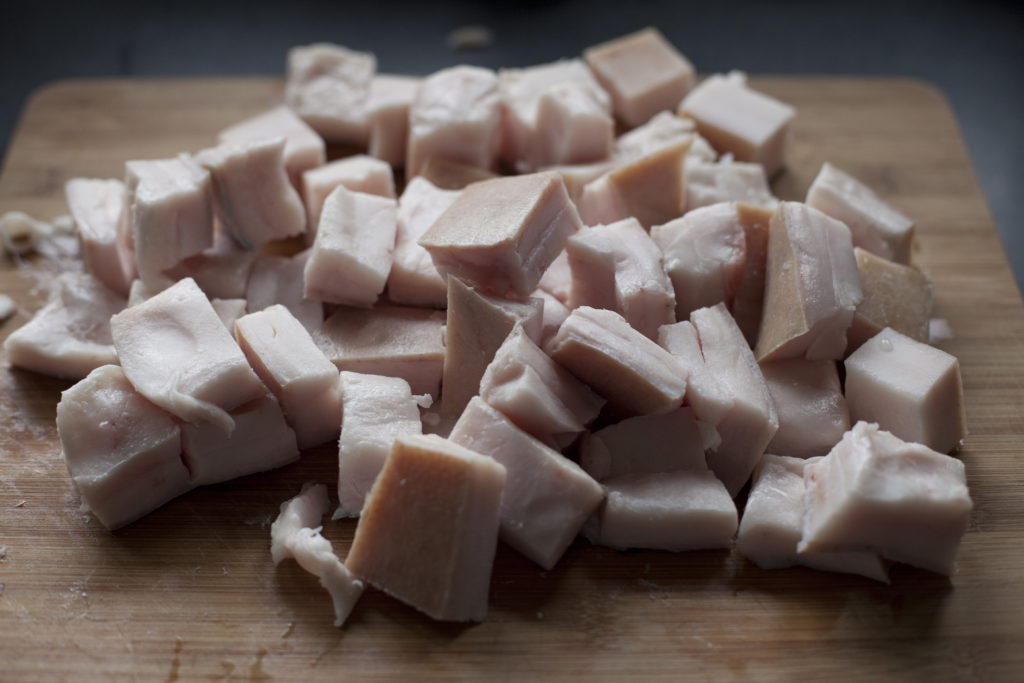
									<p style="text-align: center;">So now that you have acquired your pasture raised pork fat (be it back fat, leaf fat, or both) it&#8217;s time to render it!  Like I said above, I render mine separately so that I have my &#8220;baking&#8221; and &#8220;frying&#8221; lard, but if you choose to mix them together that&#8217;s your choice.  One thing to note is that this is not a process you want to rush.  Rushing leads to overcooking the fat which leads to less than ideal lard.  When properly rendered, the cooled lard will have a snow white appearance.  Any brown color means that it was overcooked.  Still usable for frying or if you enjoy pork flavor in your baking! But, do yourself a favor and do this on a day that you know you&#8217;re going to be in or near the kitchen all day long.</p>								</div>
				</div>
					</div>
		</div>
					</div>
		</section>
				<section class="elementor-section elementor-top-section elementor-element elementor-element-cd33b85 elementor-section-boxed elementor-section-height-default elementor-section-height-default" data-id="cd33b85" data-element_type="section">
						<div class="elementor-container elementor-column-gap-default">
					<div class="elementor-column elementor-col-100 elementor-top-column elementor-element elementor-element-723fe5b" data-id="723fe5b" data-element_type="column">
			<div class="elementor-widget-wrap elementor-element-populated">
						<div class="elementor-element elementor-element-7b43622 elementor-widget elementor-widget-image" data-id="7b43622" data-element_type="widget" data-widget_type="image.default">
				<div class="elementor-widget-container">
															<img decoding="async" width="1024" height="683" src="https://themoderndaysettler.com/wp-content/uploads/2019/02/pork-fat-1024x683.jpg" class="attachment-large size-large wp-image-808" alt="rendering-lard" srcset="https://themoderndaysettler.com/wp-content/uploads/2019/02/pork-fat-1024x683.jpg 1024w, https://themoderndaysettler.com/wp-content/uploads/2019/02/pork-fat-300x200.jpg 300w, https://themoderndaysettler.com/wp-content/uploads/2019/02/pork-fat-768x512.jpg 768w, https://themoderndaysettler.com/wp-content/uploads/2019/02/pork-fat-e1549075046494.jpg 1200w" sizes="(max-width: 1024px) 100vw, 1024px" />															</div>
				</div>
					</div>
		</div>
					</div>
		</section>
				<section class="elementor-section elementor-top-section elementor-element elementor-element-7aab980 elementor-section-boxed elementor-section-height-default elementor-section-height-default" data-id="7aab980" data-element_type="section">
						<div class="elementor-container elementor-column-gap-default">
					<div class="elementor-column elementor-col-100 elementor-top-column elementor-element elementor-element-6474af6" data-id="6474af6" data-element_type="column">
			<div class="elementor-widget-wrap elementor-element-populated">
						<div class="elementor-element elementor-element-e829048 elementor-widget elementor-widget-text-editor" data-id="e829048" data-element_type="widget" data-widget_type="text-editor.default">
				<div class="elementor-widget-container">
									<ol><li style="text-align: left;">Cut your pork fat (skin, and chunks of meat attached are okay) into small chunks.  Approximately an inch in size or less.  Or, better yet if it&#8217;s ground! The smaller the pieces the quicker they will render down!    <em>**Pork fat is a solid at room temperature, however it isn&#8217;t necessarily easy to work with.  I find it&#8217;s easiest to work with it partially frozen.  </em></li><li style="text-align: left;">Add cubed pork fat to a heavy bottom stockpot with 1/2 cup of cool water.  With the lid off, turn the heat to medium low until it starts to melt, and then turn to low.  Stir frequently.  This will be the gist of your day.  Going and checking on it to make sure that is very gently and slowly melting, stirring to prevent sticking, and rechecking it. You <strong>do not</strong> want to rush this.  Resist the temptation to turn up the heat because if you overcook it, you get brown lard that has a strong piggy taste, not the snow white pure stuff.  (<em>if you do overcook it, it&#8217;s still okay to use for frying</em>!)</li><li style="text-align: left;">Continually ladle off the rendered fat and strain it through a filter into a jar if you&#8217;re there and being attentive. Continually ladling will prevent it from accidentally overcooking. Sometimes life doesn&#8217;t work out that way and we get sidetracked! If that&#8217;s the case, after several hours, once the stockpot is full of liquid rendered lard ladle off and strain through a filter. You should have hunks of pork skin, meat, etc floating on the top.  These are the cracklings!  Some people will fry these up, throw them under a broiler, and eat them as is or incorporate them into a meal.  Me? I&#8217;m a softie and always give these to Annie as a special treat for all of her hard work taking care of the goats.</li><li style="text-align: left;">Scoop out the cracklings and you now have a stockpot full of the yellow gold (should be a light yellow color if you didn&#8217;t overcook it), you will want to strain it through a fine mesh strainer to remove any large impurities followed by a couple layers of cheesecloth.  You will be left with perfectly clarified lard!  Throw it in your mason jars (I use wide mouth for easier scooping later) or whatever storage vessel you choose.</li></ol>								</div>
				</div>
					</div>
		</div>
					</div>
		</section>
				<section class="elementor-section elementor-top-section elementor-element elementor-element-01a2010 elementor-section-boxed elementor-section-height-default elementor-section-height-default" data-id="01a2010" data-element_type="section">
						<div class="elementor-container elementor-column-gap-default">
					<div class="elementor-column elementor-col-100 elementor-top-column elementor-element elementor-element-a904d31" data-id="a904d31" data-element_type="column">
			<div class="elementor-widget-wrap elementor-element-populated">
						<div class="elementor-element elementor-element-4d4859e7 elementor-widget elementor-widget-heading" data-id="4d4859e7" data-element_type="widget" data-widget_type="heading.default">
				<div class="elementor-widget-container">
					<h2 class="elementor-heading-title elementor-size-large">Storing Your Lard</h2>				</div>
				</div>
					</div>
		</div>
					</div>
		</section>
				<section class="elementor-section elementor-top-section elementor-element elementor-element-44526c88 elementor-section-boxed elementor-section-height-default elementor-section-height-default" data-id="44526c88" data-element_type="section">
						<div class="elementor-container elementor-column-gap-default">
					<div class="elementor-column elementor-col-100 elementor-top-column elementor-element elementor-element-64789e06" data-id="64789e06" data-element_type="column">
			<div class="elementor-widget-wrap elementor-element-populated">
						<div class="elementor-element elementor-element-5c3a8608 elementor-widget elementor-widget-text-editor" data-id="5c3a8608" data-element_type="widget" data-widget_type="text-editor.default">
				<div class="elementor-widget-container">
									<div class="blog-content"><div class="paragraph" style="text-align: center;"> There are may different opinions out there on how you can store your lard.  When properly rendered with all water that you added initially evaporated, lard is a shelf stable fat.  Meaning, it can sit out at room temperature and not spoil or go rancid.  Some prefer to keep it on the shelf in their root cellar, others store it in their fridge/freezer.  Just to be on the extra safe side, I pressure can mine @ 10 pounds of pressure for 2 hours.  This puts my mind at ease and I know without a doubt that it will last on the shelf as long as I need it to.  Whatever storage method you use just use your best asset in the kitchen.  Your nose.  Does it smell rancid or spoiled? If it does, then it probably is.  If it doesn&#8217;t smell funky or look funky then cook away!<br /><br />          Lard is a wonderful traditional and nutritious fat that frankly is my personal favorite.  I know how we raise our pigs and how highly nutritious their meat and fat are.  By rendering all of the back fat and leaf lard, I am minimizing waste as well as benefitting from the nutrition. I am always just about to run out when it comes time to process our next hog.  Yes, I use it that much! So, let&#8217;s hear it for the lard and if you have never cooked with this highly nutritious fat, I can&#8217;t recommend it enough.  Once you give it a try you&#8217;ll be hooked! </div></div><div class="blog-comments-bottom"><a class="blog-link" href="https://www.themoderndaysettler.com/homesteading-blog/for-the-love-of-lard#comments">0 Comments</a></div>								</div>
				</div>
					</div>
		</div>
					</div>
		</section>
				</div>
		]]></content:encoded>
					
					<wfw:commentRss>https://themoderndaysettler.com/for-the-love-of-lard/feed/</wfw:commentRss>
			<slash:comments>7</slash:comments>
		
		
			</item>
	</channel>
</rss>
